Vapoura Rum: The new English rum taking on the market


Ed Jackson and Ollie Barkley conceived the idea of Vapoura Rum during the midst of the Coronavirus pandemic.
“Ollie and I knew each other from a former life, playing rugby, but only in passing,” Jackson tells City PM. “Ollie was a bit older and a bit better at it than I was. So, we played for different clubs and stuff, but I ended up back in Bath after I had an accident that ended my career, and Ollie retired by that point as well.”
“We actually started a charity together,” Jackson says. “He helped me set up my charity, Millimetres to Mountains, and then COVID hit. We kept ourselves busy during lockdown by drinking a lot of rum.”
With the rest of the world shut down, the former rugby players started wondering why there was no category-leading British rum that could rival anything from the Caribbean, and that’s where the idea of Vapoura came from.
Building the Vapoura Rum brand
Most rum brands follow a well-trodden path. They buy bulk liquid abroad, bottle it domestically, and construct a marketing narrative. Vapoura took another route.
“We went with the idea of finding the distiller and wanting to have a say in everything from the yeast strain to the molasses, where the molasses came from, to the botanical mix… we didn’t want to put loads of modifiers and syrups and rubbish in it,” Jackson says.
“We looked at some of the English premium products; they were just making the big distilleries in the Caribbean make their liquid and then calling it English. It felt a bit disingenuous…” he adds.
This route wasn’t easy, but Barkley is refreshingly candid about these early financial miscalculations, admitting that the team was well short of the reality of how time-consuming and costly the setup would prove to be, yet they’re both adamant it’s been worth it.
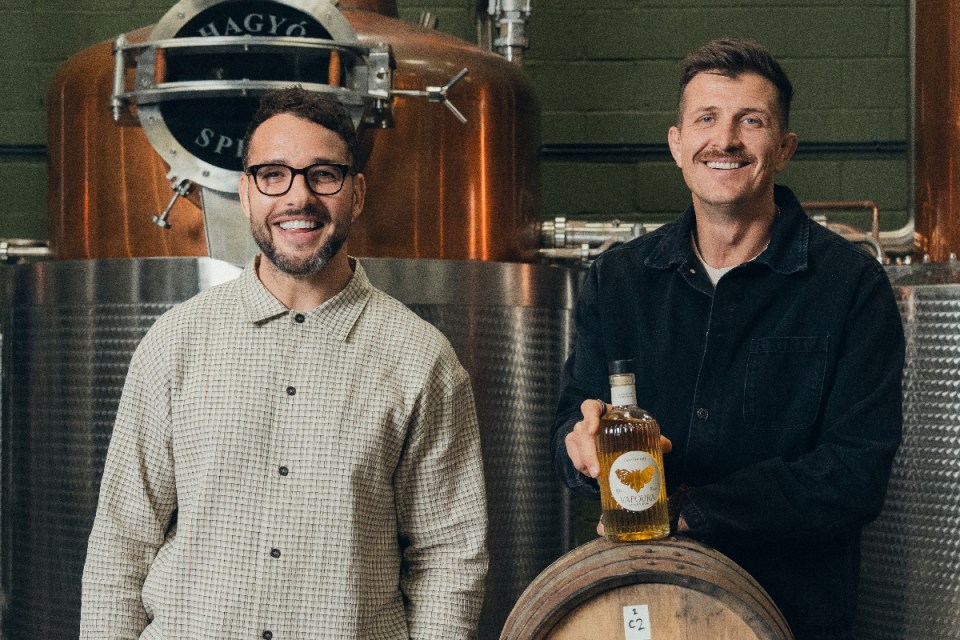
“[Competitors] can blend from a stock of Mount Gay that’s already there… and just bring out a 12-year of their rum… We’ve had rum laid down for three years now. Every three to six months, it’s this amazing process… we’ve got this emotional bond with everything that’s been through, rather than clicking a button and being like, ‘Okay, we need a six-year now. Can you deliver some samples?”
The founders are trying to build a brand that stands out on the shelves and moves away from rum’s traditional image.
“I got to the rum aisle and I just felt a little bit let down in a brand sense by how they were approaching things,” Barkley explains. “It was all about quite a nautical, mariner, swashbuckling approach, and we felt there was a real space for something more contemporary, something more progressive in the space.” To that end, they’ve focused on events and music, working with DJs and releasing their own album to help drive the Vapoura brand forward.
As part of this growth, the founders are trying to put down roots for the brand around the UK and they’re looking at going to export markets next year.
“We want to move outside of London, outside of Bristol, Cornwall, Bath- we want to move up north. I’d love to start bedding down more in Manchester, which culturally makes a lot of sense for us. Birmingham, places like that. We’re looking to test on various export markets next year… We’re going out for investment this year… penetrating them even deeper in ’28.”
He adds that product premiumization continues apace: “We’ve also got the launch of our Chapter 3 liquid… a limited-edition run which we’ll do ideally in partnership with another luxury English brand.”
Founders step back
As part of Vapuora Rum’s growth, the founders want to take a step back from the day-to-day running of the business.
“We want to build the team that can take this to the next level,” Jackson says. “That’s kind of a big part of what this raise is about this year—is like from both sales, marketing, and potentially more senior role or senior roles over the next 18 months to two years to be able to kick this brand onto the next level.”
Realistically, it’s a business still being run by startup founders, and we’re quite humble that we know that that’s not for the next stage of a business. That’s not necessarily the most sustainable way to run it.”