
Up the blockchain beanstalk in search of a golden goose

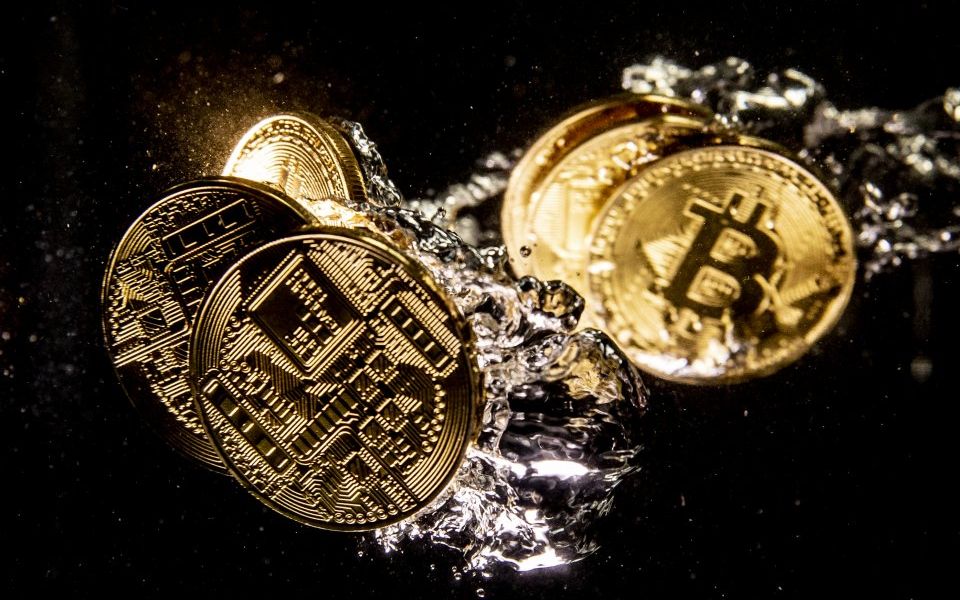
Remember the tale of Jack and the Beanstalk, when the hero traded his very last asset – the valuable family cow – for a handful of magic beans, and by some miracle of climbing the resulting beanstalk he ended up living happily ever after, thanks to proceeds from a bag of gold, a golden goose, and a harp stolen from the evil ogre’s castle in the sky?
In the world that I run in, one of the main technology waves I continuously hear about from my community of entrepreneurs, investors and corporates is the 2018 version of the magic beans: the “blockchain”.
So how exactly does one define blockchain, and why am I comparing it to a fairytale?
Read more: World Bank issues the world's first blockchain 'Bondi' security
To answer the first question I reached out to the community. And, unsurprisingly, every person I spoke to had a differing definition.
This in itself is telling.
The Wikipedia definition is a good start: “A blockchain is a growing list of records, called blocks, which are linked using cryptography. Blockchains which are readable by the public are widely used by cryptocurrencies (i.e. bitcoin or ethereum). Private blockchains have been proposed for business use.”
From a Silicon Valley perspective, it all gets a bit more enthusiastic. Tweets from Naval Ravikant, chief executive and founder of AngelList, call blockchain “a new invention that allows meritorious participants in an open network to govern without a ruler and without money”.
And if you want even more exuberance, prominent Silicon Valley investor and blockchain enthusiast Tim Draper stated during a recent debate: “the magnitude and importance of bitcoin and the technology behind it – blockchain – surpass major technological epochs such as the Iron Age, the Renaissance, and the Industrial Revolution”.
At a fundamental level, blockchain is an emerging technology infrastructure for a nascent new economy, underpinning trends such as cryptocurrencies.
However, much like the internet in the late nineties, we are at the stage where the real potential of the magic beans is still an unknown, so people are investing in the building blocks of the technology.
Richard Muirhead, founding partner of Fabric Ventures which invests in blockchain technologies, takes the fairytale analogy further to explain where we’re at now.
“We are still working out the principles of photosynthesis, let alone cultivating magic beans or sustaining bean crops. You have to invest in the underlying chemicals, factories of biochemistry, petri dishes, hydroponic watering systems, and greenhouses before you can actually grow the beanstalk.”
But blockchain has become more than an investable technology. People are betting the farm and the last surviving family bovine for the sake of the idealistic pursuit of decentralisation and equality – but also for that bag of gold in the sky.
The future is uncertain, the risks are high, but the potential payoff makes it seem worth it.
Toby Lewis, chief executive and founder of Novum Insights, a market monitor for blockchain and emerging technologies, notes that there’s an awareness of this even within the industry.
“People in blockchain certainly joke about how they are working for magic beans – a.k.a. tokens.” He’s tracked 5,800 tokens and blockchain startups, and even the fledgling ones can often raise eye-watering sums of capital. Magic beans indeed.
So how do we cut through the hype and create a real use case for the technology in specific industries such as healthcare, law, or fintech?
I chatted to a healthcare blockchain entrepreneur Alessandra Sollberger. She sees genuine potential in blockchain.
“It can allow patients to share their health records when and how they prefer. It can enable pharma companies to track their whole supply chain and offer transparency.”
However, she also advises caution, as the technology is still very young, noting that “it will take time to get to the standards that will allow us to build mainstream applications”.
Kaidi Ruusalepp, chief executive of fintech platform Funderbeam that uses blockchain to record transactions, also believes that it is still very early days.
But she observes that blockchain has already succeeded in making the financial sector question the efficiency of its business models and open minds about alternatives, like Initial Coin Offerings which are a new way to raise capital.
So the potential benefits exist, they just haven’t been realised yet.
What does that mean from an investment perspective? James Roy Poulter, chief executive of blockchain advisory The Reserve, summarises it succinctly: “The great minds in blockchain are building the future of governance, economics, politics, and money. This doesn’t mean that they – or the tokens tied to them – are worth trading the ‘invaluable family cow’ in for, but they will absolutely change the world more than we can imagine.”
It seems that there is no shortage of people buying into the belief of the capability of magic blockchain beans – but we’ve still a long way to go before that goose can deliver us an endless supply of golden eggs.
Now where do I find me some of those magic beans?
Read more: Why are Premier League clubs now doing deals in Bitcoin?