Skip to content
City PM
  • Germany
  • France
  • Europe
  • Markets
  • Business
  • Opinion
  • Germany
  • France
  • Europe
  • Markets
  • Business
  • Opinion
Tuesday 05 April 2022 10:29 am

Ukraine war is dramatically dialling up risk of global recession

By: Michiel Willems

Add as a preferred source on Google
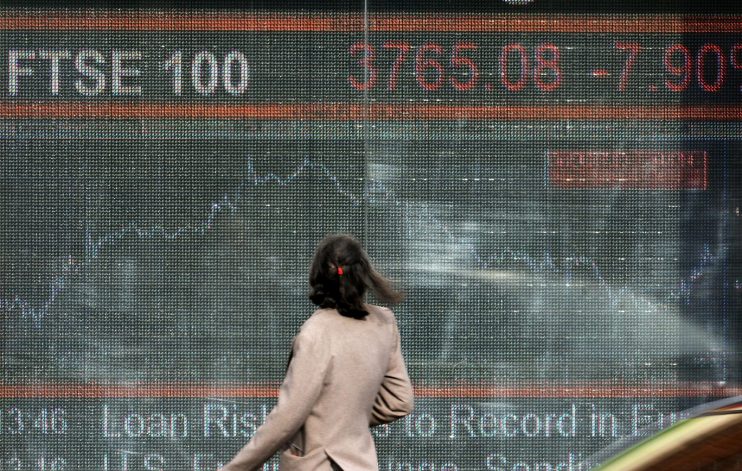
FTSE Continues To Fall Amid Growing Concerns Over Recession

The war in Ukraine has dramatically dialled up the risk of a global recession, according to leading economist.

The conflict has thrown a ‘massive monkey wrench’ into what was a gradually improving post-pandemic picture, Ira Kalish, chief global economist at Deloitte told delegates at the World Retail Congress in Rome.

And it could have damaging, long-term consequences that stretch far beyond the war zone.

He said that prior to Russia’s invasion of Ukraine there were some signs that the major economies of Europe and the US were starting to emerge from the pressures of the pandemic and confidence was returning.

But the outbreak of war had led to a sharp drop in exports of food and key commodities from Russian and Ukraine, notably energy and precious metals used in electronics.

Supply chains had also suffered a fresh wave of disruption with some freight ships in the Baltics hit by missiles, compounding problems caused by fresh Covid outbreaks in China.

This had led to another upward leap in the cost of raw materials that was already feeding through to higher inflation, a pattern that was now likely to be much more prolonged.

That increased the likelihood of higher wage demands, particularly given a tightening of the labour pool as a result of the pandemic.

“A lot people dropped out of the workforce for a number of reasons during the pandemic,” he said.

Read more

British forces intercept Russian shadow fleet in Channel

The five warships will be built at BAE's flagship facility in Glasgow

“A lot of older workers decided to retire, a lot of parents decided to stay home and look after their families and some people decided to remain in education.”

Ira Kalish, chief global economist at Deloitte

“In certain sectors such as retail people lost their jobs when shops closed and they didn’t have the skills to be part of the shift online.

“If we are going to see a much longer period of inflation it is likely to mean that this feeds through into higher wage demands.”

Dr Kalish told the conference that the backdrop presented the world’s major banks, such the the US Federal Reserve and the European Central Bank with a “major challenge”.

“They have to strike a really delicate balance between controlling inflation and not adding to what is already a much higher risk of recession in the major economies of the US, Europe and North America,” he said.

Dr Kalish added that the war combined with geo-political tensions and the pandemic were likely to drive major changes to how retailers, and other businesses, sourced goods, with less dependence on China.

“I think it has been a big surprise just how vulnerable supply chains have been to the recent shockwaves and it has caught a lot of businesses on the hop. I think we will see much greater focus on diversification within supply chains, so businesses don’t have too many eggs in one basket.”

He said that could include a switch away from just in time deliveries with businesses holding more stock. Rising wages in China, as well as its relations with Russia, could also lead businesses to seek out alternatives in countries such as India and Vietnam.

“China has played a massive part in the retail world for many years both as a growing market and as a source of production,” said Dr Kalish.

“As the Chinese economy slows and a reduction in the size of the working population leads to higher wages businesses may find it less compelling to invest in China and seek to diversify.”

Read more

Procter & Gamble axes relationship with Kremlin propaganda channel

007 PG news article image featuring a business meeting with executives discussing strategy at a modern conference table

Share this article

  • Facebook
  • X
  • LinkedIn
  • WhatsApp
  • Email

Similarly tagged content:

Sections

  • Markets & Economics
  • News

Categories

  • Business
  • Banking
  • Economics

Related Topics

  • Chinese economy
  • Indian economy
  • russia
  • Ukraine
  • Vladimir Putin

Trending Articles

  • Top Burnham adviser calls for capital gains and inheritance tax hikes

  • Clarkson’s Farm and why businesses must stop blaming the weather

  • Two solicitors linked to Post Office scandal charged with misconduct

  • Lloyd’s deputy chair: The City is a club in the best sense

  • Revealed: Secret Treasury plan to tax State Pension before it is paid out

More from City PM

  • British forces intercept Russian shadow fleet in Channel

    Politics
    The five warships will be built at BAE's flagship facility in Glasgow
  • Procter & Gamble axes relationship with Kremlin propaganda channel

    Retail
    007 PG news article image featuring a business meeting with executives discussing strategy at a modern conference table
  • Exclusive: Russian ambassador was invited to box at Queen’s Club

    Wealth
    Andrey Kelin, Russian ambassador, addressing media at a press conference on diplomatic relations and international policies.
  • Brentford in talks to host Shakhtar Donetsk Champions League fixtures

    Sport Business
    Breaking news update with diverse business professionals discussing market trends in a modern conference room setting
  • Industry warns Iran war spike to come as food inflation falls

    Retail
    A colorful array of fresh fruits and vegetables displayed on a rustic wooden table, highlighting healthy food choices.
  • UK Government warns Joe Joyce against travelling to Russia for Moscow fight

    Sport Business
    Getty Images logo on a digital screen, representing business and media industry in a professional news setting
  • Bank of England to ‘tolerate slow return’ to inflation target as interest rates held

    Economics
    Bank of England Governor Andrew Bailey said cited several indicators that the labour market was softening.
  • Bank of England chief economist ‘not trying to be a troublemaker’ on rates split

    Economics
    Chief economist Huw Pill said "consistency" was key to the Bank of England's quantitative tightening programme (Photo by: Graeme Sloan/Bloomberg via Getty Images)

City PM — European politics, business and analysis.

Europe

  • Germany
  • France
  • Europe
  • UK & Ireland

Topics

  • Business
  • Markets
  • AI
  • Technology
  • Opinion
  • Energy

More

  • Politics
  • Economics
  • Fintech
  • Legal
  • Sport
  • Life

Company

  • About City PM
  • Editorial Policy
  • Corrections
  • Contact
  • Terms of Use
  • Privacy Policy
  • Cookie Policy
© 2026 City PM · Published by CityPM Media, Bahnhofstrasse 65, 8001 Zürich, Switzerland
About · Editorial Policy · Corrections · Contact · Privacy