
Uber’s model was rife with flaws but the gig economy deserves saving

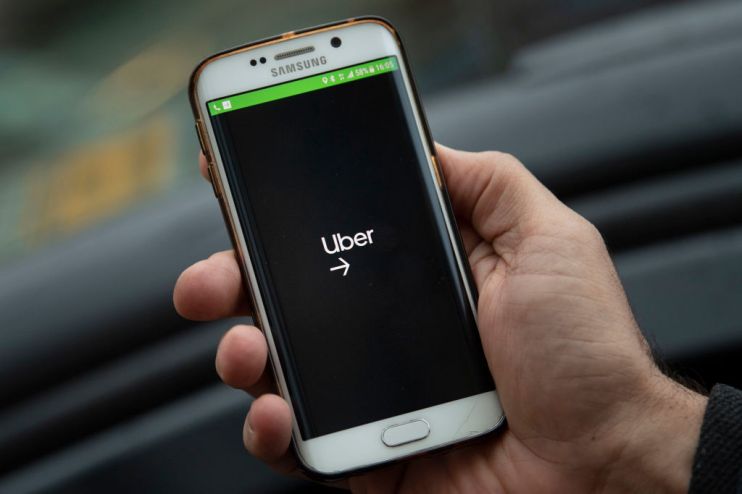
It has been less than ten years since Uber started operating in London. In that short time, the ride-hailing service has transformed the way many urban dwellers think about their transportation needs and their expectations of connectivity. By the beginning of 2020, just before the pandemic, Londoners took it for granted that Uber—or Bolt Kapten or Ola—could provide them with a car to anywhere in the capital, door-to-door, for considerably less than the price of a black cab.
The lockdown following the first crashing wave of Covid-19 hurt all of these apps badly: people simply were not travelling, and were certainly not travelling in close proximity to a stranger in the driving seat. But the circumstantial challenges were only part of a range of problems, many of which were structural and institutional. After a decision by the Supreme Court, Uber was forced to reclassify its drivers as “workers”, changing their rights and obligations.
Now on busy London streets we see how low ride-hailing apps have been brought. Waiting times have increased many times over, drivers frequently cancel, and unavailability is now a real problem. In an attempt to sweet-talk drivers into signing up, Uber has now raised the base rates for rides. For many Londoners, this undermines the point of hopping in the car altogether, and more will be tempted to just wave down a black cab.
While the votaries of the Licensed Taxi Drivers’ Association will rub their hands with glee—and, let us be honest, black cabs offer a different and worthwhile service—many of us are now writing off Uber and its competitors as a flash in the pan, a glorious moment of freedom before legislation caught up with technology.
Does it have to be this way? Are we content to live in a financial and technological ecosystem in which, sooner or later, innovation is simply squeezed out of the market by regulation?
In fact the principles which underlie ride-hailing services are laudable and ideally suited to the world of the 2020s. They encompass efficiency, autonomy and personalisation.
Efficiency because, in crowded cities, it suits many people not to own a car, with the attendant costs and responsibilities, but still to have instant access to the transport capability of a car to go from door to door. Try hailing a black cab on a busy street, or finding one in a suburban outpost. By contrast, an app that can bring one to your home, and allow you to monitor its progress, is digital beating analogue in front of your eyes.
Autonomy because drivers can work when they want. Increasingly we expect, want or need to have a range of economic activities, and part-time taxi work requiring only a sat-nav and the Uber software is an attractive option. It is, in many ways, the ultimate side-hustle, and, if it is done properly, it can be hugely empowering for the driver.
Personalisation because we live in a world in which innovation is allowing us to operate a much more bespoke existence. We listen to Spotify rather than the radio, and algorithms monitor us to deliver new content it is reasonably certain we will like. Amazon is the greatest recommender of all, and huge amounts of work go into refining that process so that it is accurate and authentic.
Why should personal transport be any different? We should be able to go where we want and have a mutual relationship of assessment with the drivers: I rate you, you rate me.
So here’s the challenge for policy-makers and legislators. We know Uber has had problems with pay and conditions, security and safety. But the idea not only works, it embodies much of what we say about the future economy. Let’s not stifle it, but rather refine it according to its basic principles, and extend those across the commercial environment. Let’s have rules which look forward and work to enable innovation, not act as a brake on it.
Remember the three principles: efficiency, autonomy and personalisation. These should be central to how we regulate and monitor as well as assist and encourage.
We’ve learned lessons from the problems of Uber, but we don’t have to shake our heads and lament what we’ve lost. Services that work for the individual are the future.