Skip to content
City PM
  • Germany
  • France
  • Europe
  • Markets
  • Business
  • Opinion
  • Germany
  • France
  • Europe
  • Markets
  • Business
  • Opinion
Tuesday 09 December 2014 8:57 pm  |  Updated:  Friday 07 June 2019 7:19 pm

Tumbling oil prices to give lift to UK economy

By: Chris Papadopoullos

Add as a preferred source on Google

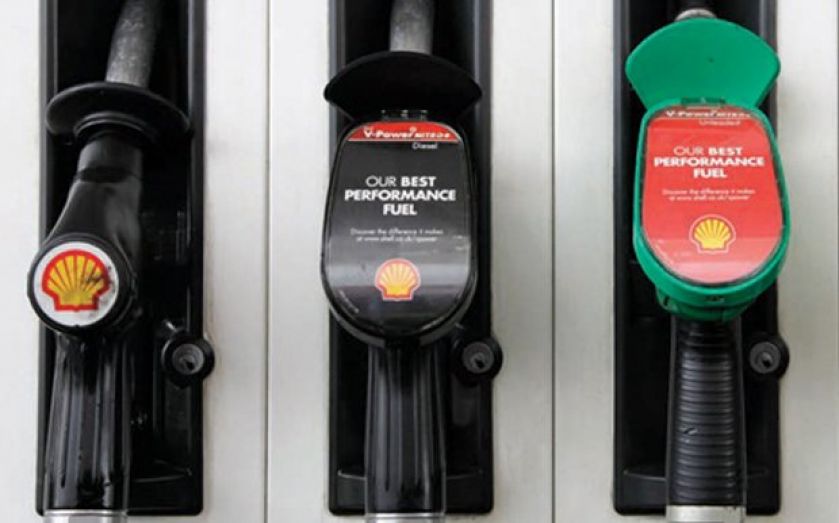
As oil tumbles to another five-year low, the consequences for the global economy will be far-reaching

Plummeting oil prices could give a major boost to the UK’s economic growth and provide a turnaround in fortunes for the Eurozone.

Consultancy group Oxford Economics is forecasting the UK economy to grow by 2.6 per cent on average over 2015 and 2016.

However, if oil prices average as low as $40 a barrel over those two years, growth could top 3.2 per cent. Drops to $60 and $50 would also lift growth.

Brent crude oil – extracted from the North Sea – edged down to $66 a barrel yesterday. It was just shy of $115 a barrel in June.

Oxford Economics believes that an average price of $64 dollars a barrel in 2015 followed by a steady recovery to $86 by 2019 would increase global economic output by 0.4 per cent by 2017. It may even be enough to revive the weak Eurozone economy, which could be boosted by 0.3 per cent by 2017.

The Organisation of Petroleum Exporting Countries (Opec), which includes Iran, Kuwait, Saudi Arabia and the United Arab Emirates (UAE), would suffer, however, as their 2017 output would be 0.7 per cent lower than planned.

Among developed economies, Hong Kong is set to benefit the most if oil prices fall to $40 per barrel, with an extra one per cent of economic growth per year over 2015 and 2016 – up to 3.9 per cent from 2.9 per cent.

At the other end of the spectrum are Russia, Saudi Arabia and Norway.

Russia’s economic growth has already been hit by economic sanctions. It relies on oil as a major export and generator of state revenues. Russia’s economy could contract by 2.5 per cent if oil drops to $40 a barrel while Saudi Arabia and Norway would stagnate.

Cheaper oil would also weigh down on inflation in the UK and could turn negative if oil prices dropped below $60 a barrel.

This would likely prevent the Bank of England from raising interest rates from their historic lows.

Portugal, France and Spain could see annual inflation as low as minus two per cent over the next two years if oil averaged at $40 a barrel.

An average oil price of around $60 over the next two years would also have an impact on current accounts – exports minus imports. Taiwan, Hungary and Thailand all have their current account balances boosted by over two per cent of GDP.

“A fall in the price of Brent crude to $40 per barrel remains unlikely in our view, yet is not beyond the realms of possibility,” report author John Bulford told City PM

“Our model highlights some real vulnerabilities in a number of countries, not least of which is Russia.

“In general, however, such a fall in the oil price would provide a welcome boost to the global economy,” Bulford added.

Share this article

  • Facebook
  • X
  • LinkedIn
  • WhatsApp
  • Email

Similarly tagged content:

Sections

  • News

Categories

  • Business

Related Topics

  • Oil prices

Trending Articles

  • Burnham tax plans spark investor rush to bank capital gains

  • Brewdog chief executive quits after only one year

  • Nothing fails to file accounts months after dissolution threat

  • UK ‘no longer a serious place’ says Hedge fund boss after losing £200m tax battle

  • Cruyff turn: Starmer allows pubs to stay open for England World Cup game

More from City PM

  • Reeves warned Iran war oil shock will lead to government borrowing spike

    Economics
    Rachel Reeves speaking at an IOD event.
  • US and Iran agree to peace deal’s text, negotiators say

    Economics
    Aerial view of Strait of Hormuz with cargo ships navigating the strategic waterway under clear blue skies
  • The world can’t keep consuming more than it produces

    Opinion
    FTSE 100 stocks rise as Brent crude oil prices jump 1.8% to $104.98 amid Strait of Hormuz tensions and Trumps Iran stance
  • Interest rates next change ‘far more likely down than up’

    Economics
    The Bank of England's Andrew Bailey will be closely monitoring movements in long-dated bonds
  • ‘Nothing is straightforward’: Market analysts warn of US-Iran deal complications 

    Markets
    Breaking news event coverage with diverse crowd gathered, showcasing a lively urban scene, reflecting current affairs.
  • As it happened: Stocks jump on defence and metals boost; Oil on track to shed a fifth on US-Iran peace hopes

    Markets
    FTSE 100 stocks rise as Brent crude oil prices jump 1.8% to $104.98 amid Strait of Hormuz tensions and Trumps Iran stance
  • As it happened: FTSE 100 relief rally runs out of steam as BP and Shell weigh; Oil hits three-month low

    Markets
    Breaking news illustration with a newspaper, digital devices, and coffee cup on a desk, highlighting media consumption
  • UK economy falters as deeper damage to growth to come

    Economics
    Rachel Reeves speaking at an IOD event.

City PM — European politics, business and analysis.

Europe

  • Germany
  • France
  • Europe
  • UK & Ireland

Topics

  • Business
  • Markets
  • AI
  • Technology
  • Opinion
  • Energy

More

  • Politics
  • Economics
  • Fintech
  • Legal
  • Sport
  • Life

Company

  • About City PM
  • Editorial Policy
  • Corrections
  • Contact
  • Terms of Use
  • Privacy Policy
  • Cookie Policy
© 2026 City PM · Published by CityPM Media, Bahnhofstrasse 65, 8001 Zürich, Switzerland
About · Editorial Policy · Corrections · Contact · Privacy