
There is a future for British steel – but it isn’t built on nostalgia

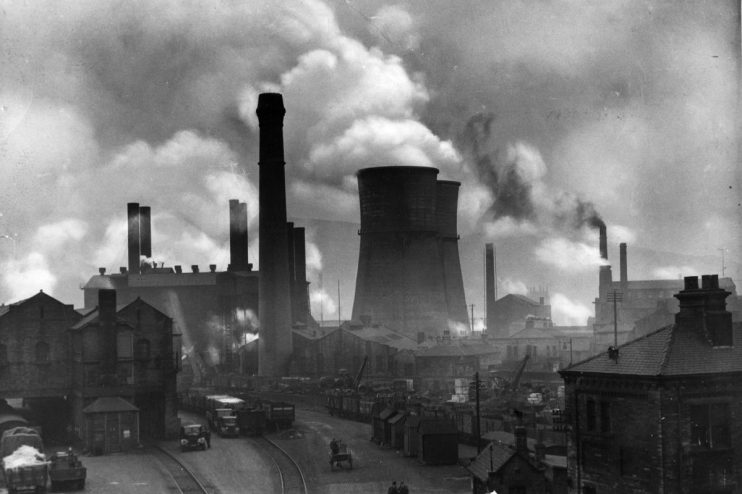
Traditional steel making is one of the dirtiest industries on earth. Transforming it into an industry of the future requires innovation not nostalgia, writes Sebastian Langendorf
“There will be a future for British steel,” Rachel Reeves told the Labour Party Conference, presenting steel not only as an economic issue but as a test of Labour’s values and patriotism.
It was a bold promise, but it leaves a harder question: what kind of future will Britain choose? That choice cannot be deferred. The country stands at a crossroads, with the last remaining steelmakers considering a merger and a new Steel Strategy on the table. The Prime Minister has staked his leadership on national renewal and economic growth, yet the future of steel, the backbone of industry and infrastructure, the material behind factories, cars, bridges and turbines, still hangs at the edges of serious policy debate. Reeves has put steel back in the spotlight, but unless her words are matched with a plan for genuine transformation, Britain risks falling back into the familiar cycle of subsidy, stagnation and decline.
The problems facing British steel are hardly a secret. Energy costs that keep rising, plants older than most of the workers that fill them, global rivals moving faster and cheaper and the small matter of decarbonising one of the most energy-intensive industries to hit net zero by 2050. Crucially, the steel industry has seen no major investment in modernisation for two decades, leaving it lagging rivals. Technology could have eased costs, including labour, which remain high in the UK. To do nothing is an active policy choice, one that risks consigning British steelmaking to the scrap heap of history.
Traditional steelmaking is one of the dirtiest industries on earth, responsible for around eight per cent of total global emissions, and while the uses of steel have advanced significantly since the early 1900s, the manufacturing process which transforms iron ore into finished steel products on the same site has not. Retrofitting old furnaces may buy time, but it does not deliver transformation. The Chancellor’s commitment to intervene in the national interest is welcome, but if that intervention locks Britain into outdated blast furnaces, it will mean permanent subsidy and decline rather than renewal.
Making steel into a green industry
At the moment, the most carbon and energy-intensive step in steelmaking is in transforming iron ore into iron in blast furnaces. The future requires a rethink, using different technologies and splitting iron ore reduction from steel manufacturing. This decoupled model also makes commercial sense. Applying direct reduction instead of blast furnace technologies, energy-intensive ironmaking should happen where energy is abundant, including access to renewable energy. Value-added steelmaking can then follow close to end customers, where complex steel grades can be delivered just-in-time with lower inventory costs. Each process can take place in the most advantageous location. That is why new models, such as the one we are building at Meranti Green Steel, matter for Britain’s industrial future.
We will replace blast furnaces and coking coal with Direct Reduced Iron (DRI) plants and green hydrogen to produce Hot Briquetted Iron (HBI), which can be used in electric arc furnaces. By building our DRI plant in Oman, we tap into the plentiful supplies of green hydrogen and natural gas to produce HBI economically with a minimized CO2 footprint. Our HBI will provide a cost-effective alternative to conventionally reduced iron and feed green steel plants elsewhere.
This approach transforms the most carbon intensive step of production, and changes the equation for steel everywhere. And here lies the opportunity for Britain. Instead of refining iron domestically at great cost, the UK could import low-emission HBI from allied countries like Oman. That feedstock can then be turned into high-value steels in Britain, using electric arc furnaces powered by clean electricity. This also enables the use of domestic scrap blended with imported HBI, since high-end grades require virgin iron for quality. It plays to Britain’s strengths: advanced manufacturing, innovation and producing specialist steels for state-of-the-art cars, aerospace, energy and infrastructure.
Under such a model, the UK would move away from outdated blast furnaces and, through partnerships, take its place at the top of a secure supply chain of clean iron, while protecting jobs and keeping industry relevant. At the same time, it would align with global markets, where demand for low-carbon steel is only rising and where policies such as Europe’s Carbon Border Adjustment Mechanism will penalise high-emission imports.
Green steel is not just about lower emissions, it’s about new supply chain models, optimized energy usage and therefore lower costs. So yes, there will be a future for British steel, as Reeves promised. The choice now is whether that future is built on nostalgia and subsidy, or on transformation and competitiveness with green steel as the true backbone of a revitalised economy.
Dr Sebastian Langendorf is founder and CEO of Meranti Green Steel