
The Sunak Gambit: a chess renaissance might be just what Britain needs

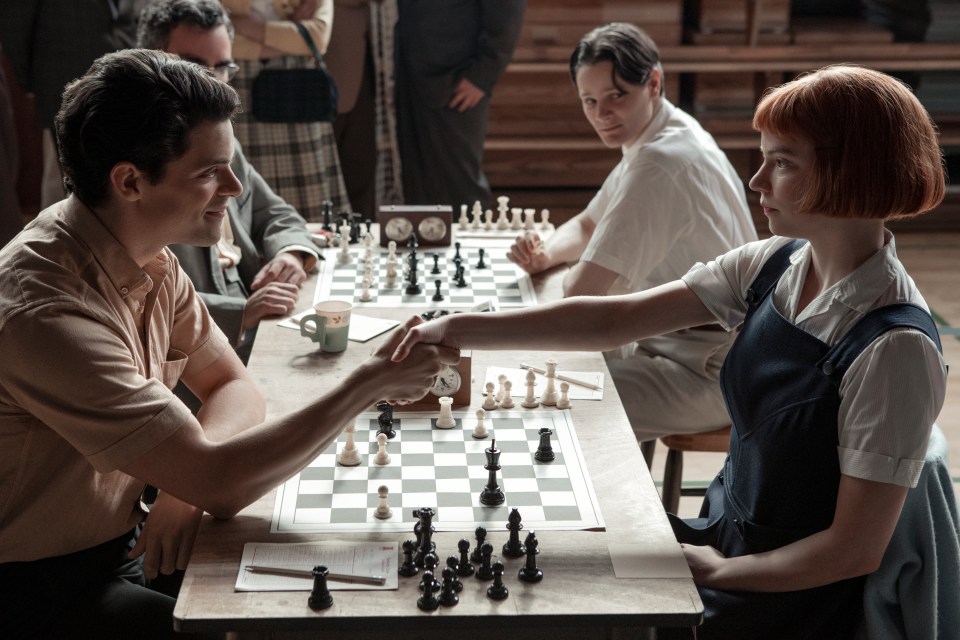
Shows like the Queen’s Gambit threw chess back into the limelight, but the game could prove transformational for educating Britons, writes Eliot Wilson.
Very occasionally, you find yourself in a narrow age band which gives you a vivid set of recollections which mean virtually nothing to everyone else. I am in that position with chess. I was a sixth-former when, to everyone’s surprise, the sober-seeming board game suddenly burst into the news.
In 1993, improbable as it may sound, the chess world exploded in controversy. The International Chess Federation (FIDE) arranged to hold its world championship in Manchester without consulting either the reigning world champion, the brooding young Jewish-Azeri Garry Kasparov, or his challenger, Nigel Short, a stereotypically English, bespectacled figure of 28. The two players took the dramatic decision to walk away and formed the Professional Chess Association, with a rival tournament to be held in London.
That match was held in September and October in the Savoy Theatre, and, inexplicably, it seized the public’s imagination. It was sponsored by The Times, and Channel 4, proving their commitment to provocative and counter-intuitive programming, showed 81 (yes, 81) episodes of events from the Strand. Returning for my upper-sixth after the summer holiday, I was captivated.
Last week we learned that the government would be acting to support the game with an award of £500,000 to the English Chess Federation. This may not seem like a significant sum—to the government it is not—but it is more important than it might seem. To begin with, this is the first time the government has ever given chess financial support: it is not eligible for funding from Sport England because it is not classified as a “sport”. But more important is a sense of perspective. Half a million pounds is the blink of a civil servant’s eye when it leaves a departmental budget, but when it arrives at the English Chess Federation (ECF), it will be, as they said, “potentially transformational”.
Malcolm Pein, the ECF’s director of international chess, explained that while chess is a cheap sport, they have plans to use the money to invest in top-level coaches, training camps and computer technology to help promising young players analyse and improve their game. There are also plans at an early stage to support chess in schools and install chess tables in public parks.
There is a hint that the game is pushing at an open door. During lockdown, there was a 400 per cent surge in sign-ups to chess websites as people looked for new recreations and distractions; at the same time, the 2020 Netflix miniseries The Queen’s Gambit, the story of a young female chess prodigy’s rise to the top of the game, was hugely popular, at one point being the provider’s most watched show.
There are high-level supporters of the game. At Westminster, the shadow chancellor, Rachel Reeves, was British girls’ champion, as were twin sisters Dame Angela and Maria Eagle, both former shadow cabinet ministers; other enthusiasts include Sir Richard Branson, Daniel Radcliffe and Anthony Joshua.
Playing chess is a good habit. The evidence seems to suggest it improves memory, enhances literacy, teaches forward planning and promotes creativity and problem-solving abilities. It may also have a role to play in warding off dementia. Although some warn of the game’s addictive nature, it is an all-round gymnasium for the cognitive faculties.
Inevitably there have been nay-sayers who have mocked chess’s image as a haven for misfits and eccentrics, some commentators feel that it is not the government’s role to micromanage hobbies, and others lampoon the quantum of the money as far too small to cross a minister’s radar, let alone that of the prime minister. That attitude seems to me needlessly grudging. If the grant of £500,000 is useful to the English Chess Federation, then the government has, with virtually no effort, made modest contributions to children’s cognitive abilities and brought people together.
Don’t look at the grant in isolation. Think of it like this: the world is brutally competitive, and we need every tool available to us to shore up our position. I’m drawn to a national application of Sir David Brailsford’s theory of marginal gains, the transformational approach he brought to British Cycling as director of performance. Look at everything you do, and seek to improve every part of it by one per cent. The overall effect is revolutionary.
Perhaps this is fanciful, but why shouldn’t chess be one of the examples of marginal gains? This is something which is, effectively, free to the government and therefore the taxpayer, and requires no further activity: the community which will make the running is in place. If that running leads to a gentle uptick in memory, planning, foresight, creativity and convergent thinking, especially among young people, then that would make a tiny gesture look like a bright star in a much broader constellation. Your move.