
The Notebook: We need seats! A plea for pedestrianisation

Where the City’s movers and shakers get a few things of their chest. Today, it’s City PM features writer Lucy Kenningham
We need seats! A plea for pedestrianisation
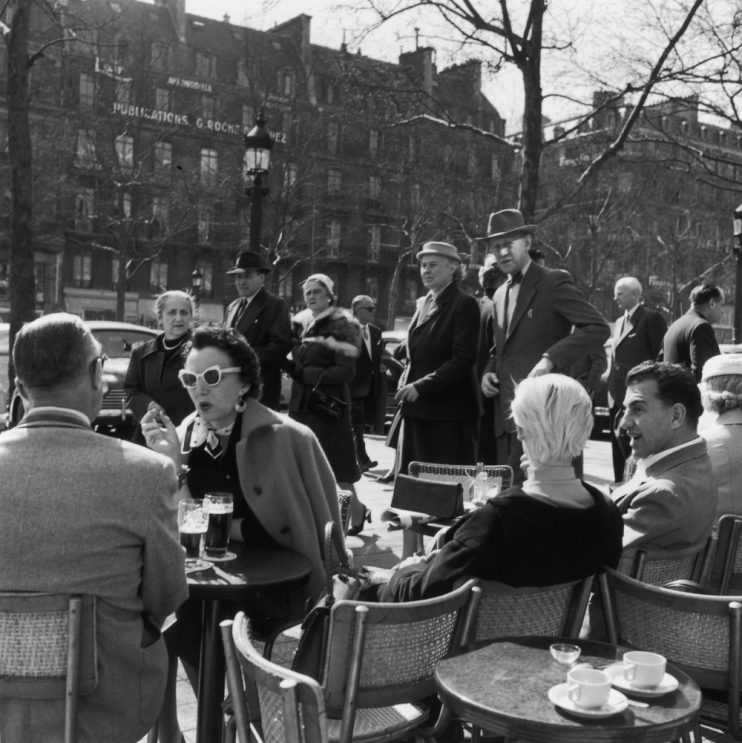
The best thing about Paris isn’t the food, Hausmann architecture or the newly-swimmable Seine. The best thing about the city is that whether you go, people are sitting out and chatting. This might be in part due to conversational prowess that is untrained in Brits who, red faced, sputter and yell over pints whilst standing in the pub – but it is in no lesser part a result of France’s pavement licence policy.
It astounds me that there isn’t more clamour for a reworking of the Kafkaesque rules that dictate applications for outdoor dining or drinking. Councils require an inordinate amount of detail – in Westminster, for example, two different applications, eight copies of a detailed plan of the site, manufacturers’ details of the furniture and more are needed. You can read more in the 36-page guide to Pavement Licensing. This, despite the regulation slightly easing since Covid when responsibilities were devolved to local authorities. A council can now grant pavement licences for two years – and are encouraged to grant the maximum period “unless there is a good reason to do otherwise”. But they are often sticking to the previous year-limit – and there’s certainly not much evidence of more tables scattering the streets. The other impact is that it now costs even more to make the application in the first place (up to £500 from £100).
When I managed a new bookshop, Morocco Bound, just off Bermondsey Street, from 2020 to 2021, we desperately needed the visibility that came from a couple of tables on an unused triangle of road in the shopfront’s shadow that would allow us to be glimpsed from the main road. Were we granted permission? No. For no obvious reason. We had to fight tooth and nail just to get an A-board out there.
It’s very clear just through observing the roads in Paris that there is far less rigidness around accessibility and health and safety. This is not always a good thing for everyone, but for the most part it is in my opinion for the best and it’s far more common to see people move their chairs to let someone through, or indeed shift a table of diners to let the rubbish collectors pass. There’s something charming about a more ad-hoc and collective approach to societal setup. Noticeable also in Paris are how yammed-up the chairs are to each other. It’s intimate, it’s assembled, it’s not all designed on a graphic that’s been photocopied and processed by 12 members of the council before being rejected twice then validated a third time. There are also fewer chains, but perhaps that’s a topic for another column (although it is linked – all this bureaucracy and cost makes it very difficult for small businesses to survive – as we found at Morocco Bound).
An obvious blockade to my pedestrianised, free-seated, vape-wielding utopia are cars and traffic. You know what’s a popular policy though? Pedestrianisation. Paris is on its way to pedestrianisation in the centre of the city already, with 100 streets already blocked off to cars. London could take a leaf out of its book. Over half of Londoners support pedestrianisation of the streets – it would reduce the amount of filth polluting our lungs and stem the high rate of accidents between cars and pedestrians (one of the highest in Europe).
Low-traffic neighbourhoods, for example, are actually supported by Londoners – ironic, given the vitriol Mayor Sadiq Khan was exposed to mostly by Susan Hall’s crass and crooked Conservative mayoral campaign.
Another objection, I hear you cry, is the weather. But Paris’s climate is almost identical to London’s. They simply erect awnings.
Anyhow, I don’t care how you do it. I want to be able to sit outside and breathe in the pollution. Sitting on the street isn’t just good for smokers – it fosters community and bonds. We don’t have stoops anymore, but if you’re sitting on the sidewalk you could serendipitously bump into a neighbour. So: fewer cars, more outdoor seating, vive a la France.
A fight over adverbs
I had the pleasure of getting into an (ultimately good natured) argument with a distinguished journalist at a dinner party hosted by The Folio Society in Brunswick House last week. After some pleasant,, chitter chatter, the conversation swerved towards adverbs. Suddenly, she was advising me – no, telling me – that adverbs had no place in prose of any kind whatsoever. I couldn’t agree: what about “brazenly”? What about “surreptitiously”? What about doing something slowly or quickly? We whipped out our respective reading material – her, John Gray (“no, not the philosopher”); me, The Economist (“that’s a pile of shite!”) – to search for adverbs. She fessed up to finding a couple of justifiable ones – but not for four pages. Use em sparsely, if at all, she counsels. She has Graham Greene on her side. I’ve Martin Amis on mine. My instinct is that any prescriptive guide on ‘how to write’ is doomed to fail – even Orwell included the caveat that one could throw out any of his rules at a moment’s notice if it felt right. I shall feel free.
Sand: it’s endangered
During an interview I had with a chief executive in the recycling industry last week, the issue of sand arose. It is one of the world’s scarcest resources, he told me, earnestly. I had no idea. Fifty billion tonnes of it is used per year, enough to cover the entire UK. Riverbeds, beaches and forests are being “stripped bare”, apparently, for. For sand is a key component in vital building materials like concrete and glass. And it can’t come from deserts, by the way. Those grains are the wrong shape – the sand must come from riverbeds, beaches and forests. What can be done? Reduce construction where possible. But really, recycling is key. Glass can be recycled ad infinitum and incinerated solid waste can be recycled and used as a sand alternative.
Facing mortality in Surrey
A two-day camping and cycling trip in the Surrey Hills was the invite I received, and one I thought I couldn’t possibly decline – being a casual cyclist and equally casual appreciator of the outdoors. Also, there would be beer. However, it turns out the Surrey Hills are genuinely hills and not the sweet little hillocks of my imagination. In fact they are vertigo-inducing, alpine-esque inclines covered in brambles, ravines and unruly tree roots. Yes, Leith Hill is only 394 feet but it doesn’t feel like that when you’re cycling up it for the third time in a day. Albeit the area is covered in an incredible variety of flora and fauna – which I would have loved to appreciate but simply wasn’t possible whilst all my energy was focused on not dying. You know an activity that doesn’t give you long-term cramp or damaged muscles? One that lets you appreciate the stunning scenery without the accompanying fear of near death? Walking. I think I might try it.
My French lessons are more than language learning
French lessons at the Institut Francais have been colouring in my Tuesday evenings. The almost liminal space and dynamic constructed by a foreign language class gives rise to conversations you would simply never have anywhere else: we’re a motley crew featuring a Spaniard, Aussie, Pole and some Brits – all of different ages and professions, plus a French teacher, discussing “food miles”, the depiction of Gaza in the media or whether you would press a button to stop the world from ever being created (18 year old Caspar from Belgium says yes). Also – politically, I couldn’t have signed up at a more fascinating time to gauge reactions from a wide range of people. Merci a tous.