
The Notebook: Nuclear power continues to divide, but we need to think about the future

Where the City’s top thinkers get a few things off their chest. Today, Kokou Agbo Bloua, Societe Generale’s global head of economics, takes the pen to talk nuclear, climate volatility and the economic outlook
The Nuclear Debate: Fears, Facts, and “Fission”
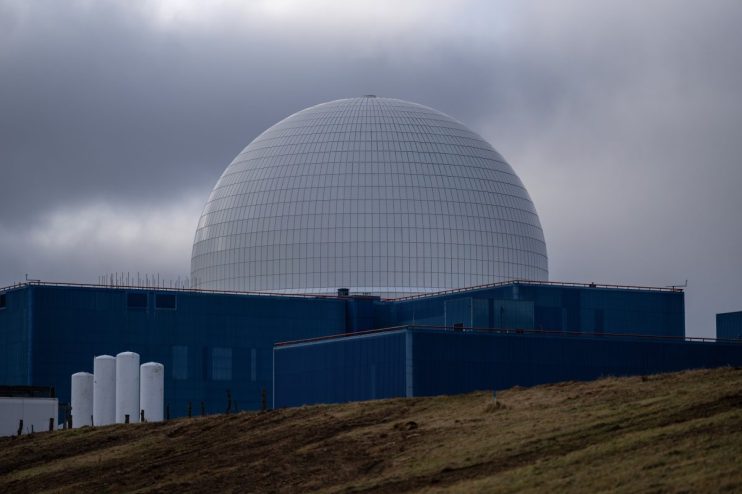
Nuclear power is a controversial topic as it is seen by some as a key solution to achieving a carbon-neutral future, while others view it as a potential disaster waiting to happen. With the global population projected to reach 10bn by 2050, the demand for electricity is expected to double at the time when the world is looking to transition away from fossil fuels. This raises the question of how to power the future.
In a recent episode of 2050 Investors, the podcast I host for Societe Generale, we explored the contentious issue of nuclear power via a virtual Oxford-style debate between experts from both sides. Nuclear power has a dual nature, serving as the energy source with the highest energy density on Earth and low-carbon footprint while also posing a potentially catastrophic risk due to its ability to alter life at the atomic level. The pro-nuclear experts emphasised the need for nuclear power to combat climate change, arguing that it is a low-carbon source of energy that can provide reliable and consistent power. They also highlighted the improvements in nuclear technology and safety measures over the years.
On the other hand, the anti-nuclear experts raised concerns about the economic feasibility of nuclear power, citing long lead time (up to 10 years), high construction and decommissioning costs. They also pointed out the safety risks associated with nuclear power, such as the potential for accidents, the disposal of nuclear waste and the proliferation of nuclear weapons.
While non-hydro renewables such as wind and solar are expected to play a significant role in the future, they face intermittency issues. The debate surrounding nuclear power corroborates the need for a nuanced and informed discussion about the role of different energy sources in achieving a carbon-neutral future.
From Green Swans to antifragility
Abraham Lincoln once said, “By failing to prepare, you are preparing to fail.”
So why do well-known risk management models fail to predict major events? And how can we be better prepared?
In another episode of 2050 Investors, we explored the theory of Black Swans, created by Nassim Nicholas Taleb, and its relevance to sustainability, climate change, and financial markets.
In the context of climate change, Black Swans are rebranded as Green Swans, representing the increasing frequency and severity of climate events such as floods, heat waves and wildfires. These events pose significant challenges for economies and sustainability efforts.
To address this challenge, we investigated the principles of antifragility, a term also coined by Nassim Taleb, which suggests that systems can benefit from external stressors, making them more resilient in the face of volatility and uncertainty. By embracing antifragility, we can better prepare for and manage the impact of Black and Green Swans in a rapidly changing world.
United we hiked, divided we cut
Central banks around the world tightened policy almost in lockstep in 2021-23, albeit with differences between those in emerging markets and those in advanced economies. But the easing cycle looks to be far more heterogeneous. An important differentiator is the progress towards inflation targets. What also seems clear is that rate cuts will come to an end at a much higher level than where the tightening cycle started. In our economists’ view, fewer rate cuts than hikes also reflect the fact that policy is not particularly tight, at least in advanced economies. In emerging markets policy looks mostly more restrictive.
Update on GHG emissions
Our economists estimate that global greenhouse gas (GHG) emissions increased last year by 1.1 per cent to 54.4bn tonnes of CO2 eq. They project global GHG emissions of 53.8bn tonnes of CO2 eq. in 2030, a 6.3 per cent increase in the 2020s. Emissions should peak at 55.0bn tonnes of CO2 eq. in 2026 and fall thereafter.
Our economists currently see slower progress in major EMs – China and India – toward emissions goals. However, they expect backloaded efforts in China to lead to a steeper decline in emissions in the latter half of this decade.