
The Bank of England is dying for data on private markets

City Editor Simon Hunt on the stories that caught his eye this week
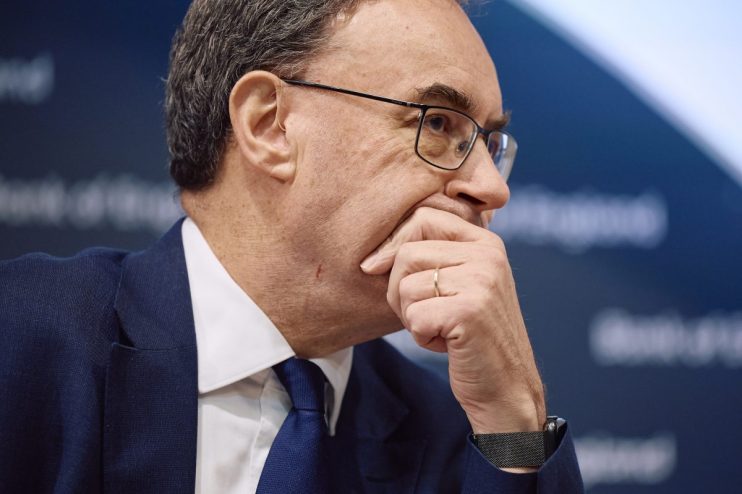
Andrew Bailey’s svelte profile has attracted much City chatter the past year. Some say the guv’nor has a strict exercise regime to lose weight; skeptics reckon it’s Ozempic.
Here’s my theory: Bailey is wearing so many different hats, the constant switch between them means the pounds are flying off. His CV is giving George Osborne a run for his money: Bank of England governor, Financial Policy Committee chair, Prudential Regulation Committee member, Monetary Policy Committee chair.
Last week he added another: Chair of the Financial Stability Board. Therefore, a new hat – this one a green alpine one, a nod to the FSB’s Basel headquarters.
All these roles culminated in dramatic scenes yesterday. In the afternoon, Bailey led a press conference to discuss a report on financial stability by the Financial Policy Committee. That same afternoon, he hot-footed it to another press conference, to discuss a separate report on financial stability by the Financial Stability Board.
Bewildered financial journalists scrambled to digest 140-odd pages of recommendations by two separate bodies covering similar ground, to figure out which questions to put to which Bailey in which room at which time. Inevitably they failed, and there was a lot of “let me take off my x hat and put on my y hat” from Bailey, mopping the sweat from his brow and counting the burnt calories.
Pantomime aside, there was much to glean from the lengthy reports. But perhaps the most salient detail was the one conspicuously missing: data. The two reports mention the word a combined 150 times, but mainly in reference to the data they lack – data they desperately need – rather than what they have.
“Unless you’ve got the data, you don’t have line of sight, it’s that simple,” as Bailey put it at one of the conferences (I forget which).
“Unless we can see the data and see the data across the market…I don’t think anyone can say they fully understand the vulnerabilities that are there.”
This uncertainty is especially acute in private markets, which have more than tripled in size globally over the past decade and now account for around 15 per cent of UK corporate debt.
Unlike stocks, valuations of private market assets are not mark-to-market and take place much more infrequently, while private funds often borrow against the assets at those valuations. That conflict of interest, combined with a relative opacity and what the Bank calls a “weakening in underwriting standards,” could pose problems.
In the event of a downturn, private funds may have to sell off assets at a discount to meet debt repayments, which could trigger falling asset values, and a downward spiral. But how likely is it?
The Bank says: “Further work is needed to address the significant data gaps that hinder the ability of financial stability authorities to understand how private markets might operate after a shock, and how stress within private markets might interact with the wider financial system and potentially disrupt the UK real economy financing.”
A less charitable reading: if private markets are on the brink of collapse, we haven’t got a scooby. Nor do we know what they’ll take down with them.
None of this means a meltdown is imminent. As Bailey noted, there is nothing inherently wrong with the expansion of private equity and credit. But getting a handle on the state of play, and pronto, feels important. Maybe the Bank needs a Data Unit for Financial Underlying Stability to make it happen – but who will chair? Depends how much space is left on the hat stand, because the FSB set up a new taskforce to assess where it needs more data — and you can guess who’s chairing that.
Takeaways from the OBR’s gloom
There are few more gloomy financial reports than the OBR’s on fiscal risks. Reading it brings even the most hardened government official to tears, let alone Rachel Reeves.
OBR chair Richard Hughes was blunt about the situation’s severity. The public finances are on an unsustainable path, he said, and it’s his job to get politicians to talk about it.
Take your pick of daunting prognoses offered up by the report: population ageing, birth rate declining, tax receipts sliding, debt levels soaring, climate catastrophe looming.
Two details stood out for me. One was the huge role that productivity will play in determining the fate of the British state. Unexpectedly high productivity growth could “substantially improve the outlook for public finances” over the coming decades. And lower than expected? Debt would reach 647 per cent of GDP. No, not a typo – we’d be bankrupt three times over.
Surely therefore, productivity should be the sole focus of government to get its finances in shape. AI could be a game changer, the OBR says, but that’s “highly uncertain.”
Another detail concerns the response to the scrapping of the non-dom regime. The OBR initially thought the move would bring in £13bn, but now? “Higher earners’ behavioural responses to tax changes are more uncertain and potentially higher than assumed in costings. A growing reliance on this small and mobile group of taxpayers therefore represents a fiscal risk.”
Which sounds an awful lot like “please, don’t even attempt a wealth tax.” Or as tax guru Dan Neidle put it this week: “We’re left with the false claim that Other People will always pay.”