Skip to content
Wednesday 29 July 2026London --:--Frankfurt --:--Zurich --:--
NewslettersSearchEN · DE
City PM

European business, markets and politics

FTSE 100
10,908.41
+0.34%
DAX
25,460.48
-0.01%
CAC 40
8,408.27
-0.60%
STOXX 50
6,248.84
-0.65%
  • Europe
  • Markets
  • Business
  • Economy
  • Technology
  • Politics
  • Opinion
More
GermanyFranceBankingAIEnergyFintechPropertyCapital Markets
  • Germany
  • France
  • Europe
  • Markets
  • Business
  • Economy
  • Technology
  • Politics
  • Opinion
  • DE
Thursday 17 October 2013 8:34 pm

Tate’s Klee exhibition is too much of a good thing

By: Express KCS

Add as a preferred source on Google

ART
PAUL KLEE: MAKING VISIBLE
Tate Modern | By Joseph Funnell
Two Stars

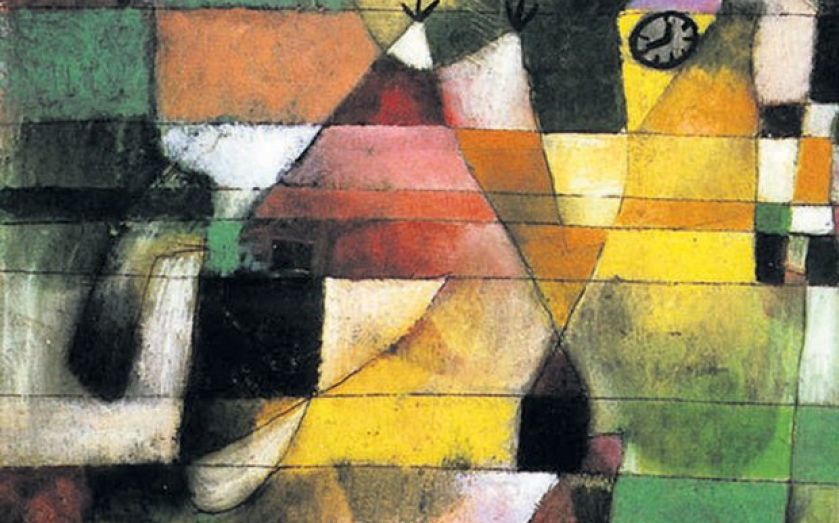
TATE Modern’s newest exhibition opened this week with a bold claim: that the German-Swiss painter Paul Klee was one of the most important artists of the 20th century. Convincing arguments can be made in that direction, but unfortunately in this instance, Klee’s art gets lost somewhere along the way.

Born in 1879 Klee’s career developed through some of the most exciting advances in modern art. His greatness can be historically linked to the artistic movements in which he moved. Early on, Klee was associated with German expressionism. But, unlike August Macke and Franz Marc, Klee survived the First World War and later taught at the Bauhaus.

This being said, Klee likes to flit between styles and there is a uniqueness to his work that makes him difficult to place in any one movement. Starting with his earliest works he conjures images between abstraction and representation in the vein of cubist predecessors.

At other times his cryptic allegories border on the free impulses of surrealism. His influence on tastes and standards for “naive” outsider art cannot be denied. But above all, it is his ability to realise his inner vision with emotional vividness that makes him great. Nevertheless, the Tate thinks a fixation on historical context is necessary to justify this greatness.

Upon entering we are bombarded with a room of texts, dates and quotes – a timeline that maps Klee’s life in tandem with political history. The majority of early works, which unfortunately dominate the show, are small and intimate – they get lost in Tate Modern’s cavernous rooms.

A solution seems to be to cram in as many works as possible, but this results in brilliant paintings being lost among ones that are merely good.

His best paintings, when you do find them, are mesmerising. Klee’s idiosyncratic “gradation” pieces achieve a sense of rhythm with a strange combination of depth and delicacy. A particularly strong body of work emerges around 1926 where fantastically intricate drawings of mountain views are shrouded in bright sprays of paint. Klee’s genius lies in his ability to create these miniature tableaux, and to draw the viewer into an imaginative world. Accompanying texts, however, too readily associate periods of creativity with market booms and Germany’s tense 20th century history.

The diversity of Klee’s work means there will be at least one piece that everyone loves – but the Tate shouldn’t try so hard to sell it to us all at once.

Share this article

  • Facebook
  • X
  • LinkedIn
  • WhatsApp
  • Email

Similarly tagged content:

Sections

  • Life&Style

Categories

  • Culture
  • Life&Style

Trending Articles

  • Big Four’s AIM exodus accelerates as mid-tier firms seize mandates

  • EY and London managing partner fined over £1.3m for audit failure

  • Lloyd’s of London allows staff to work from home as heatwave hits the capital

  • FTSE 100 firm agrees £5.7bn takeover in latest private equity swoop

  • Burnham backs plan to pump £1bn pension funds into start-ups

More from City PM

  • The Square Mile art gallery with amazing free exhibitions

    Life&Style
    Art enthusiasts view colorful abstract paintings and a unique yellow light sculpture at a Square Mile art gallery.
  • Tate & Lyle faces shareholder revolt over executive pay

    Retail
    Tate & Lyle logo, a global food ingredients supplier, on a corporate building.
  • FRC Chair-in-waiting grilled over holding seven other board roles

    Regulation
    Modern office space with open seating and collaborative work areas reflecting FRCs innovative business environment
  • ViiV Healthcare to present phase IIIb data comparing Dovato with Biktarvy in treatment-naïve adults; alongside INSTI-powered long-acting injectable innovation at AIDS 2026

    Business Wire
  • Inside the trippy French vineyard owned by ousted Claridge’s billionaire 

    Life&Style
    Former Claridges billionaires French vineyard with lush grapevines and scenic landscape in a business feature.
  • Why Guildhall Art Gallery and Roman Amphitheatre deserves a Toast Award

    Toast the City
    Guildhall Art Gallery interior, showcasing historic architecture and diverse art collections.
  • Fernie Cultural Universe: Where Eastern Myths Meet European Animation Soul Within a Medieval Castle

    Business Wire
  • Takeovers aren’t the reason the London Stock Exchange is shrinking

    Opinion
    Canada skyline featuring iconic skyscrapers and modern architecture against a clear blue sky
CityPM

Independent European business, markets and political news for decision-makers.

Morning Briefing

Europe

  • Germany
  • France
  • Europe
  • UK & Ireland

Business

  • Markets
  • Banking
  • Technology
  • Energy
  • Property
  • Fintech

Editorial

  • Opinion
  • Editorial Policy
  • Corrections
  • Contact

Company

  • About City PM
  • Privacy Policy
  • Terms of Use
  • Cookie Policy
© 2026 City PM Ltd · Published by CityPM Media, Bahnhofstrasse 65, 8001 Zürich, Switzerland
Privacy · Terms · Cookies · Facebook