
Sweeney should get RFU bonus if he earned it. He didn’t, so shouldn’t

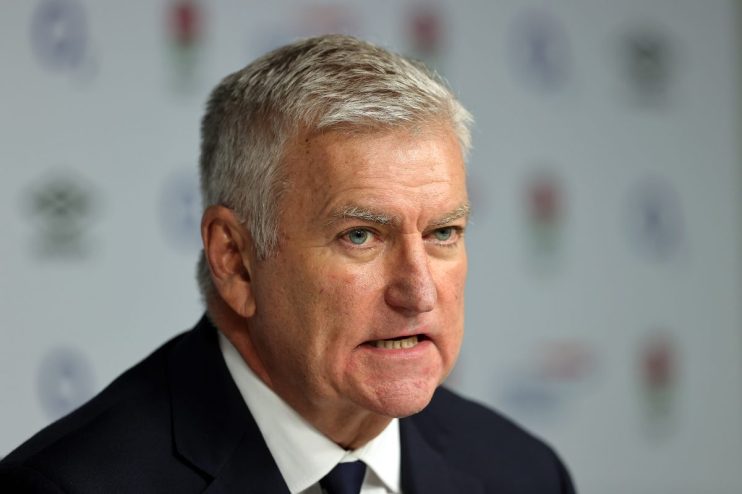
England Rugby’s CEO Bill Sweeney should get a hefty pay package, but only if the numbers add up. They don’t, so he shouldn’t, argues Matt Hardy
Should the chief executive of a major organisation receive a bonus for the work they do? For some it will depend on where they stand on the morality of bonuses, and for others it will depend more on the performance of the bigwig in question.
Bonuses can be mandated by a company to incentivise performance, to stop rivals poaching talent and to offer share and stakeholders confidence.
But what happens when a chief executive is handed a bonus despite their organisation being subject to mammoth losses and increasing outside pressure? Well that’s exactly what Bill Sweeney and the Rugby Football Union are grappling with at the moment.
England Rugby’s governing body has been forced into convening a special general meeting next month, which will present a resolution for the deposition of Sweeney, who was previously in charge of the British Olympic Association.
Lack of confidence
It relates to a lack of confidence in the boss to guide rugby union in England, and especially below the Premiership, through turbulent financial circumstances.
But the most recent RFU accounts showed operating losses of £37.9m, and a bonus of more than £350,000 for its chief executive, taking his package to £1.1m.
The governing body cites the lack of autumn internationals due to the 2023 Rugby World Cup as a major factor, yet the bonus was paid. Furthermore the RFU said Sweeney’s LTIP (long-term incentive plan) recognised a “voluntary reduction in remuneration” during the pandemic, adding that “the targets included revenue growth, cost control and underlying profit, stretch targets were also in place in relation to other measures including performance and participation”.
For note, the previous biggest loss in RFU history – £30.9m in 2018 – came shortly after former chief executive Steve Brown stepped down from post. Brown denied the two events were related.
But should Sweeney ever have taken the bonus, or was it on the Rugby Football Union to have usable mechanisms in place in which to deny their boss a bonus in a year they announced record operational losses?
RFU and Sweeney criticised
When MPs criticised the Rugby Football Union for “sky-high bonuses” recently amid an uncertain future for the sport, the sport’s governing body hit back, saying that despite revenue losses of £150m due to the pandemic, the “RFU received no government loans and remains in a strong financial position”.
Except that it did, to distribute to the community game in the form of loans and grants, to the tune of £40m. At the time Sweeney said: “With 85 per cent of our income coming from hosting international matches at Twickenham, our revenues have reduced by around £140m… we are also incredibly grateful for the £1.1m funding for the Women’s elite game.”
Some critics have pointed to small oversights, too, that should have been picked up with the RFU’s investigators after a recent report found a lack of consultation of Sweeney’s bonus despite it being “appropriate”. Were they, for example, prepared for the pandemic?
The RFU annual report for 2018/19 stated that the body has “relevant insurance contracts in place to insure against stadium related losses or loss of revenue”, yet the annual report for the first quarter of 2019-20 states it has “relevant insurance contracts in place to insure against lost revenue in the event that the stadium cannot host a match… but excludes pandemics”.
Minor but important
These things are minor but they appear to be oversights, and the buck stops with the chief executive.
Mega firms have mega bonuses, that’s often a certainty. They ensure talent retention and an incentive to push an organisation forward.
Most banks, for example, pay bonuses and LTIPs to reward performance. But they’re not legally required to.
England should have had a mechanism in place to cancel Sweeney’s bonus – which some say is equivalent to the RFU’s annual funding for a Championship club. And if that mechanism was in fact built into Sweeney’s LTIP plan then it doesn’t take a genius to assess the numbers and conclude that it should have been activated.
Rugby was in a financial hole during the pandemic, and those at the top should have led by example. They didn’t, it cost the former chairman Tom Ilube his job, and Sweeney faces the chopping block next.