
Bank of England stress tests: There’s still an elephant in the room

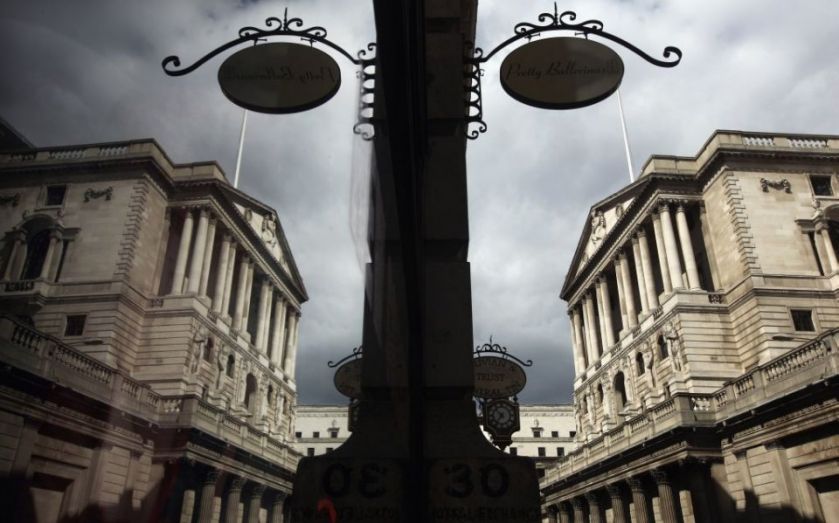
With the Bank of England releasing the results of its stress tests today, banks’ financial strength is still a major concern for markets, regulators and policymakers. The second set of stress-testing results in just a two-month period, following the comprehensive assessment issued by the European Banking Authority and European Central Bank in October, the latest tests have looked at whether banks have enough capital to withstand a future economic shock.
Today’s results will give a good indication of banks’ stability. But there has been an elephant in the room since the start of the financial crisis: banks’ published capital positions may not be as reliable as they should be.
Capital protects bank depositors and creditors from losses, and the capital ratio is the most important indicator of a bank’s financial strength. Yet the risk-weighted asset (RWA) calculations that drive this ratio are poorly understood, inconsistently applied, and virtually impossible to compare between banks. While the stress tests included some quality checks on RWA calculations, there may be room for more regular or more detailed reviews.
RWAs are a measure of the risks that a bank has on its balance sheet, and the potential losses it may face. The riskier an asset, the higher its RWA value should be. But calculating an asset’s risk weight is highly subjective and complex. And the capital rules allow the most sophisticated banks to use their own models, based on their own data and assumptions, to calculate their own capital requirements. Unlike a bank’s financial statements, capital calculations are not audited.
These numbers are important. They are probably looked at more by investors, creditors and bank management than any measure. Regulatory exercises have shown that different banks have widely different RWA valuations for similar hypothetical assets. Worse, recent errors in capital calculations by Bank of America and in stress tests by RBS show the potential of capital numbers to move the market, which can affect the wider economy.
This issue must be addressed. Banks are increasingly issuing contingent convertible (or “bail-in”) debt, with triggers for converting debt into equity based on the capital ratio. This increases the pressure for the calculation of ratios to be robust. Creditors could lose huge sums if the trigger is pulled. New regulations such as the Senior Managers Regime increase the pressure on senior bankers to ensure they are confident about this information.
This is why we have been discussing with the Prudential Regulation Authority and audit firms the potential for assurance on RWAs. Early in the crisis, we raised the fact that bank capital ratios are not audited. At that time, we found little demand from investors, analysts or other stakeholders for such assurance, as they assumed that capital information was accurate. But we are now seeing less and less trust in capital numbers from investors, and more interest in assurance. Assurance cannot remove subjectivity from capital rules, but it can improve the quality of controls around their operation and increase confidence in the reported numbers. We will be consulting on and developing a model for assurance on RWAs in early 2015 to meet growing market demand.
Regulators, investors, creditors and banks need to have confidence that capital calculations are robust. The public and depositors expect banks to get their numbers right. We are concerned that capital measures are not reliable enough and undermine trust in banks. If we are to restore trust in the financial system, we must sort this.