
Stiglitz’s 2020 vision: Left-wing economist makes a pitch for the soul of the Democrats


Who will take on Donald Trump in next year’s battle for the White House?
At the time of writing, an absurdly long list of Democratic hopefuls is dominated by Joe Biden, the septuagenarian former vice president who currently enjoys a huge lead in the opinion polls.
Read more: President Trump endorses Boris Johnson as next PM
Despite his early pace, however, it would be naive to assume that Biden’s relatively centrist following in the Democratic party will get their way.
Indeed, it may be that Biden is not even the most popular 76-year-old Joe among Democrat-leaning activists.
Professor Joseph Stiglitz, Nobel prizewinner and doyen of the American left, has published his latest book to coincide with the fight, not just for the White House, but for the soul of the Democratic party.
Flock to the centre ground, so wildly abandoned by arguably the most divisive president in US history, or fight fire with fire in a push to the radical left?
Stiglitz nailed his colours to the mast many years ago, and the sentiment behind his latest publication will surprise no one.
The centre ground is dead
“We’ve tried centrist politics for more than 25 years and centrist politics have gotten us into the mess that we’ve had, and that is the theme that I emphasise,” Stiglitz told City PM during a recent interview.
“The book’s implicit argument, or maybe it’s explicit, is that the kind of tweaking, the minor reforms – a little bit more education here, a little tax reform there – are not likely to suffice to address the maladies in which we find ourselves.”
People, Power and Profits is a manifesto for Democratic hardliners, pouncing on the popularity of Alexandria Ocasio-Cortez (known affectionately as AOC), Bernie Sanders and Elizabeth Warren to encourage the party further and further to the left.
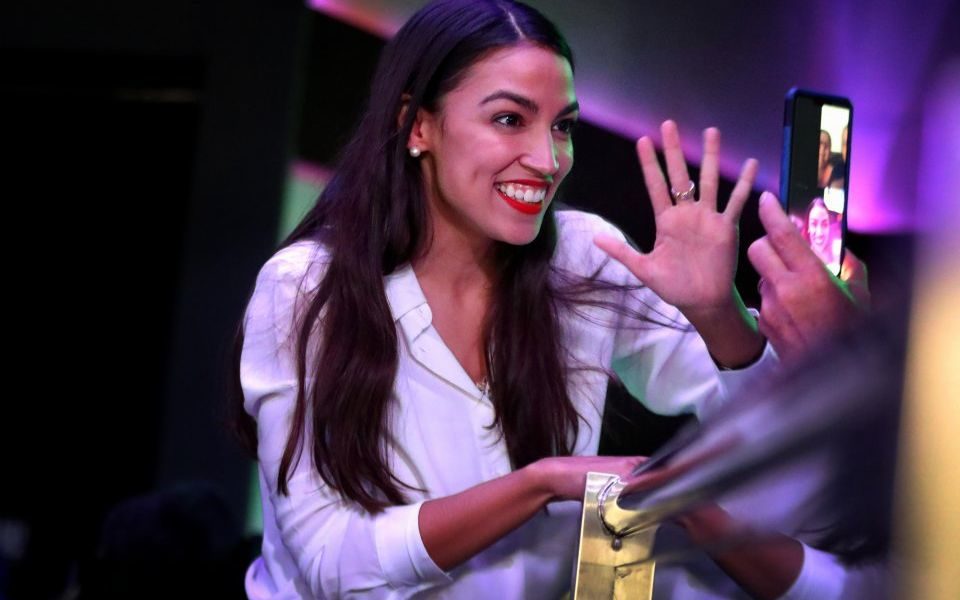
Asked for whom his book is written, Stiglitz says: “There are two audiences. One of them is obviously the politicians who are running for office, the political activists… I wanted to give them an analysis with which they can understand why things have not worked as well, and then examples of particular solutions.”
He adds: “And then of course the broader objective is reaching the broader citizenry, many of whom are concerned or certainly should be concerned about the increase in inequality, the slowing of growth, and the political discontent to which it’s all given rise.”
With every opinion article, every book, and every interview, the former World Bank economist cements his position as a bastion of the left, including a generation of young men and women on both sides of the Atlantic who find themselves attracted to socialist thinking.
Could Corbynism spread to the US?
For supporters of Sanders, AOC and on these shores Jeremy Corbyn, Stiglitz’s CV provides an intellectual justification for a platform of “curbing market power, reframing globalisation [and] tempering financial markets,” to borrow the author’s own words.
Read more: Corbyn’s Labour shows the dangers of nationalisation
Asked about Corbynism itself – and the Labour party’s support for sweeping nationalisations, a huge state bank and plans to radically change the Bank of England’s remit – Stiglitz admits his thinking is “broadly in line” with that of the Labour party and its firebrand chancellor John McDonnell.
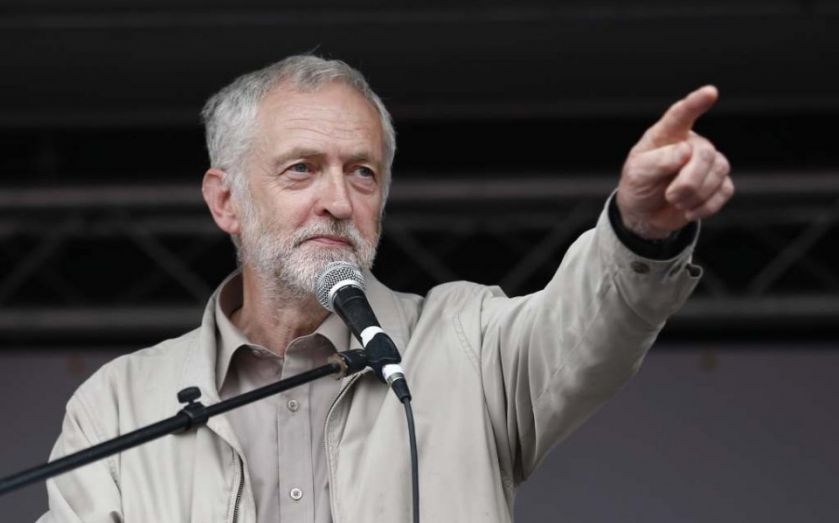
But Stiglitz insists today’s objectives are “very different from the socialist agenda of 45 to 50 years ago or more”.
“They use language like nationalising the railroads which is a throwback to the debates before 1980, and one of the things I’ve said explicitly is that no one in America is talking about the ownership of the basic means of production,” Stiglitz says.
However, a vocal advocate of state banks (“not really a revolutionary idea”), Stiglitz is loath to criticise the proposed reshaping of central banks or even so-called “People’s QE”, a policy previously backed by Corbyn in which the Bank of England would create money to directly fund government spending.
“Central banks have since 2008 taken on a very large but hidden fiscal role,” he says.
“Let me put it like this, central banks are often proscribed from lending to government but if you ask what is actually going on, government has borrowed large amounts of money, issued bonds, and the central bank has bought those bonds in the secondary market – that is no different than if they had lent actually to the government directly, that’s a distinction without a difference, it’s what we’ve been doing.”
He continues: “When the ECB and the Federal Reserve lent money to particular corporations, they didn’t call it lending, they called it buying bonds from particular corporations – that’s lending.
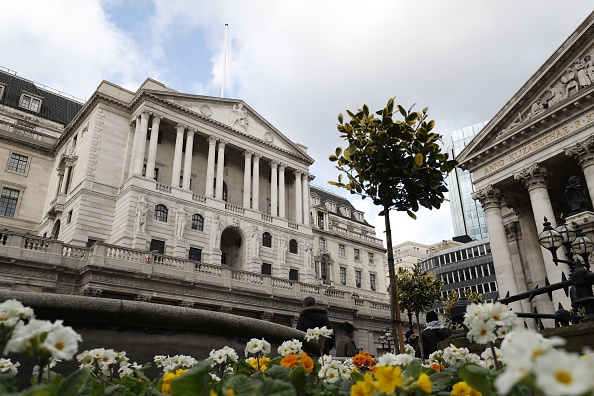
“If they’re going to be engaged in doing that very kind of lending to particular companies maybe we ought to think about the principles under which that is conducted.”
Such opinions may not come as a huge surprise in the era of modern monetary theory (a viewpoint seemingly endorsed by AOC).
Nonetheless they are likely to alarm readers from more centrist, conservative or liberal backgrounds, as will Stiglitz’s relentless broadsides against the mechanics of the financial sector and those who work within it.
Lacking momentum on the financial crisis
Many City workers, one suspects, would welcome an intellectual, thought-provoking challenge to their industry.
However, they will not find it within the pages of People, Power and Profits, a book that is ultimately no more original than its name.
The book’s narrative surrounding the financial crisis is tired and predictable. Stiglitz blames “unfettered markets” and “bankers’ unbridled pursuit of their self-interest” for the crunch and ensuing crash and presents a chapter that resembles campaign literature from the student wing of Corbynite pressure group Momentum.
“Millions lost their homes and jobs as the bankers who had brought on all of this basked in the millions in bonuses,” he writes.
Referring to emergency summits between government officials, regulators and banks at the height of the panic, Stiglitz complains: “Ordinary homeowners who were struggling were not at the [discussion] table; the big financial companies were.”
This is not, unfortunately, the only line that brings to mind the infamous scene from Team America in which Tim Robbins mulls the evils of corporations sitting in their corporation buildings being “all corporationy and making money.”
Read more: How we can learn from past mistakes to avoid another financial crash
Justifiable complaints about the bailing out of large financial companies with taxpayer money – a significant blight on the otherwise impressive record of the mixed economy – are not accompanied with any detailed analysis of the regulatory and structural flaws that led to such interventions becoming necessary.
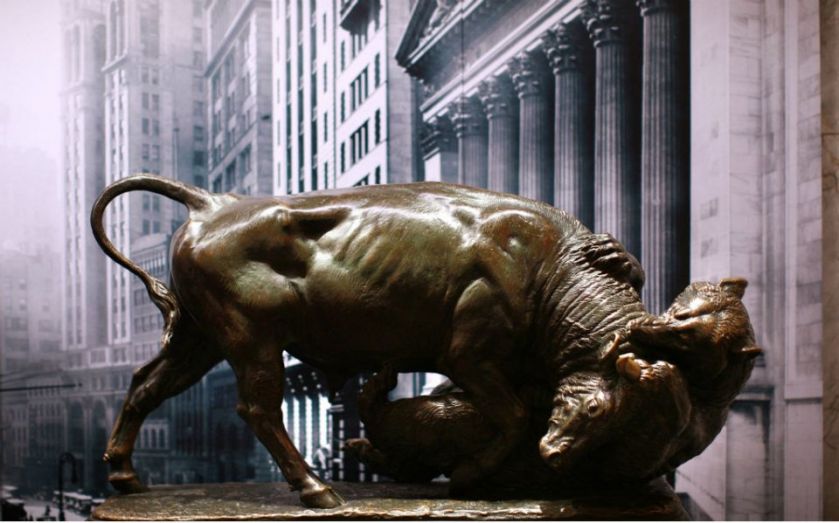
In other words, why were bail-ins not possible? Which laws and mechanisms inflamed moral hazard and in which areas of the sector? To what extent did US housing policy exacerbate the subprime crisis and what role did the government-sponsored Fannie Mae and Freddie Mac play?
Over a decade later, bailouts remain a prospect (certainly in Europe) and regulators are still bashing their heads together to ensure that big financial companies can be wound up without prompting a systemic shock.
Stiglitz’s solution is simply for large banks to be forcibly broken up by bigger, all-encompassing regulators that would also outlaw a broad range of modern investment banking activities that he considers to be needlessly complex.
A detailed analysis, followed by targeted interventions and reforms, would be seen as the kind of fiddly centrism that Stiglitz rejects.
It is much easier to perpetuate the idea that the crash was caused by unfettered markets (“As the 2008 financial crisis showed, markets on their own are not stable”) and thus propose an entirely new system tightly controlled by the state.
Trumping Donald at his own game
The book’s political analysis is equally blunt and strident.
Despite conceding to the significant differences between “revolutionary” Trump and “conservative” Reagan, Stiglitz invests a lot of effort into pushing them on to the same trajectory of the American right and its “mistaken faith in trickle down economics”.
Meanwhile, dismissing the suitability of GDP as a measure of growth, Stiglitz doubles-down on his belief that the US suffers not just from high levels of inequality (a fact consistently confirmed by numerous data sets) but also widespread economic stagnation and a lack of innovation.
These claims are harder to stack up in a country that still produces the world’s most famous and successful startups.
Nonetheless, the blame for America’s problems lies exclusively with the so-called neoliberal economic consensus which Stiglitz wishes to supersede with the kind of socialist agenda currently promoted by the Democratic left.
Considering the number of left-wing radicals hoping to take on Trump next year and “why the slate is so slanted in that direction”, Stiglitz insists “it’s where Americans are”, citing popular support for a higher minimum wage and other interventionist policies.
We will discover, in the near future, to what extent Democratic activists and the wider electorate are prepared to back left-wing candidates and their radical agendas.
Read more: Trump’s bluster shows we need to rethink global trade
With his latest book Stiglitz is preaching to his not-inconsiderable choir while trying to nudge some undecideds away from the likes of Biden and into the arms of Sanders, Warren and co.
It is a pitch to the left, reiterating a range of existing views, and will be celebrated in familiar circles. People, Power and Profits is already popular among Stiglitz’s left-wing fans. For readers of a different persuasion, it contains little to change one’s mind.