
Starmer’s steel tariffs are as hare-brained as Trump’s

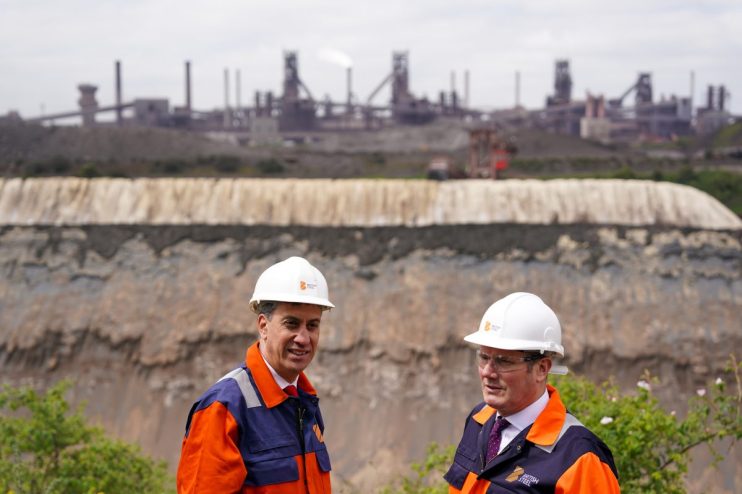
Contrary to supporting the industry, Starmer’s steel tariffs will push manufacturing offshore and likely invite retaliatory EU action, writes Andrew Griffith
The road to failure is paved with good intentions.
As ministers were drawing up their plans to fully nationalise British Steel, they announced a slate of Trump-style tariffs to tilt the balance in favour of their newly owned business and against the rest of British industry. The result of these tariffs may be to cosset and prop up British Steel, but they will bring with them the risk of the further loss of advanced manufacturing capacity across Britain.
From 1 July, steel import quotas will be cut by 60 per cent while tariffs on any steel imported above those quotas will double to 50 per cent. The same widely criticised rate that Trump is charging on steel imports into the US.
This is nothing short of a disaster for our manufacturing industry and is hurting steelmakers too.
A modern economy cannot make everything at home
The UK does import steel, particularly specialist grades and alloys which are not manufactured at all or in the particular volumes or sizes required.
Contrary to popular prejudice, only a small share of this comes from China. The vast majority of our steel imports are from our NATO allies, most of which comes from the EU and some of which comes from Turkey.
Because of what British engineering then makes and exports with that steel, this is very much a good thing.
A modern economy cannot make everything at home. The steel we import is often lower priced steel that Britain’s ruinously high energy prices don’t enable us to make here.
Nothing the government plans on energy will change that for the better. That steel is often reprocessed by specialist firms in the UK into high value grades that are used in manufacturing or, along with £4.8bn worth of steel, exported to the rest of the world.
If Britain is to be a rich country, with high quality manufacturing jobs, it is essential that we make products that are higher up the value chain rather than overpaying for input costs. Yet by increasing the price of low-value steel, that is precisely what the government has planned.
Steel tariffs will punish our EU and NATO allies
Advanced manufacturing, automotive, aerospace and defence are already worried. High profile suppliers to Formula One, AUKUS and the Tempest fighter jet project may all be impacted.
Already creaking under the burden of high-energy costs and a tax on jobs, I have spoken to many that are now considering moving manufacturing offshore to avoid paying these tariffs. This would be a scandalous betrayal of our manufacturing sectors.
Countless smaller steel producers in the UK, already choked by energy costs and taxes, will also be forced to pay these tariffs on the lower-value grades they import. The very sector the government is claiming to protect may end up being amongst the hardest hit.
To make matters worse, a government that claims to want a closer relationship with Europe is now inviting retaliatory tariffs.
While I welcome that ministers have realised the freedoms of an independent trade policy which Brexit brings, the idea of using it to place tariffs on our NATO allies, and incurring more tariffs for British exporters in return, is nothing short of farcical.
There are already credible claims that these tariffs will even apply to types of steel which the UK does not currently make and may not make for years.
Soviet planning will not bring growth
This is an attempt by ministers to stimulate demand and get people to set up production. But as anyone with experience of manufacturing will know, setting up a whole new production line can take years. In the meantime, firms may close or simply ship tooling and jobs abroad.
For those who may have placed orders many years in advance and are now locked into contractual agreements around which they have planned, these tariffs may essentially apply retroactively. The cost of that step will undoubtedly be to reduce trust in any future promises the government makes.
The steel industry and its supply chain is complicated and international. The fact that ministers can’t fully understand all of it is not surprising. But the fact that they would then choose to attempt to plan it like a Soviet committee planning a harvest, with no humility about the limits of their knowledge, is unforgivable. As politicians we have a responsibility to know the limits of what the government can do. Centrally planning and running the steel sector from Whitehall is always going to be a disaster.
Conservatives offer a better way
Conservatives will not tolerate the deindustrialisation of Britain.
Under Kemi’s leadership we have announced plans to scrap net zero, slash taxes on energy, and once again drill for oil and gas in the North Sea. That is how you rebuild British industry.
Earlier this week, colleagues and I wrote to ministers asking them urgently to reconsider these tariffs. There is some hope. Once we raised the issue, even Labour MPs crawled out of the woodwork too to admit, yes, they also had similar issues in their constituencies. There is time for ministers to act. Just.
If the government does not change course, the victims will be the hundreds of thousands of people working with steel in British manufacturing and the remainder of the steel sector. They are now having their jobs pitted against the 2,700 at British Steel.
Andrew Griffith is shadow secretary of state for business and trade