
Starmer’s labour market reforms will put people out of work

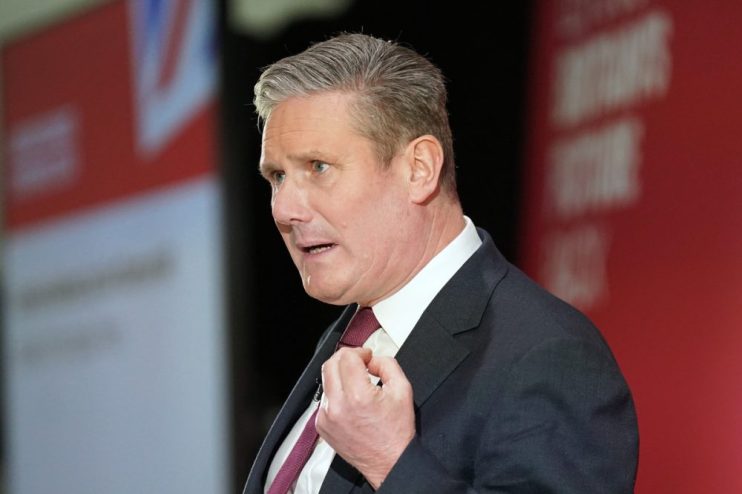
Even in watered-down form, Keir Starmer’s plans to expand workers’ rights will push up the cost of hiring people and push some people out of their jobs – but is that a good thing? Asks Paul Ormerod
Keir Starmer’s Labour Party is frequently criticised for the lack of detail around most of its policy pronouncements.
One area where this is far less justified is the labour market, where a whole raft of proposals has been put forward.
The initial set included ending the two year period before full employment rights kick in, banning zero hours contracts, outlawing the practice of fire-and-rehire, extending parental leave, encouraging flexible working, regulating work in the gig economy and the extension of collective bargaining rights.
True to form, Labour is signalling that some of these will be watered down or even removed and yesterday held talks with trade unions billed as a ‘showdown’ over the proposals.
But even if the original set of proposals is altered, there is much in them that Labour does seem pretty unequivocally committed to, amounting to substantial alterations to labour market laws and regulations.
Their impact will be to increase the cost to a company of taking someone on.
In the case of parental leave, this is obvious. If a new parent gets more paid time off, their effective wage has risen. Making full employment rights effective as soon as someone takes up a new job also raises the price of labour. At present, if a new member of staff proves unsatisfactory in practice, no matter how well the interview went, he or she can essentially be dismissed without the company incurring a cost. Labour’s proposal means, for example, that firms will have to put more resources into trying to avoid making such hiring mistakes. Employing someone will therefore become more expensive.
This effective increase in the price of labour has been the basis of most of the attacks on Labour’s proposals.
The standard economic textbooks suggest that if the price of a product rises, the demand for it will fall. The logic follows that Labour’s plans will reduce employment.
But there is always a crucial qualifying point to the textbooks which is often overlooked. Namely, “other things being equal”.
Just before the First World War, one of the most successful entrepreneurs in the entire history of capitalism took the view that other things were not equal when he decided to offer what was at the time a very high wage.
In January 1914, Henry Ford famously introduced a minimum wage of five dollars a day in his new car factories. He took the view that this would reduce absenteeism and reduce labour turnover. So he would probably end up saving money.
In modern times, a detailed analysis of British labour market data by the distinguished economists Phillipe Aghion and Richard Blundell showed that the same phenomenon still characterises innovative firms. Compared to non-innovative ones, they offer a wage premium at all levels of skill and responsibility, except at the very highest. The reasons will be similar to those of Henry Ford. A contented workforce pays dividends.
An increase in the price of labour can therefore encourage companies to make better, more productive use of their workforce.
Of course, not all firms either want to or are capable of reacting in this way. They may even be forced out of business altogether by a rise in the cost of employment.
But even this is not always a concern. For example, James May, the TV presenter and publican, welcomed the recent news that pub closures had reached a decade-high level on the grounds that this was just a “cull” of bad pubs which offered poor value to the customer.
Labour’s plans certainly run the risk that firms will create fewer jobs as a result. But against that, companies will have an incentive to make more productive use of their workforce. Without doubt, something needs to be done to improve our abysmal productivity record, so it might be a gamble worth taking.
Paul Ormerod is an economist at Volterra Partners LLP, an Honorary Professor at the Alliance Business School at the University of Manchester and author of Against the Grain: Insights of an Economic Contrarian, published by the IEA in conjunction with City PM