
Stamp of approval: Has the Chinese economic slowdown licked the value of philatelic investments?

When share prices are volatile, fine wine, art and other tangible assets offer the bittersweet assurance that your investment will only turn to dust if exposed to excessive sunlight or extremes in temperature.
Interest in philatelic investment, or stamp collecting, peaked after the financial crisis as investors turned to alternative asset classes to diversify their portfolios. Demand reached its height around 2011, bolstered by a growing Chinese middle class more open to alternative investments than their American and European counterparts. But speculative interest has waned with the slowing growth of Asia’s largest economy. Last year, Stanley Gibbons, a major stamp dealer and auction house, suspended the launch of a rare stamp fund.
“The underlying assets continue to show growth,” insists Keith Heddle, investment director at Stanley Gibbons. “Stamps are a stable, tangible asset class with low volatility, driven by supply and demand. But the real beauty is that they are uncorrelated, so they are ideal for investors with a long-term strategy who want to take a more defensive position.”
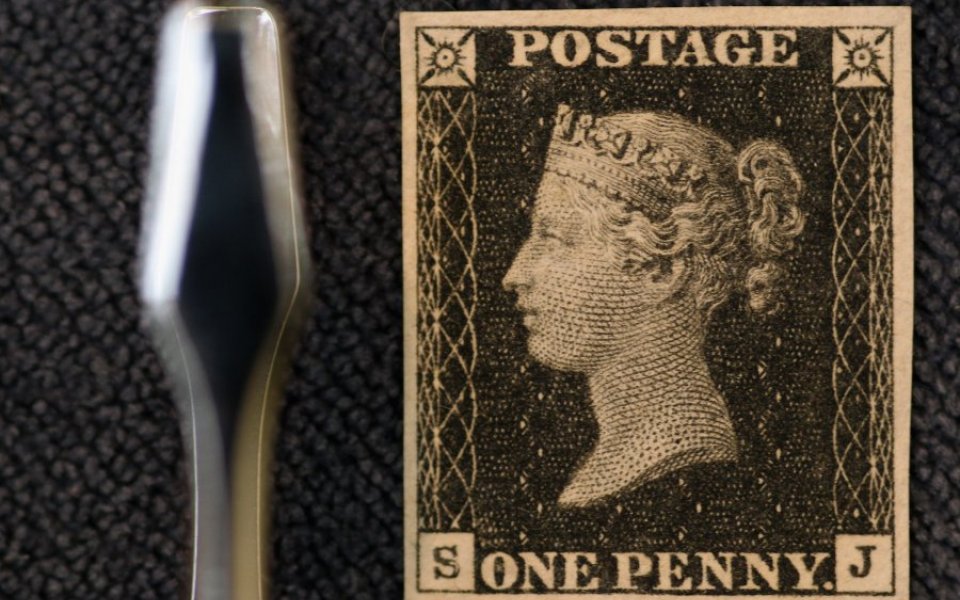
According to Heddle, mint condition Penny Blacks – the world’s first adhesive postage stamps – have enjoyed compound annual growth of 10 to 11 per cent every year for a decade. “Chinese Dragons have increased by 20 per cent in the same period. The Tyrian Plum was issued in 1910 and then recalled, meaning that there are only a few in existence. That has been showing double-digit growth in recent years and is worth around £115,000.”
There are five criteria to consider when picking stamps for a good return: authenticity, condition, rarity, price, and liquidity. Unused specimens fetch higher prices, and designs which have been recalled are highly sought after. The Prussian Blue variety of the 1935 King George V Silver Jubilee stamp was only produced when the printer used the wrong shade of ink for just 480 examples. Unused, a Prussian Blue could command £18,000. Its cousin, the ubiquitous Royal Blue version, which George V approved, is worth around £10.
Typically, an investor will choose a selection of stamps from Britain – the first country to issue them and the backbone of any portfolio – the Commonwealth and, increasingly, China. “The market for Chinese rare stamps has been on a bull run for the last 20 years, and remains strong. A blend of historical assets from these areas would grow at different speeds, depending on the length of the investor’s time horizon,” says Heddle.
For those thinking seriously about investing, portfolios with Stanley Gibbons start at £15,000, and include free storage, insurance and annual asset valuations. Holders can sell the assets themselves, or through Stanley Gibbons’s auction business, paying a commission on the profit made. Classed as chattels, stamps are subject to capital gains tax. But UK investors tend to trade one stamp out of their portfolio at a time to avoid exceeding the tax-free annual limit.
“If you’re going to do it yourself, you need a degree of expertise or a very good adviser,” says Heddle. The gum on the back can be dated to assess the authenticity of a stamp, but forgeries are common, and old printing presses can be used to produce convincing duplicates. “One forger in Sri Lanka is so good that he even signs his work. A secondary market is springing up around his imitations, which are increasing in value. It’s completely bonkers.”