
Small boats deal shows Labour’s technocrats have no clue what they’re doing

Labour positioned itself as a party of technocrats, but the small boats deal shows they have no clue what they’re doing, writes Eliot Wilson
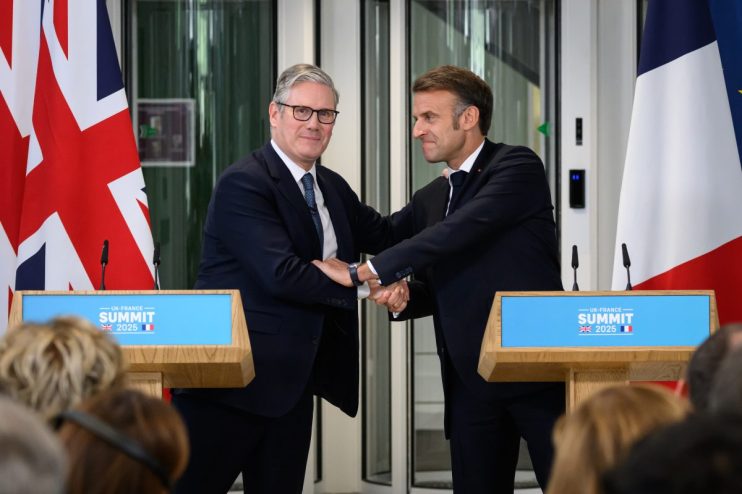
Last week, the Agreement on the Prevention of Dangerous Journeys, concluded between the UK and France in July, came into force. It is the government’s latest attempt to tackle the number of migrants crossing the English Channel in small boats, which has become talismanic in the debate over immigration.
The agreement states that those arriving in small boats who “do not or no longer, fulfil the conditions for entry to, presence in or residence in the territory of the United Kingdom” will be returned to France as quickly as possible. In return, the UK will admit “regularly balanced” numbers of asylum seekers deemed to have stronger claims. Our government will pay for both groups, those being returned to France and those being admitted.
On its own, this one-in, one-out agreement will have no effect on overall net migration, yet Britain is picking up the tab for the whole process. The home secretary, Yvette Cooper, refused to say how many people she expected to be involved, but privately officials are expecting it to start at around 50 a week.
For context, 25,000 people arrived in Britain in small boats in the first half of 2025 – roughly 1,000 a week. That is a record high, despite Sir Keir Starmer’s tough-guy pledges to “smash the gangs”, and there is little reason to think the new agreement will make a significant difference.
Small boats deal is entirely inadequate
Clearly this is an entirely inadequate response to the Channel crisis: five per cent of current numbers of illegal migrants, who are themselves only five per cent of overall immigration. The idea that this will move the dial on an issue which is now regularly cited as one of the public’s biggest concerns is positively outlandish.
But it is also a patently and laughably poor deal for Britain. It bears comparison with paying Mauritius billions of pounds to induce it to accept sovereignty of the British Indian Ocean Territory, or in domestic terms awarding huge, above-inflation public sector pay deals with no conditions attached. I sometimes wonder whether civil servants now check that the Prime Minister still has his loose change, watch and shoelaces when he returns from the negotiating table.
This is more important than just basic incompetence on the government’s part. Labour’s 2024 election manifesto had been stripped of any commitments and ambitions which might alarm voters and projected an air of “safety first”: dull, yes, and uninspiring, but there was a plausible argument that stolid predictability was an attractive electoral antidote to the febrility of the closing years of the Conservative government.
Starmer struck a similar tone in his first speech outside 10 Downing Street. He talked about his intention to “end the era of noisy performance, tread more lightly on your lives”, while supporters celebrated that “the grown-ups are back in the room”. With the Prime Minister boasting that his administration was “unburdened by doctrine”, there was a strong whiff of a regime of technocrats, reinforced by appointments like James Timpson as prisons minister and Peter Hendy to oversee rail policy.
Labour’s attempt at technocracy has failed
I have always found technocracy an uninspiring creed, just another face of the big-tent managerialism into which New Labour strayed. It has one indispensable precondition: competence. Voters will forgive boring, blank-faced politicians with the emotional connection of an early sat-nav so long as they are capable and effective. Labour is proving again and again that it is neither of those things, as the chancellor of the Exchequer, Rachel Reeves, faces the prospect of raising £40bn in this autumn’s Budget. Suddenly a £20bn black hole seems a distant luxury.
Every opinion poll shows the damage this is doing to the government. It struggles to rise above the low 20s, Starmer’s personal favourability has dropped below -40 and some polls suggest three-quarters of voters think “things are getting worse”.
Worse than Labour’s woes is the damage this is doing to the very idea of serious politics. Bitter disillusionment reinforces in voters a kind of desperate recklessness, a feeling that if neither traditional party of government is able to be competent and achieve its objectives, then there is nothing to be lost by taking a chance on a raucous carny barker like Nigel Farage. What do the details of policy matter when you share an inchoate sense of anger and grievance? After all, what’s the worst that can happen?
It can always get worse. The yawning gap between Labour’s pre-election rhetoric and its performance in government was not unforeseeable, but it is deepening a widespread malaise and disillusionment. Britain has not passed a point of no return, but when you look at ministers, they seem lost and helpless. That absence of direction, and emerging pattern of getting things badly wrong, push voters further towards glib, back-of-a-fag-packet bonhomie, instead of the hard intellectual yards we are going to need.
Eliot Wilson is a writer, commentator and contributing editor at Defence On The Brink