

Share and share alike: electronically?

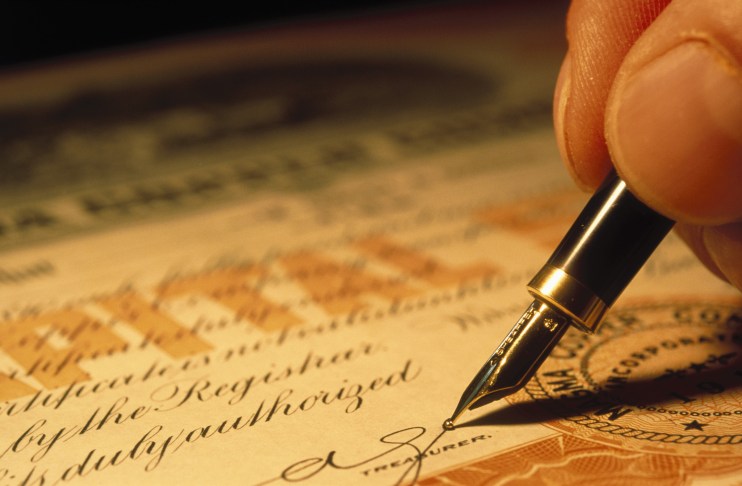
Where – if you’re lucky enough to own shares – do you store the paperwork? A drawer? The attic? Share certificates – possessed by millions of Britons – and dividend cheques seem on a path becoming obsolete.
A trend towards digital delivery of shareholder-related communications means that the era of private investors filing away their written proof of part-ownership of a company and, in the case of dividend cheques (share of company profits), enjoying ‘envelope open’ moments could increasingly be a thing of the past.
As with most analogue-to-digital journeys, it’s not been an entirely smooth ride – with some way to go yet. But the digital turbo-boost triggered by the coronavirus pandemic is likely to nudge things along, as well as a process known as dematerialisation. This is the move from paper share certificates to electronic format, with – crucially – the shares being held by an intermediary.
Cheque-ing out of popularity
“Hard-copy share certificates and dividend cheques are unquestionably on the way out,” says Mark Bullen, managing director for share registration services at EQ, which managed £35bn of dividend payments last year.
The company, known as Equiniti until a recent rebrand, says that 46% of shareholders receive dividends by cheque, with the rest either being paid by bank transfer, being reinvested or a combination of both. Clients that have moved to chequeless dividends over the past couple of years include Marks & Spencer, Smiths Group and GSK, while those planning to, include Old Mutual, Iberdrola and Segro.
“In the past two years we have seen more than 700,000 cheques taken out of the process by clients moving to digital payments. This reduces cost to the company, and ultimately its shareholders, and reduces the risk of fees as a result of lost certificates and reissued dividend cheques and the shareholder experiencing delayed payment value,” says Bullen.
Reassurance and rights all-important
“Most people – including me – like the system whereby the company pays the dividend into your bank account,” Peter Parry from the UK Shareholders’ Association tells City PM. “It is relatively safe, there’s no trip to the bank to pay in a cheque, and so on. The companies hate sending out dividend cheques – they get lost in the post or the recipients lose them or forget to pay them in and then want them re-issued. Surprisingly, there are a few people who still like receiving a cheque – they say it gives them more control. But when you ask a company to pay your cheque into your bank you get a paper (or electronic) tax certificate showing how much dividend was paid and tax deducted. To my mind this provides all the reassurance of a paper cheque.”
Cliff Weight, director of ShareSoc, the individual shareholders’ campaigning group, is likeminded, preferring dividends to be paid directly into his bank or share-trading platform account. He is similarly in favour of the move towards digital systems for paper share certificates, albeit with an important caveat. “An electronic system is needed, but it must pass on my ownership rights to vote and receive information – far too many trading platforms fail to pass on these rights to the beneficial owners of shares,” he says.
‘Lockdown has changed how many firms interact’
During the coronavirus-triggered economic recession, dividends have been in the headlines for a very different reason – many companies have opted against paying them.
The speed and extent to which they are likely to bounce back is an open question. Regardless of the answer, the proportion of shareholders continuing to receive dividends as postal cheques is expected to continue to decline.
“Lockdown has changed how many firms have had to interact with their customers,” says Tim Fassam, director of government relations and policy at the Personal Investment Management & Financial Advice Association (PIMFA). “Most of our members have been pleasantly surprised by how staff and customers have adapted to communicating electronically and are looking to maintain this method of communication, as well as looking at ways to improve the shareholder experience.”
“Registrars and investment firms are looking at ways to eliminate dividend cheques and physical certificates, as a large number of shareholders from the ‘privatisations’ era still retain certificates in their name, and receive cheques,” Fassam continues. “Greater use of electronic systems for the payment of dividends and maintaining shareholder registries would make life a lot easier for industry, and would benefit the shareholders from fewer errors and inevitable lost paperwork. But for this to work, a solution needs to be implemented across the industry and shareholders, including those who are either unable or unwilling to use these systems.”
EQ’s Bullen says the firm is conscious of those who struggle with technology, and has staff trained to spot and support potentially vulnerable customers.
Dematerialisation: ‘tbc’?
Corporate governance experts and shareholder rights advocates have their eyes on government.
The Department for Business, Energy & Industrial Strategy asked the Law Commission to run a ‘scoping study’ on what are known as intermediated securities in 2019 (the report will be published later this year).
Meanwhile, the ball is in HM Treasury’s court as regards dematerialisation. Within the European Union no new share certificates will be issued from January 2023 as part of the European Central Securities Depositories Regulation (CSDR).
Brexit is a curveball – landing zone apparently unknown. The elements of the EU’s CSDR regime that mandate the dematerialisation of shares will not be in force at the end of this year, and therefore will not form part of domestic UK law. As a result, there will not be a mandatory obligation to dematerialise shares in UK legislation.
“With the government preoccupied by Brexit and the threat of a second wave, it’s hard to imagine dematerialisation will be high on Whitehall’s to-do list anytime soon,” reflects EQ’s Bullen.
Despite digital trends, shareholders who thrill to see dividend envelopes landing on their doormat – when companies are opting to pay them, of course – can enjoy those moments for a while longer at least, it seems.