
Screenshot: Is social media heading for a new era of privacy?

A weekly column from City PM bringing you all the biggest stories and trends in technology, media and telecoms
This week
**Media Moment of the Week: CNN’s crowbar correction
**Whatsapp’s privacy exodus
**Music touring: A victim of Brexit?
Media Moment of the Week
Given the extent of the carnage at the Capitol last week, reporters should surely be forgiven for assuming the worst when covering the riots. This, it seems, is what happened to the CNN journalists behind this article when they reported on one Republican lawmaker’s weapon of choice.

Just two weeks into 2021 and we already have a contender for correction of the year.
Is social media heading for a new era of privacy?
The social media giants are under attack. No, not by Donald Trump. Well, a bit by Trump, but we’ll come to that later. More than enough ink has already been spilled about the president’s social media ban and what it means for free speech and regulation (if you pick just one, I’d recommend Hugo Rifkind’s piece in the Times), so I won’t add to the mess. No, the tech titans are facing a more authentic threat: a mass uprising over the murky issue of privacy.
It all started last week when Whatsapp, perhaps hoping that people were distracted by the impending collapse of American democracy, updated its privacy policy. The changes, which all users will have to agree to in the next month, include more information about how the app shares data with parent company Facebook.
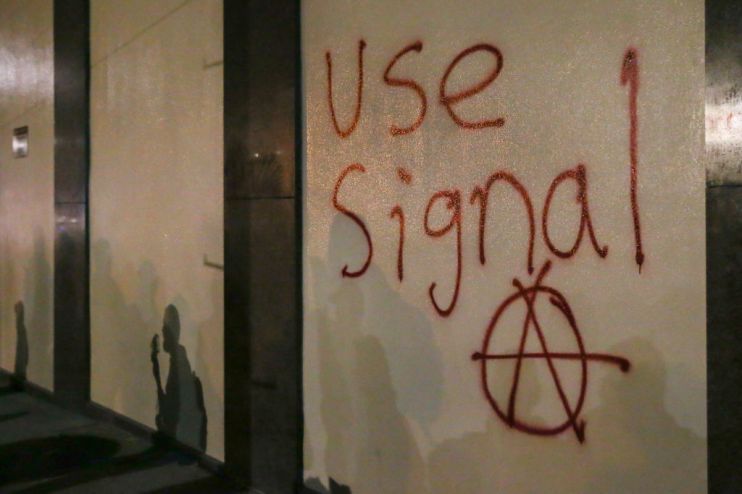
The backlash was swift and brutal, as millions of Whatsapp users upped sticks and moved to rivals. Telegram surged past 500m users in the first week of January, raking in 25m new sign-ups in one 72-hour period. Signal was downloaded 17.8m times in seven days, a 62-fold rise from the prior week (spurred on by this typically laconic Elon Musk tweet). Whatsapp, by contrast, saw its download numbers fall 17 per cent, according to data from Sensor Tower.
Some clarity is needed at this stage. The Whatsapp changes do not mean, as many people assumed, that the app will be snooping on all your conversations and snitching to Facebook. Its chat and call functions have end-to-end encryption, meaning Whatsapp has no access to them. Instead, the updates relate to things like your phone number, battery level and signal strength, and they’re designed to improve the platform’s shopping features. Moreover, Whatsapp has said the changes don’t even apply to the European region, including the UK.
Yet these details don’t really matter. Some of the exodus from Whatsapp can undoubtedly be pinned on Trump and his Big Tech ban, but the main driving force is a growing sense of discomfort around Silicon Valley’s control over our data. Mark Zuckerberg has long made it clear that he wants to combine the messaging services across his different apps, and a further blurring of the lines seems inevitable. Whatsapp’s recent changes have only served to underline that while it’s a separate platform from Facebook, they’re both part of the same colossal organisation.
It’s important to retain a sense of perspective here. With more than 2bn users worldwide, Whatsapp dwarfs Telegram. Signal, which has about 20m active users, is a mere minnow. Change won’t happen overnight, but as public opinion continues to turn against Big Tech, privacy-focused rivals such as Telegram and Signal could well be the future of social media.
Music touring: A victim of Brexit?
Things aren’t going well for the music industry. As if inspired by the havoc wreaked by the pandemic, Brexit has now decided to dish out a fresh helping of trouble for the sector. While Brits in some industries will enjoy visa-free business travel on the continent, this — it turns out — does not include touring musicians and their crews.
Industry body UK Music warned this could have a “devastating impact” on the sector, and potentially limit its £5.8bn contribution to the economy. Radiohead frontman Thom Yorke branded the government “spineless”, while a petition calling for visa-free touring across Europe has racked up almost 260,000 signatures, including artists such as Laura Marling and Dua Lipa.
Touring is a key source of income for musicians, and the ability to travel around Europe without burdensome costs will be essential — especially as the sector looks to recover after the pandemic. What’s more, our musical exports (think London Symphony Orchestra as well as Little Mix) are a key part of Britain’s cultural power.
Perhaps the sorriest part of this tale, though, is that the country’s vibrant music sector has become little more than a political football in a petty blame game between the UK and the EU.
Earlier this week it emerged that the government had rejected a proposal that would grant musicians 90 days of visa-free travel. Culture secretary Oliver Dowden rubbished these claims, instead shifting the blame to the EU, which he said had “repeatedly” turned down the “mutually beneficial agreement” proposed by the UK. In response, the EU said the government’s solution may still have left musicians liable to buy a visa and was therefore not fit for purpose.
If all this sounds childish, well, that’s because it is. As UK Music boss Jamie Njoku-Goodwin said earlier this week: “A blame game helps no one.”
The post-Brexit trade deal contains a review clause, meaning the outcome is not set in a stone and a tailored solution could still be carved out. In the tricky post-divorce period it’s understandable that both sides want to save face, but we can’t allow music to become a victim of political squabbling.
The algorithm recommends:
- Telegraph owner Sir David Barclay has died aged 86. His death leaves the paper’s ownership in the hands of twin brother Frederick, and may pave the way for a sale.
- Incoming BBC chair Richard Sharp has hinted at a reform of the licence fee. The new boss said the £157.50 charge was the “least worst” option, but could be reassessed.
Got a story? Drop me a line at [email protected] or on Twitter