Skip to content
City PM
  • Germany
  • France
  • Europe
  • Markets
  • Business
  • Opinion
  • Germany
  • France
  • Europe
  • Markets
  • Business
  • Opinion
Wednesday 21 February 2024 5:00 am  |  Updated:  Tuesday 27 February 2024 11:30 am

Ricardian Equivalence and why Britain’s really in a recession

By: Paul Ormerod

Add as a preferred source on Google
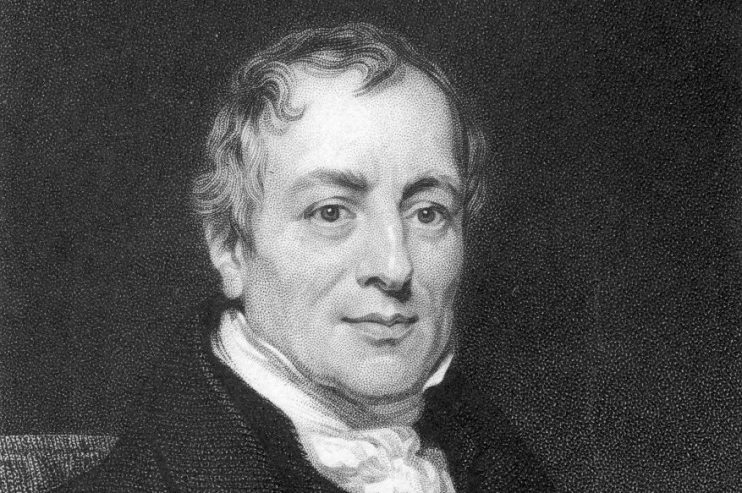
English economist David Ricardo (1772-1823). theorised that consumers would respond to debt-financed government spending by saving more in anticipation of future tax rises (Photo by Hulton Archive/Getty Images)

The intriguing factor governing low household spending isn’t mortgages or energy prices, argues Paul Ormerod, but saving…

News that we have entered a technical recession will come as no surprise to anyone who has even a passing acquaintance with the British economy. But what is less well understood is how personal spending – or rather the lack of it – is contributing to low growth.

Household incomes have been squeezed by rises in energy prices and mortgage rates. But that’s not the whole story. Wage increases and falling inflation have offset some of these pressures, with real incomes per head now 3.5 per cent higher than in the second half of 2022. And mortgage-holders make up only a small fraction of households.

The intriguing factor governing household spending is not income –  but saving.  

The Office for Budget Responsibility (OBR) estimates that during lockdown, households accumulated a massive £180bn of so-called “excess savings”. Most economists at the time assumed that once the restrictions were lifted, people would spend and run these down.

But on the contrary, households are saving more than they did before the pandemic, not less.

In the third quarter of 2023, the proportion of household income saved was 10.1 per cent. This compares to just six per cent in the year immediately before the onset of the Covid pandemic. In cash terms at an annual rate, the difference between the two is just over £50bn.

Two hundred years ago the great British economist David Ricardo – who has the same superstar standing among economists as his near contemporary Adam Smith – argued that this behaviour is entirely to be expected.

Writing at the time of the Napoleonic Wars, by far the biggest military effort in British history up to that time, Ricardo argued that this huge injection of government spending would not boost the economy overall. Rational investors and consumers understood that any stimulus financed by debt would eventually have to be paid back. Therefore they would save more in expectation of higher taxes in the future, offsetting the increase in demand created by additional government spending.

This theory, known as Ricardian Equivalence, is controversial among economists, but it is consistent with the evidence. As long as public debt remains stubbornly high, the public are choosing not to spend, regardless of what the Chancellor says about cutting taxes.  

The solution is obvious – to restore household confidence, Jeremy Hunt must reduce public debt.

Read more

Soaring petrol prices and Devil Wears Prada 2 help consumer spending return to growth

Supermarkets have been accused of hiking petrol prices to artificially high levels

Share this article

  • Facebook
  • X
  • LinkedIn
  • WhatsApp
  • Email

Similarly tagged content:

Sections

  • Opinion

Categories

  • Opinion

People & Organisations

  • Spring Budget 2024

Related Topics

  • Budget
  • Conservative Party
  • Jeremy Hunt
  • Spring Budget 2024

Trending Articles

  • Top Burnham adviser calls for capital gains and inheritance tax hikes

  • Clarkson’s Farm and why businesses must stop blaming the weather

  • Two solicitors linked to Post Office scandal charged with misconduct

  • Lloyd’s deputy chair: The City is a club in the best sense

  • A meeting with the breakfast king of Mayfair

More from City PM

  • Soaring petrol prices and Devil Wears Prada 2 help consumer spending return to growth

    Economics
    Supermarkets have been accused of hiking petrol prices to artificially high levels
  • Legal & General handles King’s staff pension schemes as monarch’s £13m tax bill revealed

    News
  • Nationwide fires starting gun on mortgage deals ahead of interest rate decision

    Banking
    Nationwide coverage map displaying regions affected by recent events, highlighting key areas of interest for general updates
  • FICO UK Credit Card Market Report: April 2026

    Business Wire
  • Housebuilder Bellway warns mortgage rate hikes dampening housing demand

    Property
    Things could be looking up for Bellway
  • London house prices fall as Bank of England rate hikes loom over mortgage market 

    Property
    Housing delivery in London is in a major crisis
  • OECD: Growth to remain below one per cent as UK economy struggles with unemployment

    Economics
    Sir Keir Starmer and Rachel Reeves discussing policy at a press conference, emphasizing Labours economic strategy
  • Food inflation: First signs of energy cost surge feed through to supermarket shelves as discounts fail to stem price growth

    Economics
    Tesco supermarket exterior showcasing brand signage and entrance with shoppers entering and exiting the store.

City PM — European politics, business and analysis.

Europe

  • Germany
  • France
  • Europe
  • UK & Ireland

Topics

  • Business
  • Markets
  • AI
  • Technology
  • Opinion
  • Energy

More

  • Politics
  • Economics
  • Fintech
  • Legal
  • Sport
  • Life

Company

  • About City PM
  • Editorial Policy
  • Corrections
  • Contact
  • Terms of Use
  • Privacy Policy
  • Cookie Policy
© 2026 City PM · Published by CityPM Media, Bahnhofstrasse 65, 8001 Zürich, Switzerland
About · Editorial Policy · Corrections · Contact · Privacy