
Reeves will be more hands on with the economy than the last Chancellor

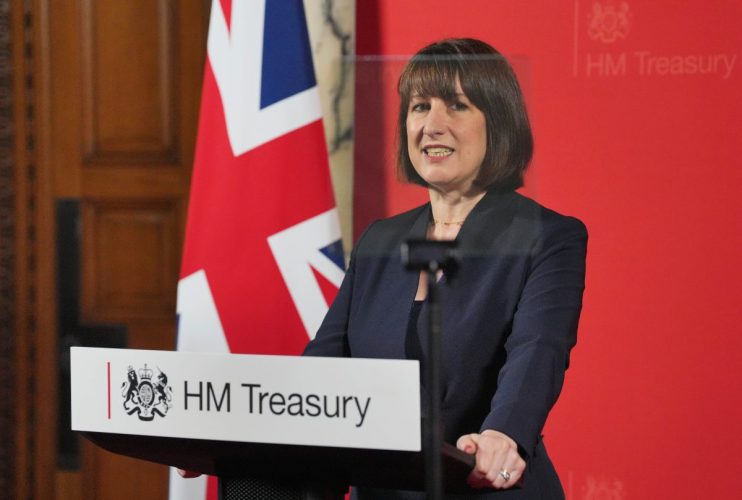
Rachel Reeves has made a splash in her first few days of being Chancellor.
Within days of arriving in No.11, she promised to make growth a “national mission” before launching a fairly ambitious reform of the planning regime.
Looking back at her speeches before becoming Chancellor, there’s plenty to suggest that Reeves might be a more radical reformer than many have suggested.
The first thing to note is Reeves is not just playing party politics when she talks about how bad the economy is. In her Mais lecture, she argued Britain was in “a moment of deconvergence” compared to other advanced economies. This comment reflects an argument that the present situation is unique in modern British history, that we have never had it so bad.
Economic decline has been a common motif in debates about the British economy over the decades. It reached a fever-pitch in the 1960s when there were widespread concerns that Britain was falling behind more dynamic rivals on the continent due to an ossified class system and an economy overly dependent on finance.
Regardless, living standards were still improving and improving at a decent rate. British ‘decline’ was more a reflection of other economies catching up.
The situation now is more severe. There has been virtually no improvement in living standards since the financial crisis. Indeed, the last parliament was the first in which living standards were lower at the end than the beginning.
While other economies have also slowed, it has not been as severe. As Reeves notes, the average British family is ten percent worse off than their French counterparts and a full twenty percent worse off than their German counterparts.
So things really are bad.
The fundamental issue is that productivity has not improved since the financial crisis. Improving productivity is the only way that wages can rise without causing inflation.
Generally, boosting investment is seen as the best way to improve productivity, because it provides workers with new tools and better skills, so boosting investment is crucial to the Labour plan.
And what is the plan? Reeves’ prognosis is a repudiation not just of the Conservative government for the past 14 years, but also New Labour. Her argument is that governments of both the left and the right have focused too much on simply providing macroeconomic stability, particularly price stability.
Reeves too wants to bring about stability. She has repeatedly stressed that “stability is change” after the chaos of the post-Brexit years. But stability on its own has not been enough.
As she said in the lecture, “stability was a necessary, but not a sufficient condition to generate private sector investment”.
On top of providing political stability, Reeves wants to work in lockstep with businesses to remove potential barriers to investment, starting with the planning system.
Reeves described the planning regime as “the single greatest obstacle to our economic success,” so it is no surprise that she moved quickly on reform.
A more radical break from the past comes in her vocal endorsement of industrial strategy, which signals a willingness for the state to intervene more actively in various sectors.
Industrial strategy is the idea that there are clear objectives that the government is striving towards and that intervention in the economy – be it through regulation, direct subsidies or some other means – can help achieve those goals.
“Governments and policymakers are recognising that it is no longer enough, if it ever was, for the state to simply get out of the way, to leave markets to their own devices and correct the occasional negative externality,” she said in her lecture.
An industrial strategy, she said, would support sectors in which the UK has a comparative advantage, ensuring they remain competitive in the years ahead. It would also support those sectors which have strategic importance to the British economy.
More broadly, this should help correct sectoral and regional imbalances in the economy, i.e. an economy too focused on finance and too centred in London and the south east (sorry City PM readers).
Reeves acknowledged that governments face “informational” constraints, but there is no doubting that she believes in the power of state intervention to drive economic growth and development.
Challenges remain. The classic criticism of industrial policy is that it is vulnerable to capture by vested interests.
Whatever the government sets out to achieve, its plans end up being influenced by well-connected lobbyists who direct support towards their own industry without regard for the national economic interest.
Less the state picking winners than business picking ministers. No doubt every sector is already preparing its document to send to the Treasury revealing how much it contributes to the economy and how it needs an appropriate strategy to help it compete internationally.
The other criticism, from a different political perspective, is that Labour has not committed to spend enough money to actually make a meaningful difference. It is Bidenomics without the money.
Given the lack of money, Reeves will have to rely on businesses to bring about the changes she wants to see, whether that be on the green transition or rebalancing the economy regionally.
On the corporate side, there’s a feeling that a lot can be achieved with clarity of purpose and well-targeted interventions. Full details on the new government’s industrial strategy will be awaited with interest by the business community.