
Rachel Reeves or Liz Truss: Who really ‘crashed the economy’?

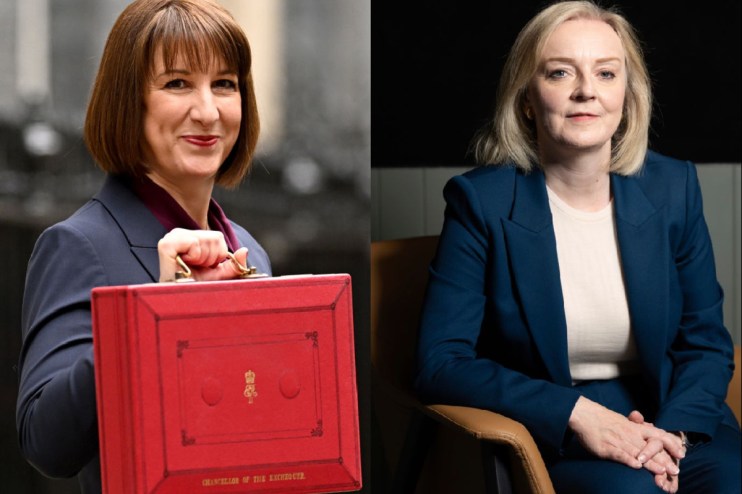
Amid UK bond market turmoil, it’s tempting to compare current events with the fallout of the 2022 mini-Budget. But do the events really compare, and who out of Liz Truss and Rachel Reeves is really responsible for ‘crashing the economy’, asks Julian Jessop
The recent surge in the cost of UK government borrowing has undoubtedly added to the pressure on Rachel Reeves. But has it also helped to vindicate Liz Truss?
To be fair to the current Chancellor, bond yields are also rising sharply in many other countries, reflecting renewed fears about global inflation and excessive government borrowing worldwide. Indeed, long-term interest rates in the UK are now closely tracking those in the US, which have also hit multi-year highs.
The fall in the pound to a 14-month low against the dollar is also still primarily a reflection of the broad-based strength of the US currency. The pound has actually appreciated over the last few months against the euro, so this is not a ‘sterling crisis’.
Nonetheless, the UK is still an outlier. Yields have risen further here than in the euro area, especially Germany. And they should not be as high as those in the US, where the economy is much stronger.
In a nutshell, investors in the UK are worried that the additional spending in Rachel Reeves’ first Budget will boost inflation and slow the pace of rate cuts from the Bank of England, that the additional taxes will hammer growth and not raise as much money as expected, and that the additional borrowing will mean that yields have to rise even further to attract enough buyers for all the additional bonds.
Moreover, regardless of the exact reasons for the rise in UK bond yields, it is more bad news both for the public finances and for the wider economy.
The question, then, is how this crisis compares to the fallout from the Truss/Kwarteng mini-Budget in 2022.
There are three key points.
1. The economy did not actually crash
First, it is important to distinguish between volatility in the financial markets and what is happening in the real economy, which most people would understand to mean things like consumer spending, business investment and employment.
On this basis, it is unfair to accuse Liz Truss of ‘crashing the economy’ in 2022 for the simple reason that the economy did not crash. The main exception was the disruption to the housing sector as lenders withdrew mortgage offers, but this was short-lived.
Others might say that the economy as a whole was only unscathed because some key measures in the mini-Budget were swiftly reversed. That would be pure speculation, but also an admission that there was indeed no crash.
2. Things were worse in 2022
Second, though, the market turmoil in the wake of the 2022 mini-Budget was more severe and disorderly than we are seeing now. Gilt yields have risen recently to higher levels, but the UK was more of an international outlier in 2022 and the moves were more abrupt. Yields rose by a full percentage point in just four days, and the pound fell more sharply across the board.
Nonetheless, the adverse reaction in 2022 was compounded by factors that cannot be blamed on Liz Truss. The most important was the forced sales of gilts by liability-driven investment (LDI) funds. The Bank of England’s decision to start selling the bonds it had bought under the policy of Quantitative Easing (QE) also added to the upward pressures on yields.
3. Businesses welcomed the mini-Budget
Third, the other big difference between the two fiscal events is how businesses responded. Critically the mini-Budget was actually welcomed by businesses and, at least initially, seen as positive for growth. In contrast, confidence has slumped since last summer, exacerbated by the large increases in tax and other business costs announced in the October Budget. Consumer spending, business investment and hiring have all stalled.
It is therefore tempting to conclude that if anyone has ‘crashed the economy’, it is surely Rachel Reeves.
Julian Jessop is an independent economist and fellow at the Institute of Economic Affairs