
Price cap: Government will ‘continue to help’ with high energy bills but falls short of fresh support packages


The government has pledged to continue helping households with sky-high energy bills, but stopped short of pledging fresh support packages despite the hike in the price cap.
The move was despite industry warnings customers will be paying more for their energy usage this spring following today’s announcement from Ofgem.
A spokesperson for the department for energy security and net zero (DESNZ) confirmed the Energy Price Guarantee (EPG) would provide household support, but at a raised subsidy rate of £3,000 per year from April in line with the Chancellor Jeremy Hunt’s announcement last year.
This compares with the current subsidy rate of £2,500 per year.
They said: “Government support will continue to help households with their energy bills. In the meantime, we’re committed to helping people with rising costs by reducing inflation and growing the economy.”
DESNZ’s comments follow Ofgem today slashing the price cap today from £4,279 per year to £3,280 per year for the April-June window.
While this is a vast reduction on current rates, it is still above the pledged subsidy rate of £3,000 per year, meaning households on standard variable tariffs will have to swallow a £500 bill hike alongside losing the £400 discount provided in the Energy Bill Discount Scheme unveiled by former Chancellor and current Prime Minister Rishi Sunak.
Energy forecaster Cornwall Insight expects the price cap to fall to £2,112 per year from July, holding steady at £2,118 per year over winter – with plummeting wholesale costs finally being felt on household bills, with suppliers typically negotiating contracts months in advance through a process known as hedging.
Neverthless, this is still a historically elevated cost for energy, with the price cap hovering between £1,000-£1,200 prior to the post-pandemic energy crisis.
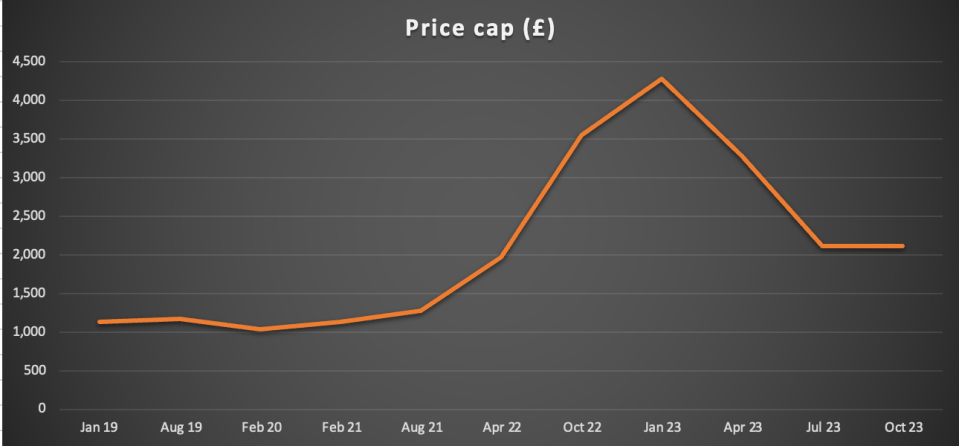
Cornwall Insight calculates that government is saving £2.5bn by not sustaining the current subsidy rate, but that this will come at a cost to households with the price cap staying above the support package rates.
Dr Craig Lowrey, principal consultant at Cornwall Insight said: “With consumers currently shielded from price cap rates by the government’s EPG, it is not the falling cap that households should be concerned with, but the rising rates of the government scheme.
“While the EPG will provide a small saving from today’s announced price cap, the proposed increase in costs will still be difficult for many consumers who were relying on the scheme to safeguard their finances from unpredictable market trends. Instead, they will now be faced with the daunting prospect of having to pay significantly more for their utilities from April.”
Industry body Energy UK was optimistic bills will drop significantly later this year, but chief executive Emma Pinchbeck recognised today’s news means “most people’s bills will rise significantly.”
Pointing to the future, she said: “That the Ofgem cap has decreased so much does give some cause for optimism that if the pattern continues, bills will fall later this year and we will begin to see cheaper, fixed deals back in a functioning, competitive market.
Industry pushes for policy changes to ease bills
Suppliers such as Ovo Energy and Good Energy have called for the government to bring in a social tariff to ease the financial pain being felt by vulnerable customers – while Utilita had urged the government to maintain support at the £3,000 per year rate.
Richard Neudegg, director of regulation at Uswitch, argued that households needed to be provided more choice in line with falling wholesale costs.
He urged Ofgem to ditch the market stabilisation charge, designed to discourage switching and encourage hedging during a period of historic volatility in the industry, to provide consumers with more power over their energy bills until the price cap further eased.
In his view, the charges was “actively dissuading suppliers from offering competitive deals that consumers desperately need.”
“Now is the time for fixed deals to return to the market to get the benefits of falling wholesale prices to consumers as soon as possible. After 18 months of sky-high energy bills, households need stability as well as choice in who their energy provider is and what they pay,” Neudegg said.
He argued: “A return to fixed deals will bring the benefits of competition back to the market, giving consumers the chance to vote with their feet and choose a supplier with the best deal and customer service, as well as locking in more price certainty.”
Meanwhile, the Energy and Climate Intelligence Unit has urged the government to ramp up developments of renewable generation and boost the energy efficiency of the country’s housing stock.
Jess Ralston, energy analyst at the Westminister body, said:: “The ban on cheap onshore wind and low Government ambition on improving uninsulated homes has left a higher burden for bill and tax payers alike.
“Will the government now boost investment in insulation and electric heat pumps which would help to reduce our gas dependence and improve energy security? All eyes are on the Chancellor and Spring Statement.”