Skip to content
City PM
  • Germany
  • France
  • Europe
  • Markets
  • Business
  • Opinion
  • Germany
  • France
  • Europe
  • Markets
  • Business
  • Opinion
Tuesday 26 October 2021 8:36 am  |  Updated:  Tuesday 26 October 2021 9:27 am

Photo hoarding carries higher carbon cost than international flights

By: Leah Montebello

Add as a preferred source on Google
Giffgaff, the mobile phone network operator, is looking to extend its portfolio and review contract prices as early next year, the chief executive has revealed. 

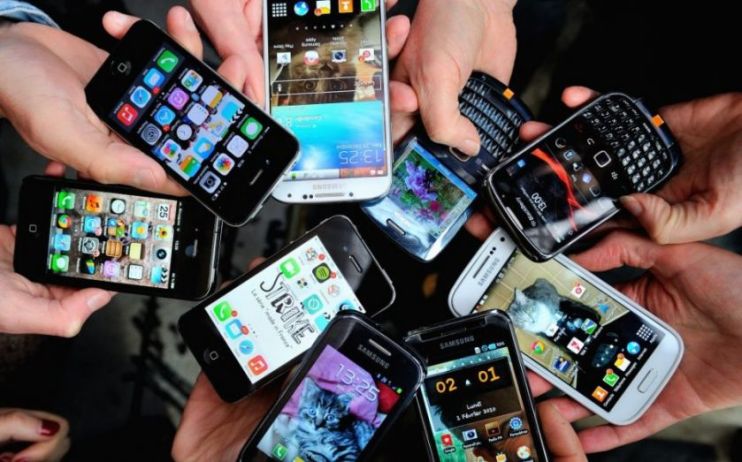
New research today reveals Britons’ hidden dirty data habits, with the nation’s trigger-happy social snappers contributing over 355,000 tonnes of CO2 every year through unwanted pics alone: the equivalent to the entire population of Chelmsford flying to Australia and back.

With Brits admitting to taking an average of five pictures for every one they post on online, and 10 per cent taking ten or more, a life lived through social media with endless selfies, scenic snaps and ‘food porn’ needs to be managed.

The new study by the Institution of Engineering and Technology (IET), found just a quarter of respondents delete additional shots they take, leaving millions of identical images being added to storage every week.

And for those that do delete their excess pictures, fewer than one in six say they do this for environmental reasons (i.e., to reduce the burden of energy needed to power servers used to store our data dumps).

With the average person taking almost 900 photos per year the duplicated, unwanted images left in storage alone could accumulate 10.6kg of CO2 emissions annually for every adult in the UK – the equivalent of over 112,500 return flights from London to Perth, Australia.

But it’s not just our social media habits that are damaging the planet. With nearly 80 per cent of us failing to consider the environmental impact of our data use online, ‘dirty data’ habits could be silently contributing as much to global emissions as international air travel.

Reports suggest the carbon footprint of our gadgets, the internet and the essential systems supporting them account for 3.7 per cent of global greenhouse emissions: on par with the airline industry. These emissions are also predicted to double by 2025.

Read more

The EU has regulated itself out of the AI race but the UK is still in the game

Keir Starmer and Ursula von der Leyen in discussion at a political summit meeting, emphasizing UK-EU relations.

Some of Brits’ dirtiest data habits include:

  • Failing to delete duplicated pictures from our phones
  • Using two or more devices at once 
  • Passive streaming – focussing on another device when streaming TV/ video content
  • Holding onto old text messages 

Passive streaming sessions were also highlighted as wasting concerning amounts of data: driving up our most invisible carbon footprints.

It’s estimated that one hour of video streaming generates a carbon footprint of approximately 55g CO2. With Brits spending almost 40 hours per week on average watching streaming services and online videos, over the course of a year this quickly racks up to over 113kg CO2.

However, the IET’s survey also showed a significant desire to be more sustainable (71 per cent), with two thirds believing everyone has an individual role to play in protecting the planet from climate change.

Chris Cartwright, Chair of the Digital Panel at the IET wants people to think more actively about the data they use and said we need to think beyond just the aviation, transport and food industry. He commented: “In our ever more connected lives, the data we now rely so much on also comes with a hidden carbon cost. Unsurprisingly, most of us don’t realise that our use of cloud storage means huge, power-hungry data centres are needed.”

“Deleting unwanted emails and photos, limiting use of the ‘reply all’ function, turning off auto-play on podcasts, Netflix or Amazon Prime and even having a ‘video off’ zoom day – these are all small changes people can easily make to lead a more sustainable online lifestyle.” 

Other ways to reduce data carbon footprint include cleaning out your cloud and having time off the screen.

Read more

Starmer’s social media restrictions will mean the government can spy on every phone

Keir Starmer at tech event discussing innovation and policy, surrounded by tech leaders and digital displays

Share this article

  • Facebook
  • X
  • LinkedIn
  • WhatsApp
  • Email

Similarly tagged content:

Sections

  • News

Categories

  • Business
  • Media
  • Tech

Related Topics

  • Climate change
  • COP26
  • Social media

Trending Articles

  • Fifa World Cup 2026: The tournament of IP infringement and touts

  • Andy Burnham says he will put essential services back under ‘stronger’ public control

  • Making Miliband chancellor would be a ‘mistake’, Trump officials warn

  • ‘That’s reality’: Burnham will have to focus on international affairs, Starmer warns

  • R|Elan™ Circular Design Challenge Celebrates Its 8th Season with a Landmark Global Edition Under the India–France Year of Innovation 2026

More from City PM

  • The EU has regulated itself out of the AI race but the UK is still in the game

    AI
    Keir Starmer and Ursula von der Leyen in discussion at a political summit meeting, emphasizing UK-EU relations.
  • Starmer’s social media restrictions will mean the government can spy on every phone

    Opinion
    Keir Starmer at tech event discussing innovation and policy, surrounded by tech leaders and digital displays
  • Starmer vows to end system ‘failing our kids’ ahead of expected social media ban

    Politics
    Keir Starmer speaking at London Tech Week conference, discussing innovation and technology advancements in the UK.
  • ‘Nobody’s getting a free pass’: Starmer warns Big Tech as social media ban looms

    Tech
    Prime Minister Keir Starmer addressing media at a press conference podium, discussing current governmental policies and in...
  • Catalytic capital is the next phase in philanthropy

    Opinion
    Corporate philanthropy concept with diverse professionals collaborating on sustainable, long-term global health solutions
  • Natwest housing finance chief: Social housing changes lives – I would know

    Opinion
    Trellick Tower UK council estate architecture, highlighting its iconic brutalist design against a clear sky backdrop.
  • UK social media ban blow to sports rights holders using TikTok and YouTube

    Sport Business
    A diverse group of business professionals engaged in a dynamic meeting at a modern office, discussing strategic plans.
  • Ferdinand, Crouch, Foster: How footballers have built media empires for the future

    Sport Business
    GettyImages 2252823665 might depict an important event or figure related to the latest business news.

City PM — European politics, business and analysis.

Europe

  • Germany
  • France
  • Europe
  • UK & Ireland

Topics

  • Business
  • Markets
  • AI
  • Technology
  • Opinion
  • Energy

More

  • Politics
  • Economics
  • Fintech
  • Legal
  • Sport
  • Life

Company

  • About City PM
  • Editorial Policy
  • Corrections
  • Contact
  • Terms of Use
  • Privacy Policy
  • Cookie Policy
© 2026 City PM · Published by CityPM Media, Bahnhofstrasse 65, 8001 Zürich, Switzerland
About · Editorial Policy · Corrections · Contact · Privacy