
Passive investing is strangling UK capital markets

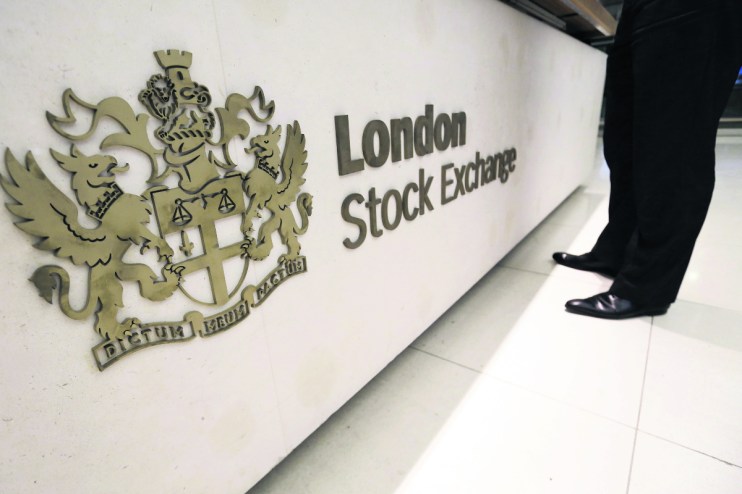
Passive investment funds have become both free riders and absentee landlords, says Charles Hall
Passive investment has become a key driver of global and UK equity markets. From being relatively insignificant 20 years ago it is now a key component. Given that growth in passive investing is likely to be inexorable, it is time we took a step back and consider the implications.
Passive investing has democratised and revolutionised investment for millions of people. Passives have enabled investors to gain access to markets or themes without any need for deep market or company knowledge and at very low cost. They also require little monitoring and remove emotional or compulsive bias. Furthermore, the performance of passive has been consistently greater than most active funds, which has increased the attraction.
However, much like a strangler fig, passive investment has started to dominate its host and there is a real concern that it will end up strangling it. In the US, passive investing is now around 50 per cent of the market and in the UK there are consistent outflows from UK active funds and inflows into passives. Vanguard, one of the largest passive funds, has over $11tn of assets under management and over 50m investors.
So what are the negative aspects of passives? A core issue is that passives ride the waves of markets and exaggerate them. Given that they are not price setters, they require active funds to do all the heavy lifting of monitoring markets, researching companies and making decisions. If passives squeeze out the active managers, then price discovery becomes less efficient and markets more volatile. Furthermore, passive funds do not invest in most IPOs or actively support capital raises. If the ability of active managers to finance businesses diminishes then a core raison d’etre of capital markets fades. This matters as it reduces access to permanent capital for growth companies and chokes off the ability of private companies to grow and scale in public markets.
Not only is there a free rider issue, there is also an absentee landlord problem. Passive funds are by their nature owned by disinterested investors and own most companies. The fund has little insight into the views of the underlying holders and limited resource to actively engage with companies. This is problematic as the scale of passive funds grows given that they increasingly skew votes on corporate governance.
The dominance of the Magnificent 7
There is also an issue around weight of money. The scale of the Magnificent 7 means that they suck in increasing amounts of new money. This risks potentially inflating their prices far beyond their intrinsic worth. You may say that this doesn’t really matter if everyone is making money. However, bear in mind that most investors are unaware of the scale of concentration. Just consider that the Mag 7 now represent 25 per cent of the MSCI world index and 34 per cent of the S&P500. This really does matter for the large number of people now saving in their defined contribution pension. Most people have very little awareness of the composition of their pension and the growth in passive investing means that they now typically have >60 per cent of their pension invested in the US with a very significant proportion in just seven companies.
This issue is becoming increasingly relevant and a material challenge for the effective functioning of capital markets. This is particularly important for non-US markets. If we want a UK capital market that enables companies to grow and scale and IPO in the UK then we need to recognise that this is an issue that needs to be addressed. This is certainly not to say that there is anything wrong with passives per se, more that their growth has material ramifications. A key way to address this issue is to ensure that pensions and ISAs have to invest a meaningful proportion of their assets in UK equities in order to retain their full tax benefits. We also need to be proactive in supporting UK IPOs, such as by enabling the British Business Bank to invest in public equities and by putting a stamp duty holiday in place for IPOs. We could also ensure that passives are able to play a more active role in IPOs by reducing the base for fast-track inclusion in indices (currently a £1bn free float is required). This level excludes all but the largest IPOs.
Passive investing has been a real public good enabling more people to access markets at very low cost and requiring little expertise. However, the inexorable rise of passives is starting to cause material issues. If we want the UK to thrive then we need to have equity capital markets to function effectively. As mentioned above, there are a number of solutions, but they need action to ensure that it is not too late.
Charles Hall is head of research at investment bank Peel Hunt