
George Osborne’s Big Red Book is securing UK prosperity while Maoism gathers dust

George Osborne set out last week how this government is fulfilling its manifesto promises: delivering financial security on the back of economic growth, and national security in an uncertain world. Coupled with plans to make markets work better for families and firms – like increasing competition so bills come down – he spoke to the hopes and aspirations of millions.
A home of their own, a good education for their children, an economy where work pays, and a prosperous life in an outward-looking nation that keeps them safe. Those were my parents’ simple dreams as they settled in Britain’s Opportunity Society over 30 years ago, saying goodbye to Communism forever.
The chancellor’s Autumn Statement and Spending Review mean that those same dreams of security and opportunity, achieved by my parents’ generation, are now open to more people across Britain than ever before. Unsurprisingly, his speech was loudly cheered on the Conservative benches, and by more than a few moderate Labour MPs too.
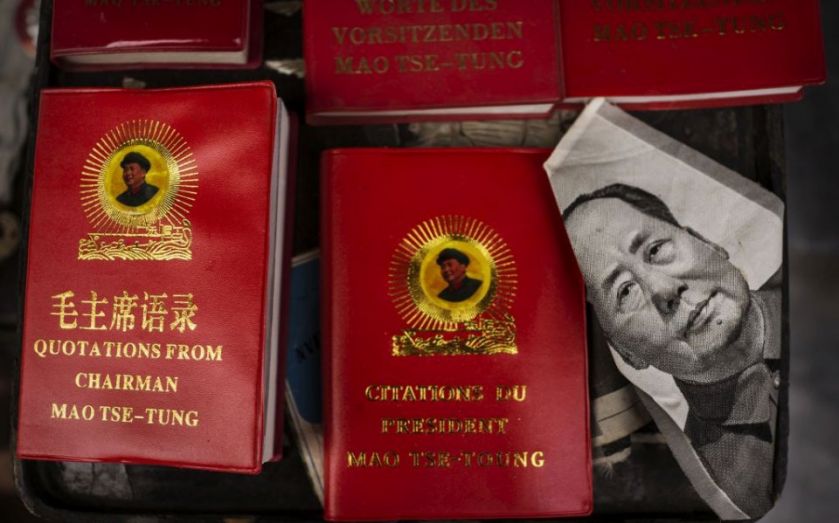
In reply, shadow chancellor John McDonnell started quoting from his personal copy of Chairman Mao’s Little Red Book, taking admiration for far-left, big government, anti-capitalist ideas to a new level. This was unsurprising given that McDonnell includes “fermenting [sic] the overthrow of capitalism” among his hobbies in Who’s Who. While the public treats the Labour leadership as a joke, they are actually a potent threat to Britain’s economic and national security.
McDonnell’s stunt reminds us that the case for popular capitalism can never be restated too often. Let’s not forget that capitalism created the wealth that pays for our Armed Forces, public services and much more. Yet capitalism is at its heart just an economic system: a construct that’s been created and refined by human hands. It’s not necessarily the natural order of things and, left unsupported, it could be lost. We have to consciously choose to embrace it and show how it delivers prosperity for Britain’s hard working people. It has to be renewed for each generation. This chancellor’s Budgets, Autumn Statements and Spending Reviews – with the accompanying policy detail set out in the Treasury’s traditional Red Book – do just that. Take housing and schools as just two examples.
For the millions of young people, families and public service workers, especially in London, who trawl property websites like Rightmove and Zoopla looking for a home they can afford, the chancellor’s commitment to build over 400,000 affordable homes to buy (not just rent) is tremendous news. Almost 50 per cent will be Starter Homes for first time buyers, and 135,000 will be available on the new Help to Buy shared ownership scheme. This is quite simply the biggest house building programme since the 1970s. Osborne is renewing Mrs Thatcher’s dream of a “property owning democracy” for the digital age, showing us everyone can share in the success of popular capitalism.
Similarly, Osborne’s bold commitment to a new national funding formula for state schools will transform children’s life chances and equip our young people with the skills to keep Britain competitive. As a former school governor, I saw first-hand the unfairness of a system we inherited that saw a child in one part of Britain receiving half as much funding as a child in another part. The chancellor’s reforms – paid for by the fastest-growing economy in the G7 – ensure the fruits of economic success, and educational excellence, are more evenly shared. This is popular capitalism, driven by a free enterprise economy, put to work by a chancellor committed to ensuring fair chances for all.
In the 6,000 years to 1750, living standards in the developed world doubled. But since the industrial revolution, that doubling has occurred roughly every 50 years. In China itself, Mao’s economic policies left over 60 per cent of his people in poverty. When reformer Deng Xiaoping embraced capitalism, the poverty rate fell to around 8 per cent, driving China’s modern-day economic growth. Britain is well-placed to benefit, and if the deal-hungry Chinese are going to invest anywhere in the world, it should be Britain. To use the chancellor’s words, we should be “running towards China” not running away.
The chancellor’s announcements last week – and his reforms since 2010 – are delivering the high-wage, low-tax, low-welfare economy that helps people get on in their lives, whether it’s the first time buyer, the parent, or the business owner. Labour’s reliance on discredited – and quite frankly, outdated – anti-capitalist theories shows they can never again be trusted with Britain’s economic future. While Mao’s Little Red Book gathers dust, George Osborne’s Big Red Book continues to deliver prosperity and security for Britain.