
ONS: We know we need to do more to improve our data

After calculation errors thwarted its spring data, ONS director general for statistics James Benford explains how the institute has ensured the publication of tomorrow’s Producer Prices Indices can go ahead
On Wednesday, the Office for National Statistics (ONS) will fully reintroduce our producer price and services producer price indices, as part of our monthly Prices Day. These show how the raw material costs faced by businesses (known as input prices) are changing, as well as the costs of their final products (output prices). These are not only useful for policy makers but are also important for working out how much of a change in firms’ turnover is driven by price changes and how much is due to a different volume of output, or ‘real’ GDP.
Regrettably, we had to suspend publication of these statistics in the spring, when we discovered that the way they were ‘chain-linked’ – the technique for ensuring the statistics stay consistent and comparable over time – was being wrongly applied.
Since then, colleagues have worked closely with our external Technical Advisory Panel on Consumer Price Statistics, as well as internal and external methodological experts, to develop and implement the new and robust chain-linking methods that will be used for the first time later this week. The improvements include redeveloped systems, with quality assured by standalone code developed to independently verify that the new methods are being correctly applied.
We have also reviewed and updated the relative importance of each industry in our figures to ensure they show the best and clearest picture of how prices are changing for businesses across the economy. Overall, the steps we have taken mean that our processes are now stronger, and our new data better quality, than prior to the chain-linking error.
Changes to consumer inflation statistics
But our improvements don’t stop there. We have also made significant steps forward in our consumer inflation statistics – including Consumer Prices Index (CPI) – in recent years. We have introduced new sources to improve our measures of both rail fares, second-hand car and rental prices, while earlier this year we also introduced a new cloud-based computing system, which allows us to process many more price points, much faster.
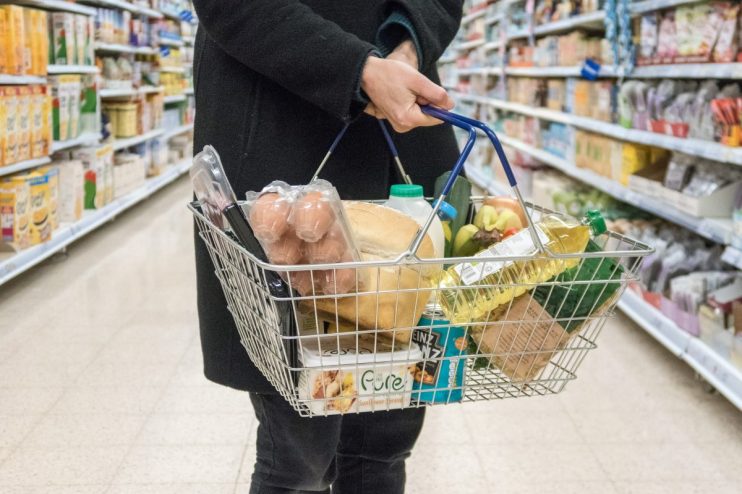
The biggest change will come in March when we will bring supermarket scanner data into our headline inflation statistics. This will mean that for 50 per cent of the groceries market, instead of sending our price collectors into shops to collect 25,000 prices per month, we’ll replace this with approximately 300,000,000 price points derived from sales of over a billion units of products per month, collected directly from supermarket scanners at the checkouts.
Taken together this recent raft of improvements will bring about a step-change in the way we produce inflation statistics, with prices for approximately a third of the CPIH basket now based on direct sources rather than surveys.
Measuring prices directly means consumer price data are more comprehensive, for example by taking into account the impact of discounts available on store cards, while also reducing data collection costs.
The work to improve price statistics is part of our broader survey and economic statistics plans. We know we need to do more to improve the quality of our data and we will do so by working openly and collaboratively with our users, so you can track our progress. We will publish our first quarterly report on where we are across the plans in December.
James Benford is the director general for economic and social statistics at the ONS