
Can office workers save the day for local businesses ravaged by Covid-19?

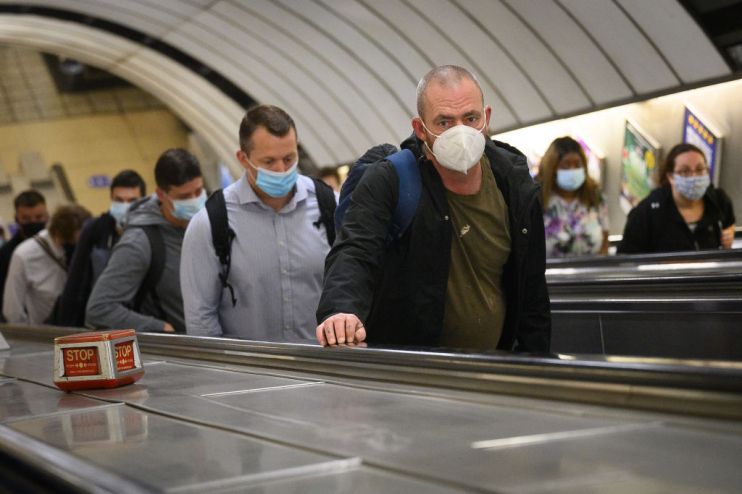
The sudden shift to remote working put in place by the majority of UK businesses may herald the end of the office, at least as we know it.
Five months and multiple government campaigns later, and the shift to the kitchen table continues, seemingly unabated.
According to a survey from US bank Morgan Stanley, just a third of UK office workers have gone back to their workplaces — far behind figures recorded in France, Germany, Italy and Spain.
Business leaders have had an unenviable range of factors to juggle: the health concerns of their employees; the financial effects on their businesses and the economy; the long-term impact on staff mental health. All of these issues and more have had a reputational impact on businesses and affected how they respond to the work from home trend — but now more must be factored in.
Put simply, when deciding whether to send employees back to the office, big businesses must consider the impact on their own communities being wrought by wide-scale remote working.
No business operates in isolation — every area of every city is an ecosystem, one that survives and thrives thanks to everyday employee interactions: from the daily commutes and cups of coffee, to the lunchtime sales and after-work shopping trips.
Remote working threatens the livelihoods of many working in the hospitality and retail sectors, often in deprived neighbourhoods. In normal times, Pret a Manger would sell 80 million cups of coffee a year, but this summer saw the sandwich chain close 30 of its branches and make nearly 3,000 members of staff redundant in the face of a dramatically reduced footfall. The impact on smaller businesses is likely to be even more pronounced.
Such concerns have undoubtedly contributed towards the government’s abandonment of its “work from home” guidance, as well as advice to avoid public transport. London mayor Sadiq Khan has also drawn attention to the impact on businesses in the heart of the capital, pointing out that, as home working continues, the number of people visiting the West End will be down for many months ahead.
Big businesses are also considering the impact of their remote working policies on local economies — not to mention their own reputations. Indeed, the reputational risks surrounding this complex issue are high — our own research has placed it as one of the top media talking points of August.
Back in April, Barclays chief executive Jes Staley said that “the notion of putting 7,000 people in a building may be a thing of the past”, but he has since changed his approach. Highlighting the group’s links to the local communities surrounding its office hubs, he suggested recently “it is important to get people back together in physical concentrations” because the bank has “a responsibility to places like Canary Wharf, like Manchester, like Glasgow”.
Conversely, RBS has been criticised for telling its 50,000 staff members that working from home could continue until the end of the year, causing concern over the impact on the cafes, lunch spots and other key retailers near their branches.
Businesses have an almost impossible balancing act to perform. On the one hand, there are many employees who continue to feel uneasy about the prospect of resuming their pre-pandemic train journeys and making their way back to bustling offices. On the other, in a post-Covid world, consumers are looking for evidence that brands are living up to their proclaimed values and supporting hard-hit communities.
Big business must ask itself some serious questions about what it stands for and how it wants to be perceived. As businesses seek to rebuild their contract with society, maintaining a physical office presence — and thereby supporting local businesses — could form a cornerstone of such efforts.
Main image credit: Getty