
Nationalising British Steel won’t help the UK’s dying industry

Nationalising British Steel is a painting-over-the-cracks solution. The real problem is energy prices, writes Elinor Bale
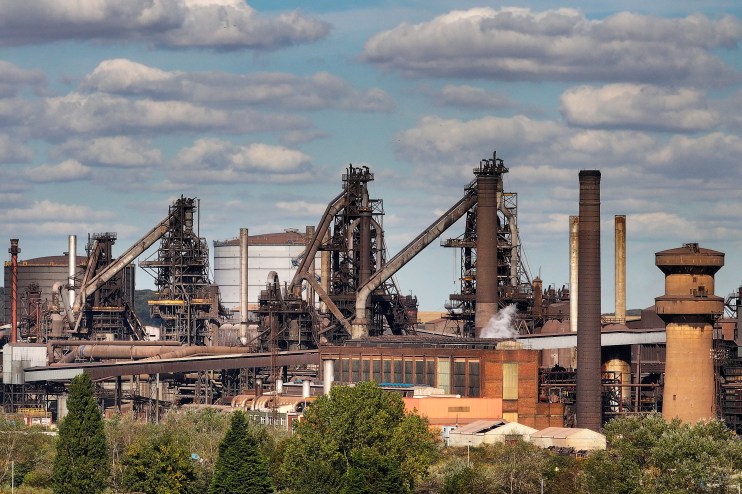
Our nation’s industrial sectors are dying and we can’t just sit back and watch. We were once an industrial powerhouse. The Industrial Revolution began in the UK. However, nowadays factories are closing, firms are moving overseas to enjoy lower operating costs and thousands of jobs are disappearing. These problems are sadly epitomised by the imminent collapse of British Steel’s Scunthorpe operation.
Labour’s solution is to produce a shiny new industrial strategy and to flirt with nationalisation of British Steel. But this will only paint over the cracks for a short period and leave industries – both directly and indirectly – reliant on government handouts. The government needs a better long-term plan. At the moment, ministers are putting their heads in the sand, doling out a few remedies for secondary problems and hoping British taxpayers will cover the bill indefinitely as the problems get worse.
We need to do a lot more to recover Britain’s declining industry and tackle the real root of the problem: the high cost of energy.
The UK’s energy price problem
The UK’s industrial electricity prices are the highest in the world. It has battered our steel industry, which is now paying 50 per cent more for electricity than our closest competitors France and Germany. These prices make industry uncompetitive against cheaper imports and the UK unappealing for manufacturing businesses to continue operating and investing.
We had hoped that increasing renewables, which are some of the cheapest forms of new electricity generation, from seven per cent in 2010 to 37 per cent by 2024 would help, but prices remain high.
This is partly due to marginal pricing, where electricity is sold at the cost of the most expensive source of energy to fill demand at that moment. Even if a steel plant is using only cheaper renewable energy, 97 per cent of the time gas is being used somewhere else to meet our nation’s demand and set the wholesale price.
Therefore, we need to look at reforming the electricity market by sharpening the price signals, for both time and location, to encourage more demand flexibility and usage of energy storage systems to lower costs.
How to reform the energy market
But we can go further still. To bring down the cost of new renewable and nuclear energy projects, we can streamline planning and regulatory processes through ‘clean energy zones’ in areas where communities are supportive. This would cut red tape, thereby accelerating investment in new infrastructure and support industry.
Alongside this, we should grant regulatory justification to all modern nuclear power stations and small modular reactors, instead of requiring each individual reactor design to demonstrate that its benefits outweigh the limited risks. We can speed up the planning process by up to two years by removing this overbearing regulation.
More transmission infrastructure can also cut bills. Too often, the grid cannot handle the amount of electricity offshore wind is producing, and it means taxpayers are having to pay renewable companies to stop producing energy: nearly £1bn was paid to wind farms to balance the grid in 2023. During an energy shortage, why are we paying companies to stop producing energy when we could be building more infrastructure to connect generation to demand?
Many energy-intensive industries receive relief on levies and network charges as part of the British Industries Supercharger. For this reason, attempts to blame green policies for the uncompetitive energy prices are wide of the mark. But the government must go further and exempt them from all network charges.
Unless we lower our electricity prices, what is left of British industry will disappear. We must reinvigorate our industrial sector with policies that drive our economy forward, prevent firms moving overseas and incentivise private investment. If we don’t, electricity prices will continue to rise, industry will disappear and jobs will be lost.
Elinor Bale is climate programme officer at the Conservative Environment Network