
National Grid ‘stands down’ plan to fire up coal units amid cold snap
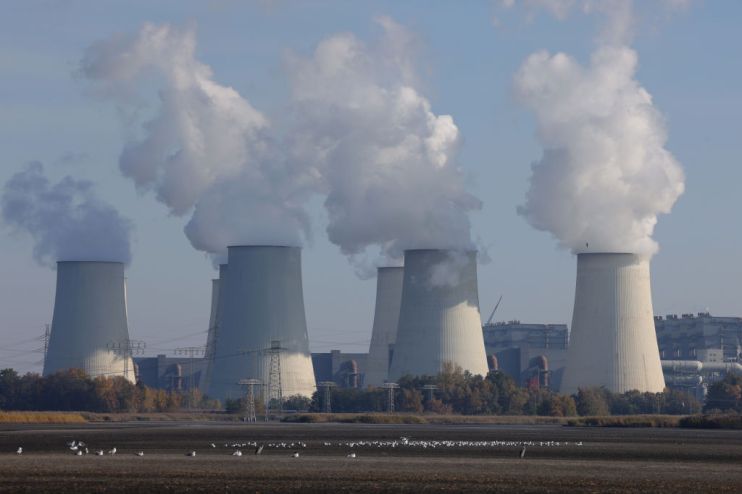
National Grid has “stood down” plans warm up two coal power plants it had put on standby in case of supply shortages this evening.
Taking to Twitter, National Grid’s electricity system operator (ESO) confirmed it had U-turned on its previous decision.
It said: “The ESO can confirm that it has now stood down these coal units as there is adequate available contingency for this evening.”
Nevertheless, National Grid is running the fifth test of its blackout prevention scheme to cope with the rise in energy demand as the UK battles frosty weather.
This includes offering discounts on bills for households who cut peak-time electricity use on Monday evening.
City PM understands Monday will be the highest demand day for electricity so far this winter, with temperatures below zero across most of the UK overnight.
Earlier this morning, National Grid instructed two coal-fired units at the Drax Power Plant in Yorkshire to be warmed up ready for potential usage today.
The two units are among five coal power terminals kept on standby this winter, after National Grid negotiated their continued operations in case of a supply crunch this winter.
West Burton Power A station and Ratcliffe-on-Soar power station, operated by EDF and Uniper respectively, are also available for emergency generation.
This reflects the Government’s shift from coal to gas over the past two decades as the main source of power, resulting in the closure of the remaining power plants across the UK – with exception of Kilroot Power Station in Northern Ireland.
Fabian Rønningen, senior analyst of power markets at Rystad Energy told City PM the National Grid’s yo-yo decision making reflected the strain the UK’s energy infrastructure was increasingly under this winter.
He said: “I think the conditions we have seen over the last two weeks have been an indication of what we can see later in the winter, as the combination of cold weather, low wind supply, and limited power imports from the continent is a very bad combination for the UK, and a real test of the system.
“It is difficult to predict what will happen later in the winter, but at least for now, it’s looking much better both for this week and next week, as both wind power is expected to return and temperatures will ease towards the weekend.”
National Grid’s supply scramble
This is the first time National Grid has had to consider using the coal plants this winter, a last resort measure to stave off blackouts – which is a worst case scenario included in its winter outlook.
The winter outlook has priced in the possibility of rolling regional blackouts in January if insufficient supplies are available via interconnectors into Europe.
Prior to the U-turn, a National Grid spokesperson said: “This evening we’ve issued a notification to warm the winter contingency coal units. This measure should give the public confidence in Monday’s energy supply.
“This notification is not confirmation that these units will be used on Monday, but that they will be available to the ESO, if required. The ESO as a prudent system operator has these tools for additional contingency to operate the network as normal and the public should continue to use energy as normal.”
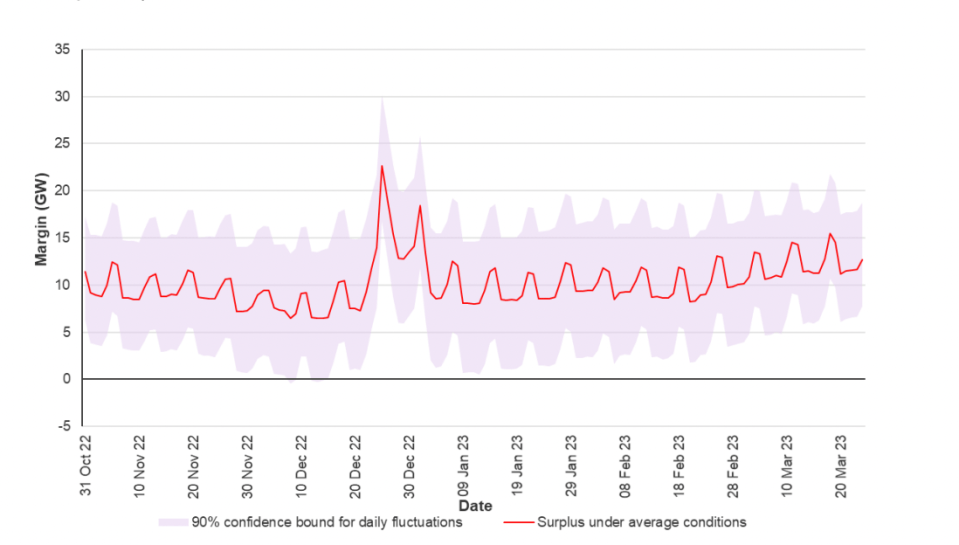
Ole Hansen, head of commodity strategy at Saxo Bank told City PM the latest volatility reflects the general shortages across the West amid colder weather and a Kremlin-backed supply squeeze.
He argued it reflects “the lack of baseload power generation” not only in the UK but also across Europe.
Hansen said: “It highlights the increased volatility in an energy system desperately short on base load given the unpredictability of power production from renewables. Blackouts are likely to be avoided for now but a prolonged winter with low production from renewables on cold but calm-wind days will continue to be a concern.”
Adam Bell, head of policy at Stonehaven, believed coal power plants on standby were doing exactly what they were supposed to, and that continental gas stores – which remain topped up to nearly 90 per cent – were a stronger indicator of blackouts.
He said: “I’d be more worried if it looked like we were running out of continental gas stores, but everything seems to be holding up.
“What is missing a stronger direction by the Government for investment in the low carbon equivalent of coal, which is a portfolio of energy storage technologies including hydrogen.”
Stuart Dossett, senior policy adviser at Green Alliance, pushed back against criticism of renewables – arguing that the UK’s reliance on coal exposed the need to further boost green energy.
He said: “The future of cheap and secure power is mainly to increase solar and wind power, and to build up our ability to back this up with electricity storage and green hydrogen. The faster we move to clean energy, the faster we can reduce people’s bills.”
National Grid faces challenging winter
The prospect of emergency measures to ease demand this winter was raised last month, when the National Grid opted against implementing emergency measures to stave off blackouts at the last moment.
It had initially triggered the plans following outages in France and a decline in renewable generation, but later managed to secure sufficient supplies from gas power plants.
If National Grid had gone through with emergency measures, this would have triggered its demand flexibility service, a first line of defence where volunteering households and businesses would be paid to cut the amount of electricity they use.
Multiple energy firms are already offering financial rewards to customers lowering their energy usage at times of peak strain on the grid – including Big Six firms such as Centrica, Octopus and Ovo.
Concerns of supply shortages have also driven up electricity prices for this evening, which are currently at a record high following yesterday’s trading.
Buyers have been scrambling to outbid the continent for scarce power supplies and ensure electricity imports from France.
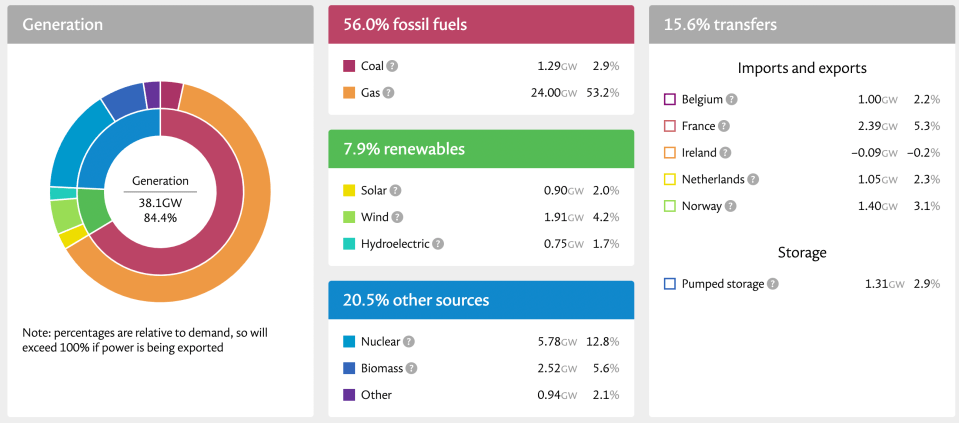
Wholesale prices for electricity for 5-6pm tonight soared to £2,585.80 per megawatt-hour yesterday, setting a record for the Epex exchange.
This is around 50 times higher than average winter power prices before the energy crisis hit last year – equivalent to £2.59 per kilowatt-hour.
By comparison, household unit rates are capped at 32p per kilowatt-hour this winter under the Energy Price Guarantee.
The Government has been approached for comment.