
Microsoft knows ChatGPT won’t crash and burn like previous AI technologies

Microsoft is being smart about ChatGPT. It has recognised the invaluable potential of this technology, but it’s being cautious with how it incorporates it into its products. This is a wise approach, writes Howard Yu
ChatGPT is not ready yet. A major problem with it – and with other large-language models – is that they are often inaccurate or don’t properly cite information sources.
Microsoft hoped to circumvent these limitations when it integrated the AI chatbot into Bing, combining OpenAI’s language abilities with Bing’s search function using a tool known as Prometheus. In a nutshell, this technology applies users’ requests, pulling out search terms to run them through Bing’s search index. Then, it combines the results with the language model to create an answer. That is how Bing types out a response in full sentences, annotated with links to the websites from which it is retrieving information.
Issues persisted during early trials. People who had enrolled noticed the new Bing would give irrelevant background information or go on seemingly random tangents, and sometimes come across as excessively aggressive.
But then, what alternative does Microsoft have? The product is still far from satisfactory, but it is a much smarter tool than anything we have seen in spellcheck or Grammarly. The only way to improve further is to get users to use it more, maintaining an open approach. Microsoft has chosen a relatively low-risk area for experimentation: Internet search. It deployed ChatGPT among a selected population to play with it at home. Wisely, Microsoft did not try and implement its use in hospitals for doctors and clinicians to use professionally, which is what IBM Watson once attempted.
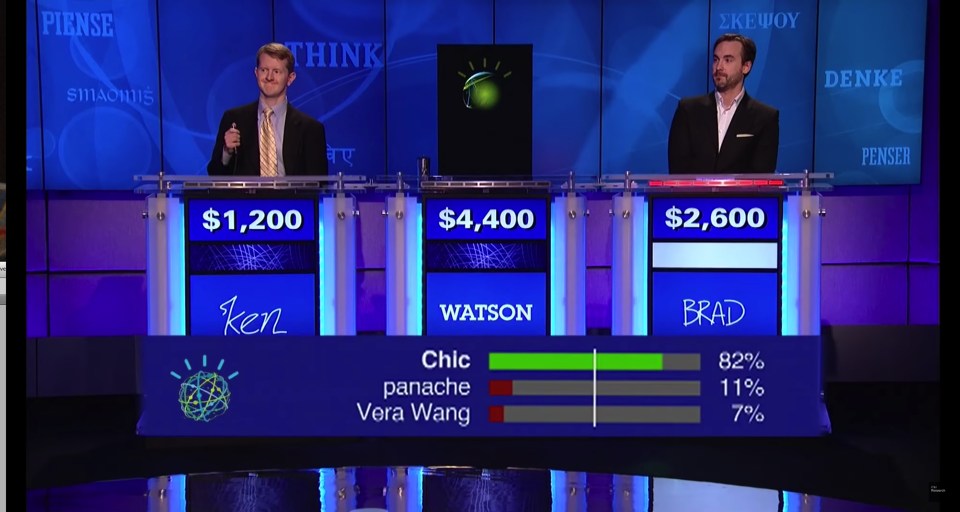
In February 2011, IBM made a lasting impression on the American public when its supercomputer, Watson, beat two human contestants in the popular game show Jeopardy!.
To achieve victory against the human players, the computer had to be able to rapidly search, generate hypotheses, analyse, and rank possible answers. Deploying this technology to the real world appeared to be a logical extension. In March 2012, Memorial Sloan-Kettering Cancer Center (MSKCC) in New York and IBM announced their collaboration to develop a decision-support tool that would help physicians recommend cancer diagnostics and treatments to patients.
On the eve of the second anniversary of this partnership, the first Watson-based commercial program was launched: “Interactive Care Insights for Oncology.” By that time, Watson had been presented with 25,000 test-case scenarios, 1,500 real-life cases, 605,000 pieces of medical evidence and two million pages of text.
With great fanfare, the whole thing quickly came crashing down. Difficulties soon became apparent. The oncologists, having seen Watson’s “Jeopardy!” performance, assumed it was an answering machine. The IBM technologists were frustrated by the complexity, messiness, and gaps in the genetic data.
It wasn’t for lack of warning. Martin Kohn, who had worked for IBM Research, recalls recommending that Watson be used only for things that it would definitely be good at, such as knowing if a person would have a bad reaction to a drug. He suggested taking smaller steps first, not making a giant leap straight away. His advice was roundly ignored by the business executives, eager to “go big” and be at the forefront of innovation.
Watson stands out as a sobering example of the pitfalls of technological hype and hubris around AI, making Microsoft’s decision to envelope ChatGPT into Bing even more prescient.
There is no doubt about what Microsoft seeks to achieve long term: embed AI into every one of its products. The millions of dollars invested in OpenAI will serve to get exclusive access to the emerging technology and breathe new life into its entire product offering.
This presents a dilemma: How to get quick feedback on a product that isn’t ready to be widely rolled out to a mass market yet? Microsoft has taken the initial step in a likely long journey. By deploying ChatGPT into Bing first, the business has shown the wisdom of starting small, while never losing sight of the bigger picture.