
May Cameron’s Wellbeing Unit rest in peace, money can buy happiness after all

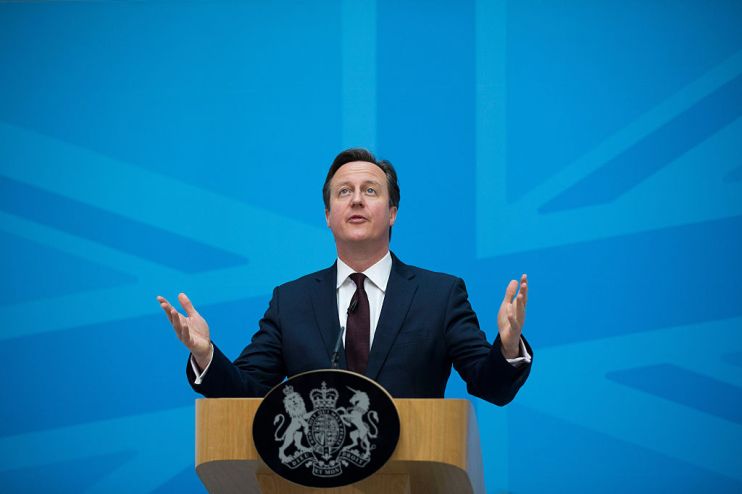
As the government prepares to shut its ‘happiness unit’ , Paul Ormerod looks at why focusing on GDP is more likely to boost the country’s wellbeing
Last month, the government announced that the What Works Centre for Wellbeing, set up with great fanfare by David Cameron in 2014 with the mission to boost national happiness, is to be shut down.
Ever since the concept was first launched after the Second World War, the main focus of the policy of governments of both parties had been to increase GDP, the total amount of income generated in the economy. But by 2014 this had become boring. Far more glamorous and exciting to have a new measure, aimed at increasing the wellbeing and happiness of the population.
But it turns out that the What Works Centre itself does not seem to have worked for the various government departments. Apparently, departments were asked to contribute individually to keep the Centre going but declined to do so.
Most of the results in so-called wellbeing and happiness economics rely on answers to questions in surveys. For example: “on a scale of 1 to 10, how happy do you feel?”. Stodgy old economists believe that the real life decisions which people take reveal their preferences much more accurately than responses which they give to surveys. But when asked not for an opinion but for actual cash, departments revealed their true preference by their actions. They do not think the unit is worth it.
Critics of the decision to close the department are concerned that it has been made at a time when figures from the Office for National Statistics show average rates of personal wellbeing in the UK declining. Hardly surprising, one might think, given the squeeze on living standards brought about by higher interest rates and higher energy prices.
But for decades, enthusiasts of happiness and wellbeing research basked in the apparent finding that the connection between incomes and happiness was weak or even non-existent.
Of course, this was pointed out in the famous Four Yorkshiremen sketch by the Monty Python team. “We were ‘appy then, though we were poor”. “Because we were poor!”.
The happiness claim seemed to have firmer scientific foundations. In a very influential paper published in 1974, Richard Easterlin, then of the University of Pennsylvania, showed, using post-war American data, that although at a point in time people with more money reported higher happiness levels than those with less, over time the overall level of happiness did not grow even though incomes did.
Between 1946 and 1970, after allowing for inflation, average incomes grew by no less than 140 per cent. But reported happiness was the same at the beginning and the end of the period. This finding seemed to strike a major blow against the fundamental basis of economics and gave rise to intensive debate.
Nobel Laureates Angus Deaton and Daniel Kahneman seemed to achieve a partial resolution of the issue in a paper published in 2010. They split the concept of wellbeing into two categories: “emotional”, which refers to the emotional quality of a person’s everyday experience, and “life evaluation”, which measures the thoughts which people have about their life when they think about it.
They found that life evaluation rises steadily with income. Emotional wellbeing, however, seemed to plateau at an annual income level of around $75,000.
But the matter appears to have been finally put to rest earlier this year by Kahneman working with Mark Killingsworth, ironically at the University of Pennsylvania. In a definitive study, they show that higher incomes lead to higher levels of wellbeing, however the latter is defined. There is, however, what they term an “unhappy minority”, perhaps 20 per cent of the population, whose emotional wellbeing does indeed plateau.
It turns out after all that the best way to increase happiness is to increase incomes, to increase GDP. Wellbeing Unit, rest in peace.