Skip to content
City PM
  • Germany
  • France
  • Europe
  • Markets
  • Business
  • Opinion
  • DE
  • Germany
  • France
  • Europe
  • Markets
  • Business
  • Opinion
  • DE
Tuesday 23 February 2016 12:08 pm

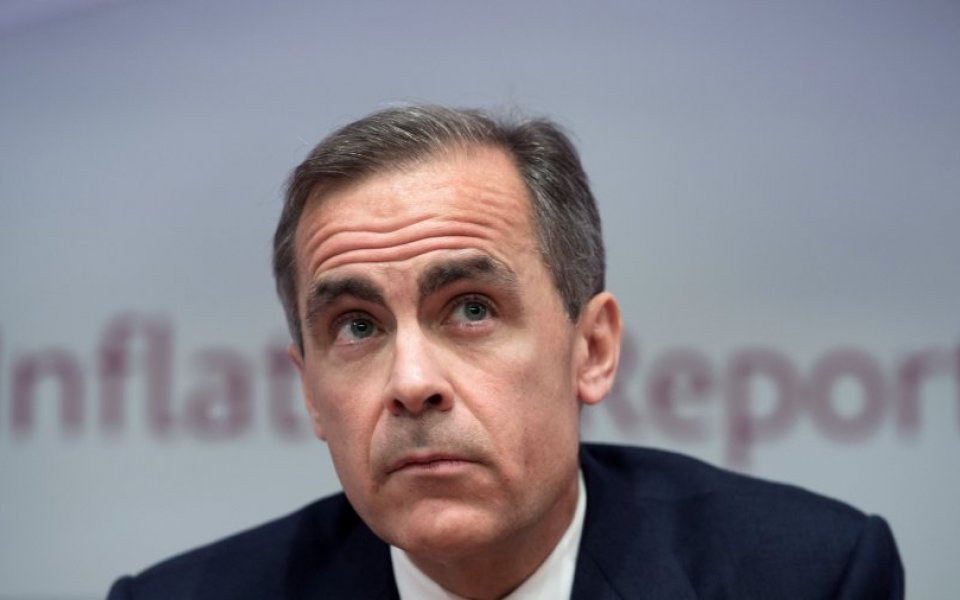
Mark Carney tells MPs the Bank of England is not prepared to cut interest rates into negative territory…for now

By: Chris Papadopoullos

Add as a preferred source on Google

Bank of England governor Mark Carney has said the Bank does not yet consider negative interest rates to be an appropriate stimulus measure for the UK.

He said the Bank would consider lowering rates below the current record low of 0.5 per cent if necessary, but they would be unlikely to go below zero.

"​One of the things we have been looking at… is the ability of those institutions [building societies] to build an appropriate capital base," he told MPs on the Treasury Select Committee (TSC) today.

"Because they had built up capital in the last several years, it is now our judgement that we could, if necessary, lower bank rate."

"It is not yet our judgement that it could go negative."

"If we were ever in a situation where we needed more stimulus we have other options."

Negative interest rates are being tried on the continent, with the Eurozone, Denmark, Switzerland and Sweden using them in one form or another. 

Monetary policy member Gertjan Vlieghe, who joined Carney along with Minouche Shafik and Martin Weale, hinted he would be voting for more stimulus if developments worsened.

“I have relatively little tolerance for further downside surprises,” Vlieghe said.

“Should downside surprises continue then I think we will get relatively quickly to a point where I find it appropriate to respond to it.”

Questions on the economic impact of the EU referendum will be addressed on the 8 March, when Carney and Sir Jon Cunliffe will face another round of questioning from the TSC. Carney brushed off questions over the future path of the sterling exchange rate. The Bank's forecasts assume the current exchange rate is maintained throughout the forecast period, Carney said.

Martin Weale said sterling's recent fall which has taken it to its lowest levels since 2009 against the dollar, would help undo the dampening effect of a strong pound on inflation.

"The fall of the exchange rate does weaken one of the factors that's been holding inflation down," he said. 

Shafik said the "near term effects of current changes in sterling will play out over quite a long time".

"First the exchange rate effects import process, then ultimately effects consumer prices, and that process can take quite a long time."

Vlieghe said the effects of a weaker exchange rate were not considered in isolation. "We think the exchange rate is falling because of increased uncertainty about what's going to happen in the period leading up to or the period following the referendum. It is possible that at some point that increased uncertainty from foreign exchange investors also ends up manifesting itself in increased uncertainty by households and businesses."

Share this article

  • Facebook
  • X
  • LinkedIn
  • WhatsApp
  • Email

Similarly tagged content:

Sections

  • Markets & Economics
  • News

Categories

  • Business
  • Economics

Trending Articles

  • Exclusive: Big Four giant KPMG to cut more jobs

  • Music tycoon Simon Cowell sued by prominent City lawyer

  • The former African gold miner taking on the billionaire Issa brothers

  • Easyjet agrees to £5.7bn Apollo takeover

  • Tesco ‘in talks’ to exit eastern Europe

More from City PM

  • Bank of England to ‘tolerate slow return’ to inflation target as interest rates held

    Economics
    Bank of England Governor Andrew Bailey said cited several indicators that the labour market was softening.
  • Inflation stays below three per cent despite price warning

    Economics
    The Bank of England is expected to hold interest rates at four per cent due to stubbornly high inflation.
  • Interest rate cut is ‘off the table’, says Bank of England governor

    Economics
    Governor Andrew Bailey has launched a defence of the Federal Reserve's independence.
  • Interest rates next change ‘far more likely down than up’

    Economics
    The Bank of England's Andrew Bailey will be closely monitoring movements in long-dated bonds
  • Bank of England should hold interest rates, City PM Shadow MPC says

    Economics
    Bailey Boe in professional attire speaking at a business conference with a presentation screen in the background.
  • Are we about to see one of the biggest shifts in monetary policy since the financial crisis?

    Opinion
  • Bank of England chief economist ‘not trying to be a troublemaker’ on rates split

    Economics
    Chief economist Huw Pill said "consistency" was key to the Bank of England's quantitative tightening programme (Photo by: Graeme Sloan/Bloomberg via Getty Images)
  • Inflation expectations at record high in interest rates signal

    Economics
    Bank of England building on Threadneedle Street, London, showcasing its historic architecture and financial significance

City PM — European politics, business and analysis.

Europe

  • Germany
  • France
  • Europe
  • UK & Ireland

Topics

  • Business
  • Markets
  • AI
  • Technology
  • Opinion
  • Energy

More

  • Politics
  • Economics
  • Fintech
  • Legal
  • Sport
  • Life

Company

  • About City PM
  • Editorial Policy
  • Corrections
  • Contact
  • Terms of Use
  • Privacy Policy
  • Cookie Policy
© 2026 City PM · Published by CityPM Media, Bahnhofstrasse 65, 8001 Zürich, Switzerland
About · Editorial Policy · Corrections · Contact · Privacy · Facebook