
London’s new Super Sewer may sound swell, but it’s a shoddy waste solution

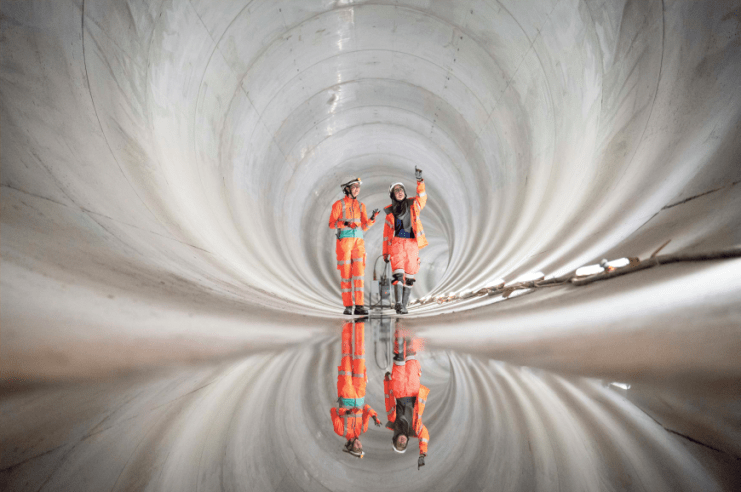
Rarely will you hear anyone bring up the Great Stink of 1858 by choice, but when elite schools are closing over sewage backfill in boarding houses and toilet waste is spilling into the Thames for days at a time, it is worth revisiting the two-month period that resulted in the sordid sewage system Londoners suffer with today.
During this ill-fated summer, heat, industrial waste and human excrement combined to produce an unyieldingly foul smell polluting the air city wide. Previously the rich had been able to ignore London’s antiquated waste system – reliant on the services of local night soil collectors who cleared pits of poo, of which there were 200,000 in a city of 3m. But this smell was bad enough to make anyone who wandered too close to the Thames to faint. Fornication, even, suffered. Cholera was rife, especially after an 1847 directive to throw all sewage into the Thames resulting in an epidemic that took 14,137 lives (ironic considering the current legal storm permits).
However, it was mainly the stink that caused parliament to finally pledge to solve the problem (just two years prior they had rejected proposals due to cost – as our private water firms would do 150 years later). But in 1858 Joseph Bazalgette was the lucky civil engineer tasked with building a new sewage system. He chose to construct a network of 82 miles of underground brick sewers which would intercept sewage flows and divert raw sewage flowing through London’s streets towards the river.
Despite Bazalgette’s praiseworthy work ethic (he personally checked nearly every sheet of design, signing it off JWB), the sewage system was fatally flawed. Instead of multiple pipes through which rainwater and bodily fluid could remain separate, Bazalgette opted for single pipes mixing the two. This has left us in an almighty mess: without separating rainwater drainage, London’s sewers will always be in danger of backflooding bathrooms in the wake of heavy rainfall.
Second, Bazalgette’s belief in the misguided theory miasma, which held that diseases like cholera are spread through air not water contamination, meant his system funnelled untreated sewage into the Thames.
No number of jovial pamphlets (“London’s heaviest drain cover is ready to install!”) or competitions to visit “Loo Gardens” (a temporary flower installation inside a sewage pipe that moved one visitor to tears) changes the fact that ultimately it is just a really big pipe
Sewage treatment centres have since been developed yet “raw” sewage still finds its way into the Thames. London’s Victorian sewage pipes have been creaking with crap as well over double the number of intended users dumping their stuff into its network. What’s more, heavy rainfall has been exacerbated by the climate crisis. The result? Thames Water flushing over 72bn litres of sewage into the Thames since 2020.
So: a shiny new solution. Londoners are being treated to a Super Sewer, to be completed by 2025. But despite the relative perks of the scheme – it is building nine public spaces above sewage treatment centres, is costing Thames Water billpayers just £25 a year extra in bills and has only been delayed by one year (all of which seem fantastical in the context of other major infrastructure projects like HS2) – it it far too late and does not address the mistakes of the past.
Other cities like Paris and Copenhagen separate faecal matter from rainwater by using several pipes – meaning the system doesn’t become so overwhelmed. Sensible design, like absorbable materials and sunken passageways, captures rainwater to avoid flooding pipes.
Tideway, which runs the Super Sewer project that began in 2016 and will finish next year, dresses up their project as transformative. But no number of jovial pamphlets (“London’s heaviest drain cover is ready to install!”) or competitions to visit “Loo Gardens” (a temporary flower installation inside a sewage pipe that moved one visitor to tears) changes the fact that ultimately it is just a really big pipe (big enough to fit between two and three double decker buses in it).
Tideway claims the project will keep London’s sewage system flowing smoothly for another 100 years, with 95 per cent of sewage spills thwarted. But then-Thames Water boss Sarah Bentley says 2.5m tonnes of sewage per year will still flow into the capital’s river, rather a lot. She also said the original analysis overlooked the impact of the climate crisis: “Clearly, with extreme weather events, that are increasing, we need to look at that before it comes into operation in the next two and a half years. But when the original analysis was done 15 years ago, we would have needed a tunnel twice as big.”
The opportunity to redesign London’s sewers in a future-thinking fashion has for the next century been thrown away. Sure, the Super Sewer is an upgrade from the current situation. But that Londoners will continue to battle a sub-par system based on a misguided Victorian model is something to commiserate rather than celebrate. It’s all too little too late, and where’s the ambition?