
Liquid Glass launch shows Apple is cautious on AI

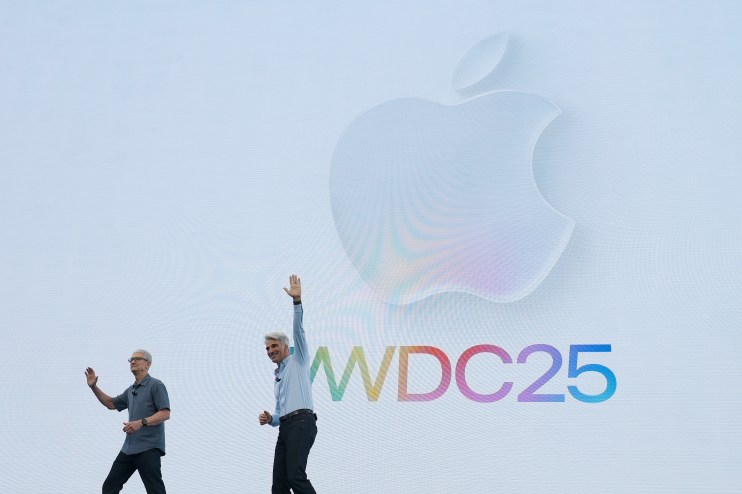
Apple’s headline ‘liquid glass’ announcement at WWDC shows the tech company is deliberately cautious on AI, writes Paul Armstrong
Apple’s WWDC 2025 delivered over an hour of careful polish, hardware refinement and calm technological confidence while actually delivering very little (except for ‘we have high standards’) on the AI that was promised a year earlier. The big news was ‘Liquid Glass’, a new ‘material’ for all its operating systems, and while nothing announced was unfamiliar to anyone following spatial computing or AI, when Apple enters a space, expectations shift. Not through noise, but through inevitability.
Liquid glass captured the headlines, and with good reason. Microsoft explored similar waveguide technology in Hololens. Meta has been chasing wearable AR with billions and limited results. Apple’s arrival reframes those in the way only Apple could. When Apple combines hardware with developer tooling and a distribution engine, an idea goes from theoretical to practical.
Glass that responds to input, context and ambient behaviour may not feel like an urgent business consideration yet. But interface expectations are already beginning to shift – think about nods with Airpods or wrist gestures, and that’s all before we really have any decent AR glasses. Screen-first interaction starts to look like a legacy constraint. Spatial design, gesture controls and ambient responsiveness will start to define the next wave of user experience over the next three to five years. Products and services built around fixed display real estate will need to be rethought. Although, we should also be clear it’s 2025 and I still cannot wave my hand over my iPhone to skip a track without extra apps, so don’t fire your developers just yet.
Enterprise software, digital commerce, media and marketing are all at risk of falling behind if spatial computing reshapes how people perceive and interact with information. Brand visibility will need to evolve into brand presence. The attention economy, already fragile, will fragment further.
Every developer announcement at WWDC hinted at this new architecture. Incremental, measured and fully embedded across Apple’s platform stack. A future where information follows the user, and not the other way around. Can’t wait, can you?
Ambient computing is no longer a speculative design discipline. Developers are now being given access to tools that assume users interact by looking, gesturing, speaking and moving. Touch and swipe remain, but as fallback patterns. The spatial environment becomes a variable, not a constant. Hello nightmare for ROI… or is that return on inference? Interest?
Most teams are still building for glass rectangles. A fundamental rethink of what UI means will be needed. For businesses, this requires a pivot in design logic, and marketing. Navigation patterns based on proximity, data visualisation that reacts to gaze and motion, interfaces that become contextual, not static. Phones aren’t going away, or about to be transferred completely to your face, but a lot of the black rectangle can be, and that should excite and scare business leaders.
Apple’s AI approach remains cautious
Rather than join the arms race for general-purpose AI, Apple is tightening its focus on contextual assistance. Productivity enhancements, language support, user behaviour adaptation, all arenas where AI features are showing up to help people. Fully agentic systems remain out of scope for now, but expect more moves when others figure it out for them to perfect it (or so the saying goes). All of this, and more, is why Apple threw a grenade into the large LLM argument last week too.
From an enterprise standpoint, Apple’s cautious approach makes sense. Deploying AI in real-world settings demands more than advanced models, it needs reliability, explainability and seamless integration. Apple prioritises consistency and privacy over risky, experimental features. For organisations focused on compliance and trust, this is a better fit than flashier, less stable alternatives.
While others lean into autonomous agents, Apple is embedding narrow intelligence where it improves function without generating confusion. AI that drafts emails, surfaces relevant documents, adjusts layouts. Not dazzling, but deployable. These use cases solve real problems without inviting unintended consequences. Is it AGI? No.
Apple, for now at least, seems to be saying your platform strategy shouldn’t just depend on capability, but on restraint. Decisions about which ecosystems to build on will increasingly hinge on how AI is governed, not just how powerful it is. Apple has decided to build slowly, transparently, and with a user-first lens. Is it ambitious? Not massively. But does it reduce risk? 100 per cent. Sounds vaguely European in tone.
Ambient features will reshape expectations across industries. Health, finance, logistics, design, any sector where interface is tied to productivity or experience will be deeply affected. Procurement and strategy teams should begin mapping which workflows will be impacted by spatial computing. Waiting for critical mass may seem safe, but by then customers and users will expect fluency that can’t be faked.
Where Apple goes, others follow
A moment like this also creates the space to reconsider Apple’s ecosystem advantage. Not because of design, but because of distribution. Developer momentum remains unmatched. The App Store drives monetisation. System-level integration means user onboarding happens without friction. Apple’s edge lies in making emerging tech feel ready. Constraints still exist though, and App Store policies remain pretty(!) restrictive. Hardware pricing limits early adoption. SDK access is tightly controlled. None of this is new, but none of it changes the main point: when Apple enters a space, adoption follows because the friction is downstream of the value.
Design and innovation teams should not see WWDC 2025 as a call to match Apple’s product roadmap. The right move is to treat it as an early signal that the foundations are shifting. Interfaces will become adaptive, and intelligence will become invisible. Consumer expectations will shift away from device literacy and toward context fluency. The magic is being injected into the apps and interfaces, like adding power steering or autocorrect: helpful, unseen and immediately beneficial.
Building for that world starts now. Every moment your company spends refining a static layout or optimising a checkout flow assumes the future will continue to look like the past. A lot of people I have been speaking with from SXSW to AI Summit believe that assumption will break, quietly at first, and then all at once. Apple hasn’t redefined the market this week, but they made it very clear what shape the future will take. Liquid glass, spatial operating systems, ambient intelligence – none of these are single products, they’re the scaffolding for the next decade of interaction with your business. You now get to decide if the future for your business smashes, or seeps, through the liquid glass.
Paul Armstrong is founder of TBD Group, TBD+ and author of Disruptive Technologies