
Let’s be honest… this Budget is austerity for the private sector

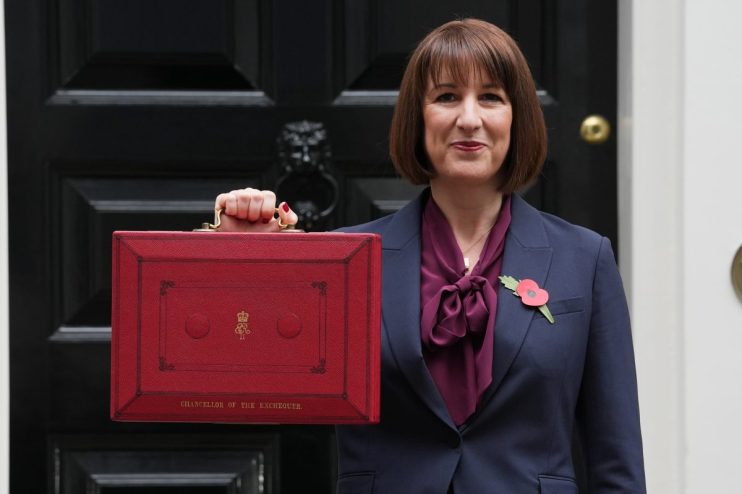
Rachel Reeves has introduced a new kind of Marxism with this Budget, where private industry foots the bill for an expanding public sector, and the poorest don’t get better off, says Mattew Lesh
Just two months ago, in a speech delivered inside Downing Street, Keir Starmer declared that growth and wealth creation were his government’s top priority. How times have changed.
This Budget veers Britain onto a starkly different course. While the public sector continues to expand without reform, it’s now funded by an additional £170bn in new borrowing and £40bn in higher taxes imposed on the productive sectors of the economy. Instead of aiming for fiscal balance, this Budget imposes austerity on the private sector.
In the short term, we may experience a temporary boost from higher government spending. But as the Office for Budget Responsibility warns, reduced business investment and a drop in private consumption will likely drive growth down to a meagre 1.5 per cent by decade’s end — a far cry from the highest G7 growth the government once promised.
The standout measure is a regressive employers’ national insurance hike, which will make it particularly costly to employ lower-paid workers by increasing the rate and lowering the threshold. This breaks the spirit of Labour’s election manifesto, if not the wording. This is a “jobs tax”, as it was dubbed by then-Shadow Chancellor Rachel Reeves when the Tories introduced the policy in 2021. The tax will filter down to consumers through higher prices and hit workers in the form of lower real wages.
The largest tax-raising Budget in British history
And that’s only the beginning of the largest tax-raising Budget in British history. Changes to capital gains, stamp duty, inheritance tax, non-dom status, and carried interest send a clear message to investors, entrepreneurs, and wealth creators: Britain is no longer a welcoming place for them.
Whether efforts to blame the previous government for these tax hikes will succeed politically remains to be seen. Starmer’s nose-diving approval ratings over recent months indicate that the public has been less than impressed by attempts to roll the pitch on ‘tough decisions’. The downbeat rhetoric about the state of the economy has sapped business confidence.
Admittedly, the Conservatives left Britain in a poor economic position, failing to address the planning system, reform public services, or restrain government size. With stagnated growth, near post-war high taxes, and debt levels reaching 100 per cent of GDP, Labour has simply chosen to double down.
Taxes will climb to record highs, while new fiscal rules are being reworked to justify even greater borrowing and spending. These accounting changes, which consider assets in borrowing calculations, are positioned as allowing for increased capital and infrastructure investments but will see the government borrow tens of billions more over the coming years.
The new fiscal rules may sound reasonable at first glance, but they will be costly as interest rates increase, particularly for people’s mortgages. The new consideration for assets also fails to consider longer-term liabilities, as an ageing population means fewer workers are expected to pay astronomical amounts on pensions, health and social care.
Symbolically, Reeves has placed a portrait of Ellen Wilkinson, a founding member of the British Communist Party, in her No. 11 office. But we should not mistake this Budget for traditional Marxism. Instead, it represents a new form of class politics. While private industry — and by extension, its workers — is expected to foot the bill, the poorest won’t see significant gains. The real winners are Labour’s new key supporters: the public sector.
Departmental budgets are going up. The NHS will absorb over £22.6bn more funds without reform. The arduous task of improving public sector productivity, which has barely budged since 1997 according to the ONS, will not yet begin.
The government has chosen to secure the state, but this decision leaves the country’s economic future uncertain. In opposition, Starmer vowed to end ‘sticking plaster politics’. Without fixes to public services, reforms to the tax system, or meaningful pro-growth politics, today’s Budget will leave us poorer for longer.
Matthew Lesh is the Country Manager at Freshwater Strategy and a Public Policy Fellow at the Institute of Economic Affairs