Skip to content
City PM
  • Germany
  • France
  • Europe
  • Markets
  • Business
  • Opinion
  • Germany
  • France
  • Europe
  • Markets
  • Business
  • Opinion
Monday 29 April 2024 3:27 pm  |  Updated:  Monday 29 April 2024 4:18 pm

Labour’s rail nationalisation is a misdiagnosis. More state intervention can’t be the cure

By: Guy Taylor

Transport Reporter

Add as a preferred source on Google
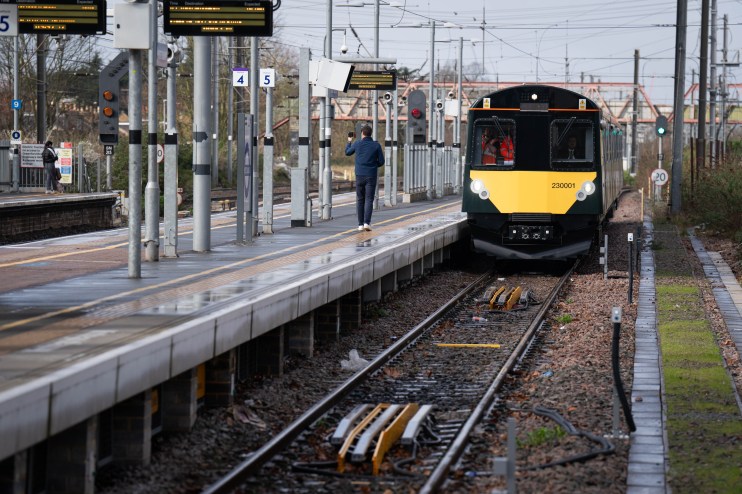
Train approaching West Ealing Station, London.(Photo creditL James Manning/PA Wire)

Labour’s plans to renationalise Britain’s rail network have been touted as the “biggest reform of our railways in a generation.”

Nationalisation is something of a buzzword in political campaigning. Voters on both sides are pitted against each other, believing the only remedy for the UK’s struggling railway sector is a binary choice between privatisation or state ownership.

But Labour’s policy is a misdiagnosis of the issue.

To start with, it misses the little-known fact that Britain’s railways have been effectively nationalised already.

Since Covid-19, train companies have been running under highly restrictive government contracts. Ministers in Whitehall have tight financial control of each operator and even the power to fiddle with timetabling.

As Rail Partners’ chief executive Andy Bagnall explained: “Train companies have been… subject to a level of micromanagement by government not even seen under British Rail.

“Change is needed for the railways, but nationalisation is a political rather than a practical solution which will increase costs over time.”

Where is the nuance in Labour’s argument? You can’t use the current state of Britain’s railway system as a reason to nationalise when one of the biggest complaints is too much government oversight. Speak to any rail company and they will tell you the same.

The reforms also lack consistency. Voters are hoodwinked into believing the private sector will be stripped out entirely under Labour’s vision.

Lesser known rolling stock companies underpin the entire system by leasing trains to operators, but they will remain privately owned. The rail freight sector, which has over 10 per cent market share, will stay private.

Read more

Five graphs that reveal Burnham’s fiscal headache

Burnham smiling broadly at a community event, surrounded by enthusiastic supporters, conveying a sense of positivity and u...

Labour has also backed “open access,” a model in which providers take full commercial risk. Small-scale trials have been a huge success, so it is good that they are getting a say, but this is an admission that commercial incentives are important.

That’s the real weakness of nationalisation. There will be minimal upfront cost, but at a time when national debt is worryingly high, it will weigh on government finances for years to come.

Incentives for operators to boost flagging demand, which are critical in ensuring a successful recovery from the pandemic, will be totally removed. This is vitally important as, taking the Elizabeth Line out of the equation, revenue still sits below pre-pandemic levels despite billions in government subsidies.

Now, the railways will be forced to compete with other public services, such as the NHS, because of an already dwindling cash pile.

What the sector is unanimously behind is Great British Railways (GBR), an arms-length government body run by rail experts to act as a unifying ‘guiding mind’ for the sector.

But Labour has presented this as a form of nationalisation, despite the fact it was backed and formulated by the Conservative party.

The reality is that GBR could also be run as an advisory body to help reduce fragmentation and remove ministerial meddling without removing private sector creativity.

Ultimately, the solution requires stepping back from the public vs. private debate, not stepping into it.

A well-functioning railway system fundamentally needs investment, incentives, and creative innovation. State-owned Switzerland and privatised Japan both do these well, and both countries are reaping the rewards.

Labour’s headling grabbing nationalisation policy may win votes. Give it a few years, though, and the core problems will be the same.

Read more

Starmer resigns as Prime Minister

Business conference attendees networking at a corporate event with banners and presentation screens in the background

Share this article

  • Facebook
  • X
  • LinkedIn
  • WhatsApp
  • Email

Similarly tagged content:

Sections

  • News

Categories

  • Business
  • Transport & Infrastructure

People & Organisations

  • Labour
  • Nationalisation
  • rail
  • rail nationalisation

Trending Articles

  • Top Burnham adviser calls for capital gains and inheritance tax hikes

  • Clarkson’s Farm and why businesses must stop blaming the weather

  • Two solicitors linked to Post Office scandal charged with misconduct

  • Lloyd’s deputy chair: The City is a club in the best sense

  • Revealed: Secret Treasury plan to tax State Pension before it is paid out

More from City PM

  • Five graphs that reveal Burnham’s fiscal headache

    Politics
    Burnham smiling broadly at a community event, surrounded by enthusiastic supporters, conveying a sense of positivity and u...
  • Starmer resigns as Prime Minister

    Politics
    Business conference attendees networking at a corporate event with banners and presentation screens in the background
  • Thames Water, energy grid, rent prices: Burnham drums up public control agenda

    Politics
    Burnham skyline at sunset highlighting modern architecture against a vibrant orange and pink sky, reflecting urban develop...
  • Andy Burnham commits to triple lock despite backlash over ‘unsustainable’ policy

    Politics
    Andy Burnham speaking to supporters during his campaign to re-enter UK parliament, engaging with the public in outdoor set...
  • Peter Kyle vows state will take bigger stakes in Britain’s next tech giants

    Tech
    Peter Kyle speaking at a podium during a press conference, addressing current issues and developments
  • Instead of picking winners, Peter Kyle should get out of their way

    Opinion
    Peter Kyle speaking at a podium during a press conference, addressing current issues and developments
  • Electoral reform could destroy the Labour party

    Opinion
    Polling station exterior with voters lining up for local election in a community setting with clear signage and ballot box...
  • London’s heatwave is a boon for Lime bikes

    Transport & Infrastructure
    Lime faces growing scrutiny over its safety record.

City PM — European politics, business and analysis.

Europe

  • Germany
  • France
  • Europe
  • UK & Ireland

Topics

  • Business
  • Markets
  • AI
  • Technology
  • Opinion
  • Energy

More

  • Politics
  • Economics
  • Fintech
  • Legal
  • Sport
  • Life

Company

  • About City PM
  • Editorial Policy
  • Corrections
  • Contact
  • Terms of Use
  • Privacy Policy
  • Cookie Policy
© 2026 City PM · Published by CityPM Media, Bahnhofstrasse 65, 8001 Zürich, Switzerland
About · Editorial Policy · Corrections · Contact · Privacy