Skip to content
City PM
  • Germany
  • France
  • Europe
  • Markets
  • Business
  • Opinion
  • Germany
  • France
  • Europe
  • Markets
  • Business
  • Opinion
Wednesday 07 May 2025 5:44 am  |  Updated:  Wednesday 07 May 2025 11:22 am

Labour’s digital ID by the backdoor will be a honey pot for hackers

By: Jasleen Chaggar

Add as a preferred source on Google
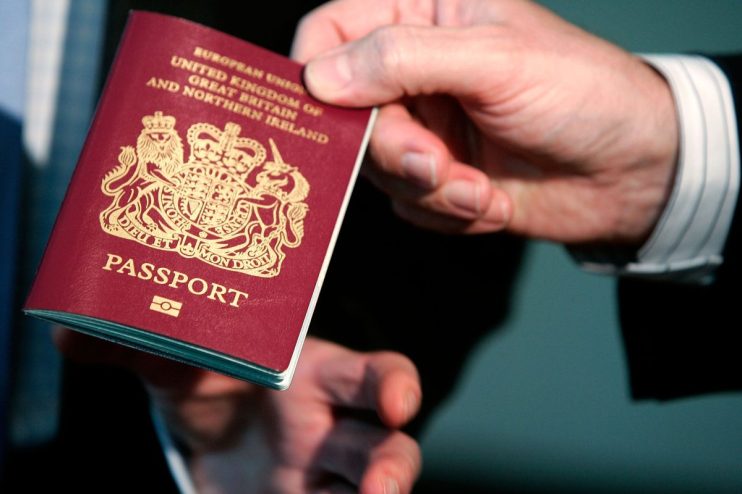
WASHINGTON - OCTOBER 24: A new British biometric European Union passport, which is embedded with a microchip, is shown during a news briefing at the British Embassy October 24, 2005 in Washington, DC. "The new British biometric passport contains features such as an enhanced security chip which will help to make international travel as safe and efficient as possible," said British Ambassador to the United States, Sir David Manning. (Photo by Alex Wong/Getty Images)
(Photo by Alex Wong/Getty Images)

Labour’s attempt to usher in digital IDs via the backdoor is in urgent need of scrutiny, writes Jasleen Chaggar

You may feel a sense of deja vu at the debate over IDs. That campaign – No2ID – was fought and won in the early 2000s, but it may be set to reignite with calls from MPs for the government to launch a digital ID, the launch of the new gov.uk wallet and the government continuing to steam ahead with its sprawling Data (Use and Access) Bill this week.

The data bill is building the framework for a digital ID ecosystem for the private sector at the same time the government is pushing its own digital wallet for public services. The idea is to make the government more efficient by allowing members of the public to access their data in one place. 

With more of us spending more of our lives online, the plans may seem common sense at first glance. But what is inclusive for some is not inclusive for all. There are many people in the UK who cannot or do not want to use digital methods to identify themselves. The digital divide is already causing issues for many people who are trying to use government services: according to the National Audit Office, only about 20 per cent of Universal Credit applicants can use online identity verification methods.

The existence of digital poverty also means that not everyone can afford or has the skills to get online. Ofcom notes that seven per cent of British households do not have internet access, and this figure rises to almost 20 per cent for low-income households and those over 65. Digital inclusion means recognising the reality that it will never be possible to get everyone online. However, the bill does not include a right to a non-digital ID. 

What does digital ID mean for personal privacy?

Before pressing ahead with embedding digital ID ecosystems, MPs also need to consider what a centralised digital ID scheme for public services would mean for privacy and security. A centralised repository of personal information about individuals – which could include every time they have been to see their GP, their GCSE grades, bank statements submitted to the department of work and pensions and tax returns – would be a honeypot for hackers and foreign adversaries who already have a track record of trying to breach government databases.

The planned digital wallet will be able to host government documents including those used “to prove things such as your age, identity or eligibility for services”. While the government has insisted that the government wallet would be voluntary there is no legal guarantee or safeguard protecting us from one day living in a world of a mandatory digital identification scheme.

In light of these plans, Steff Aquarone MP has introduced an amendment to the bill that would introduce a right to use non-digital ID when interacting with both private and public services. Unfortunately, not a single member of the Labour Party is supporting the amendment.  

Those who advocate for digital IDs have a well-intentioned belief that the government will be more efficient if we embrace a centralised digital approach to government identity and data. But digital ID schemes are not a panacea to government efficiency issues. There are liberal democracies such as Canada and Denmark that manage to offer public services without a nation-wide digital ID programme.

Labour did not campaign on launching a digital ID scheme, but it is paving the way to introduce one via the back door. The government should use the Bill as an opportunity to make sure that people always have a choice of how to identify themselves, ensuring that a digital ID scheme is never a requirement. 

Jasleen Chaggar is legal and policy officer at Big Brother Watch

Read more

Forget Palantir, Microsoft is the government’s real tech problem

At the centre of Microsoft’s pitch is the idea of agents - small, specialised AI systems trained to take on specific security tasks.

Share this article

  • Facebook
  • X
  • LinkedIn
  • WhatsApp
  • Email

Similarly tagged content:

Sections

  • Opinion

Categories

  • Opinion
  • Business

People & Organisations

  • Big Brother Watch
  • data bill
  • data privacy
  • Digital ID cards

Trending Articles

  • Top Burnham adviser calls for capital gains and inheritance tax hikes

  • A meeting with the breakfast king of Mayfair

  • Clarkson’s Farm and why businesses must stop blaming the weather

  • BT tops FTSE 100 after finding new home for international business with Verizon joint venture

  • FTSE 100 Live: Stocks jump on defence and metals boost; Oil on track to shed a fifth on US-Iran peace hopes

More from City PM

  • Forget Palantir, Microsoft is the government’s real tech problem

    Opinion
    At the centre of Microsoft’s pitch is the idea of agents - small, specialised AI systems trained to take on specific security tasks.
  • Starmer resigns as Prime Minister

    Politics
    Business conference attendees networking at a corporate event with banners and presentation screens in the background
  • Starmer’s social media restrictions will mean the government can spy on every phone

    Opinion
    Keir Starmer at tech event discussing innovation and policy, surrounded by tech leaders and digital displays
  • Barclays and Lloyds join banking sector plan for digital ID

    Banking
    Banking app interface showing financial transactions and account balance on a smartphone screen, emphasizing digital finan...
  • £4.5bn black market cigarette tax loss should be ‘a major wake-up call’ for Labour

    Tax
    Getty Images logo displayed on a digital screen, symbolizing media and content licensing in a business context
  • Thames Water, energy grid, rent prices: Burnham drums up public control agenda

    Politics
    Burnham skyline at sunset highlighting modern architecture against a vibrant orange and pink sky, reflecting urban develop...
  • In 23 months Labour has dragged the UK economy to its knees

    Economics
    Keir Starmer
  • From stamp duty to the triple lock, Andy Haldane says bold Burnham leadership can usher ‘vibe change’ for UK economy

    Politics
    Andy Haldane, economic adviser, with Andy Burnham discussing economic strategies in a formal meeting setting

City PM — European politics, business and analysis.

Europe

  • Germany
  • France
  • Europe
  • UK & Ireland

Topics

  • Business
  • Markets
  • AI
  • Technology
  • Opinion
  • Energy

More

  • Politics
  • Economics
  • Fintech
  • Legal
  • Sport
  • Life

Company

  • About City PM
  • Editorial Policy
  • Corrections
  • Contact
  • Terms of Use
  • Privacy Policy
  • Cookie Policy
© 2026 City PM · Published by CityPM Media, Bahnhofstrasse 65, 8001 Zürich, Switzerland
About · Editorial Policy · Corrections · Contact · Privacy