
Labour’s appeal to regulators is about blame-shifting, not growth

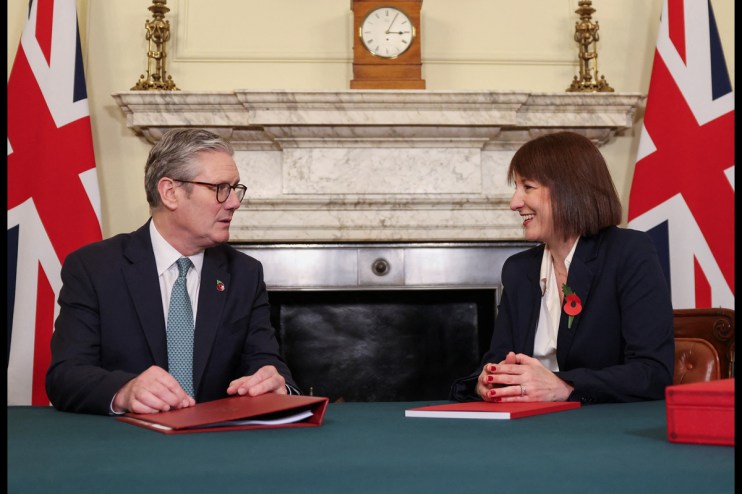
Labour has appealed to the regulators for ideas to boost the economy, but Britain can’t regulate its way to growth, writes Eliot Wilson
After six months of a Labour government, it would be hard to argue the economy is healthy. The economy flatlined in July, August and September, the hike in employers’ National Insurance contributions cost jobs and may see prices rise, and the cost of government borrowing recently hit a 16-year high, before falling again with an unexpected dip in inflation. The Prime Minister and the Chancellor remain as bullish as their personalities allow, but they must privately be concerned.
On Christmas Eve, Sir Keir Starmer wrote to some of the UK’s main regulatory bodies, the Financial Conduct Authority, the Competition and Markets Authority, the Environment Agency, Ofgem, Ofwat and Ofcom, asking them to contribute suggested reforms to encourage growth by mid-January. He had earlier that month identified “the regulators, the blockers and bureaucrats” as part of “an alliance of naysayers” holding back progress.
Last week, Rachel Reeves, who in her Mansion House speech last year accused regulators of “regulating for risk, but not regulating for growth”, invited a group of them to Downing Street. She wants financial regulators in particular – the FCA, the Bank of England’s Prudential Regulation, Monetary Policy and Financial Policy Committees and the Payment Systems Regulator – to have a “growth-focused remit”.
Ministers are already notorious for speaking not so much in word salads as word soup, an opaque and muddy blend of buzzwords like “growth”, “missions” and “stability” which describes a brighter future with few clear, realistic paths towards it. They have relied heavily on ambitions which Dr Pangloss might deem excessively optimistic.
How do regulators currently account for growth?
Let’s be frank. Regulators exist to enforce standards, fairness and protection of various interests. The FCA sets standards for financial services firms to protect consumers and the market as a whole. The Environment Agency protects our natural surroundings while promoting sustainable development. Ofgem looks after consumers, principally by promoting competition in the gas and electricity sector.
The Deregulation Act 2015 added a “growth duty”, stipulating that regulatory action should only be taken where necessary, and should be proportionate, having “regard to the desirability of promoting economic growth”. Clearly, the current government wants to go further.
What is it, exactly, that the government seeks from the regulators? The terms of the “growth duty” made it clear that growth should not be prioritised above normal regulatory activity, which is perhaps what Reeves means by “regulating for risk”, though I would argue that “risk” is one of the biggest elements of a regulator’s task.
Let us suppose that the government believes regulators have heretofore been too cautious and risk-averse. These “blockers”, in Starmer’s language, have prevented activities which might have led to economic growth, deeming the “risk” too great. The only possible conclusion to draw from that hypothesis is that ministers want less intrusive, lighter-touch regulation: in effect, fewer protections. The risk is worth the potential gain.
Careful what you wish for
If this is the case, the government has been inept, expecting the regulators to formulate policy while providing little time or context. Christian Hunt, who worked in risk and compliance for Swiss financial giant UBS and as COO of the Bank of England’s Prudential Regulation Authority, was sceptical.
“Asking regulators for ideas is sensible,” he said. “But a seemingly rushed request sent over the holiday period is not. How are regulators supposed to evaluate ideas without knowing what kind of growth the government wants? Ironically, this is exactly the kind of ill-defined fishing exercise that regulated firms rightly criticise their regulators for.”
The nature of that growth is central. Politics is the art of prioritisation, but should we really imagine that the government, let alone some of its core supporters, want more deregulation, less supervisory control? For example, as Hunt suggested, “relaxing anti-money laundering requirements would generate lots of growth, but probably not the kind ministers want”.
The Prime Minister promised a “laser-like focus on growing the economy”. But he immediately qualified that by saying it must be in every part of the country. He wants “secure borders” and less immigration, major changes in workers’ rights, regulation of English football and ticket prices, and he remains committed to the arbitrary legal target set in 2019 of achieving net zero emissions by 2050. That is not “laser-like” but qualified. He needs to be honest about that.
There is only so much regulators can, and should, do: their primary purpose is to enforce standards and protect consumers. I doubt Starmer has an appetite for a bonfire of regulation, or that Labour would follow him enthusiastically with kindling. Appealing to the regulators captures a few headlines, but it is not utterly cynical to wonder if it also paves the way for sharing blame, and dips the regulators’ hands in the blood as well as those of ministers. The path to real economic growth remains elusive.
Eliot Wilson is a writer and strategic adviser