Skip to content
City PM
  • Germany
  • France
  • Europe
  • Markets
  • Business
  • Opinion
  • Germany
  • France
  • Europe
  • Markets
  • Business
  • Opinion
Wednesday 27 November 2019 6:55 am  |  Updated:  Tuesday 26 November 2019 7:00 pm

Labour’s rejection of conventional economic theory ignores important insights

By: Paul Ormerod

Add as a preferred source on Google
BRITAIN-EU-POLITICS-BREXIT-VOTE-LABOUR
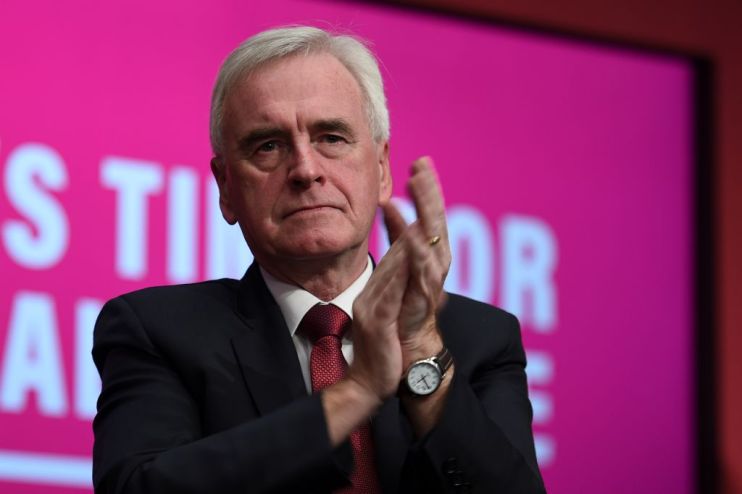
Labour's John McDonnell has radical plans for the UK

One of the first tasks facing whoever becomes chancellor after the General Election will be choosing the next governor of the Bank of England.

Getting to make this choice would be a key step in the plans of Labour’s shadow chancellor John McDonnell to  shake up the Bank of England, but his radicalism is not simply a matter of practical policies. McDonnell appears to want a new intellectual approach at the central bank and across government, one not based on existing economic theory.

Many people on the left, such as McDonnell, have criticised austerity ever since the financial crisis of the late 2000s. They often believe this to be a criticism of conventional economic theory. 

But these are two different things. They are not the same. It is certainly possible to construct a coherent critique of austerity purely on the basis of standard theory.  

Economists disagree on the matter because of different interpretations of the empirical evidence, rather than on the basic theory.

However, Labour’s election manifesto appears to want to ditch the most powerful insight of the whole of economic theory. Namely, that people react to changes in the incentives which they face. If incentives change, behaviour changes.

For example, even the most dedicated critic of economics will slow down when approaching a speed camera if they are exceeding the speed limit. On the open road, there is a chance of being stopped by the police, but it is very small. Yet the probability of incurring a penalty rises sharply in the presence of a speed camera. And so behaviour changes — the driver slows down.

We can apply this insight to taxation. Already, the top one per cent of earners in the UK pay well over 30 per cent of all income tax, according to calculations by the Institute of Fiscal Studies.  

Read more

Zack Polanski: I have a ‘serious vision’ for UK businesses

Zack Polanski addressing a business audience at a conference podium, engaging in a discussion on economic strategies

Before tax, to be in the top one per cent you have to earn at least £166,000 a year. After tax, the figure falls to £111,000. So these individuals — just over 300,000 of them — are already handing over one third of their income to HMRC.

We know from Labour’s manifesto that McDonnell wants to raise many billions more in tax from the top five per cent of earners. 

Much of this would potentially fall on the top one per cent, where the money is really concentrated. But this would require these taxpayers to stand still and wait to be plucked like so many golden geese. Economic theory, supported by a vast amount of empirical evidence, suggests that this just would not happen.  

The same ignorance of fundamental, well-supported economic theory is seen in Labour’s policy on corporation tax. The proposal is to raise the rate from 19 to 26 per cent.

The basic problem here is that if the tax rate changes, the behaviour of a company will change.

The company may hold down wages. It may not take on extra staff, or even get rid of existing employees. It may cut dividends, so that pension funds and the income of pensioners is reduced. Or it may slash investment, so that the workers in the firms which supply to the company will suffer.

Instead of jettisoning economic theory, Labour should learn from its most powerful insights.

Main image credit: Getty

Read more

Former Bank of England rate-setter to become next OBR chair 

Jonathan Haskel speaking at a business conference, wearing a suit and tie with a focused expression, emphasizing economic ...

Share this article

  • Facebook
  • X
  • LinkedIn
  • WhatsApp
  • Email

Similarly tagged content:

Sections

  • Markets & Economics
  • News
  • Opinion

Categories

  • Economics
  • Opinion
  • Politics

Related Topics

  • General election 2019
  • John McDonnell
  • Tax

Trending Articles

  • Revealed: Secret Treasury plan to tax State Pension before it is paid out

  • Two solicitors linked to Post Office scandal charged with misconduct

  • Burnham’s new chief of staff ran City firm advising Thames Water and rival Heathrow bidder

  • Barclays and Lloyds join banking sector plan for digital ID

  • Clarkson’s Farm and why businesses must stop blaming the weather

More from City PM

  • Zack Polanski: I have a ‘serious vision’ for UK businesses

    Politics
    Zack Polanski addressing a business audience at a conference podium, engaging in a discussion on economic strategies
  • Former Bank of England rate-setter to become next OBR chair 

    Economics
    Jonathan Haskel speaking at a business conference, wearing a suit and tie with a focused expression, emphasizing economic ...
  • As it happened: FTSE 100 see-saws after inflation undershoots; Oil at $80 as Trump threatens ‘dropping bombs’ on Iran

    Markets
    Donald Trump addressing media at a press event, wearing a suit and tie, with reporters and cameras in the background.
  • Markets would take Miliband chancellor appointment ‘worse’ than Streeting, predicts Cavendish chief

    Markets
    Skyline of Canada with iconic financial district buildings, highlighting UK investments and economic growth.
  • Andrew Bailey warns on AI: ‘Everybody is currently priced to be a winner’

    Tech
    Bank of England Governor Andrew Bailey said cited several indicators that the labour market was softening.
  • Burnham turns to ex-OBR and Bank of England chiefs on economic policy

    Politics
    British Chambers President Andy Haldane speaking at a business conference, addressing economic growth and industry challen...
  • From stamp duty to the triple lock, Andy Haldane says bold Burnham leadership can usher ‘vibe change’ for UK economy

    Politics
    Andy Haldane, economic adviser, with Andy Burnham discussing economic strategies in a formal meeting setting
  • BCC’s Haviland: Burnham must make growth his number one priority

    Business
    Shevaun Haviland, British Chambers of Commerce boss, speaking at a business event, emphasizing economic growth strategies

City PM — European politics, business and analysis.

Europe

  • Germany
  • France
  • Europe
  • UK & Ireland

Topics

  • Business
  • Markets
  • AI
  • Technology
  • Opinion
  • Energy

More

  • Politics
  • Economics
  • Fintech
  • Legal
  • Sport
  • Life

Company

  • About City PM
  • Editorial Policy
  • Corrections
  • Contact
  • Terms of Use
  • Privacy Policy
  • Cookie Policy
© 2026 City PM · Published by CityPM Media, Bahnhofstrasse 65, 8001 Zürich, Switzerland
About · Editorial Policy · Corrections · Contact · Privacy