
It’s the energy price stupid

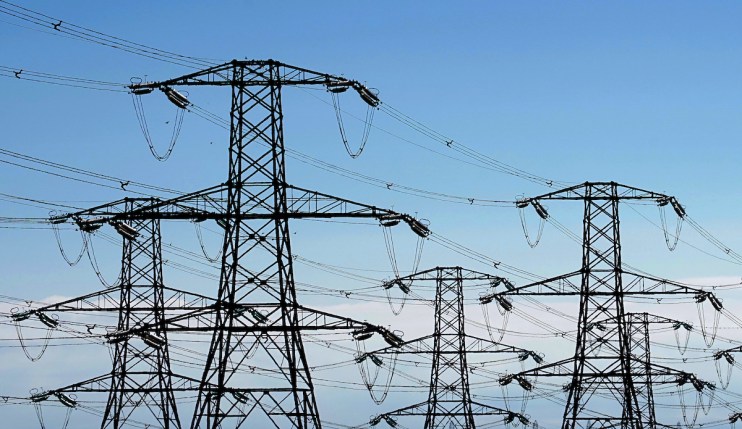
It’s not just the Conservatives, governments across the Western the world are being punished for failing to manage expectations in the face of an energy price shock, writes Paul Ormerod
The scale of the Conservative defeat in the election has been amply documented. But what has been mentioned much less is the fact that they are by no means alone.
Other Western governments which have faced the electorate since the world energy price rise during 2021 and 2022 have suffered serious defeats.
Olaf Scholz’s SPD in Germany was hammered in the Euro elections in May.
Germany is divided into 400 electoral districts. The SPD led the poll in just four of them. The centre-right CDU/CSU came top in almost every district in the old West Germany and the Alternative für Deutschland (AfD) did likewise in the East.
Of course, the elections were not on a first past the post system so the SPD might have done a bit better if they had been. But not much. The CDU/CSU took 30 per cent of the vote, AfD 16 per cent and the SPD, the governing party, just 14 per cent.
In the same way, Emmanuel Macron’s centrist party has been heavily defeated in the recent French elections.
The largest grouping in Parliament, the left wing New Popular Front, ran on a manifesto which makes Jeremy Corbyn look like an ardent free marketeer. Even National Rally, surprisingly beaten into third place, pledged levels of public spending likely to induce heart attacks in the bond markets.
In Spain, where imagery of the Civil War of the 1930s is still very much alive and party loyalties much stronger as a result, the ruling centre-left PSOE lost substantial ground to the right in both the December 2023 general election and the Euro elections in May.
Across Western Europe, there has been a conspicuous reluctance of the electorates to understand and accept the consequences of a sharp rise in world energy prices.
Such an increase is effectively a tax. Income is transferred from countries which are net energy importers to those which are net exporters. National income in net importing nations unequivocally falls.
As a result, incumbent governments have been punished at the first opportunity.
Rather dispiritingly, governments attempted to shield voters from the implications by subsidising energy prices.
It was the scale of the proposed energy subsidy rather than the tax cuts which was the undoing of the Truss government. The open-ended commitment which she and her Chancellor gave potentially dwarfed the tax cuts. The bond markets duly took note and Truss was turfed out.
Governments proclaim their adherence to reducing carbon emissions and moving towards net zero. The energy price rise gave both firms and consumers a strong incentive to reduce energy consumption.
Instead, governments did everything possible to ensure that people could afford to continue to use just as much energy as before the price increase.
But trying to protect living standards in the face of an external shock is a bit like trying to command the tide not to come in. Whatever is done has adverse consequences.
Subsidising energy prices costs money, money which could otherwise have been used either for tax cuts or for public spending.
All this, it should be said, is in sharp contrast to the last time when there was a big rise in energy prices, in the 1970s. Then, market signals were basically allowed to work. Like now, governments became unpopular and lost power, but at least they did not wreak havoc on the public finances.
Bill Clinton’s famous phrase about elections was “it’s the economy, stupid!”. Events since then have shown that he was not completely correct. What we might broadly term cultural factors, which include the level of migration, are also important.
But the expectations of electorates need to be managed much more realistically. Otherwise, electoral volatility and turmoil will persist.
Paul Ormerod is an economist at Volterra Partners LLP, an Honorary Professor at the Alliance Business School at the University of Manchester and author of Against the Grain: Insights of an Economic Contrarian, published by the IEA in conjunction with City PM