
It’s not rocket science – if we want more maths teachers, we should pay them more

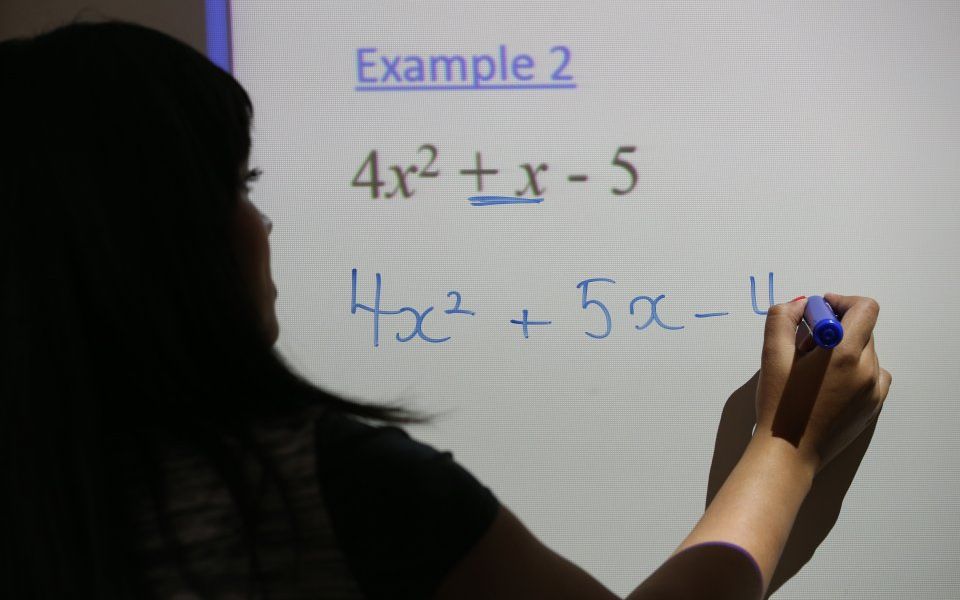
Britain faces a teaching crisis: half of new maths and physics teachers quit within five years.
Just 47 per cent of those teaching these subjects at GCSE level have a relevant degree, and in the most deprived schools, it’s as low as one in five.
Thursday’s report from the Education Policy Institute (EPI) paints a stark picture. Fortunately, it offers a solution too: pay teachers of high-demand subjects more to improve recruitment and retention.
Read more: Learn these skills to get a higher salary
That’s not the only answer, of course. People should be encouraged to switch into teaching from other careers (and, indeed, the Now Teach scheme has been set up for this purpose). Right now, a university engineering lecturer or experienced science personal tutor has to jump through a host of box-ticking hoops before they are allowed on their own in a state school classroom (although an independent school could employ them instantly).
More specialised stem training should also be offered to teachers in other subjects. And the amount of administrative pressure on teachers, from draconian marking criteria to endless targets, should be eased.
But teacher pay is primarily set on a national scale according to years of experience, with a slight supplement for London. Changing that, and offering financial incentives for teachers in the most-needed subjects, is the quickest and most effective way to tackle the shortage.
Unsurprisingly, the teaching unions disagree. The National Education Union labelled the EPI proposals “divisive and overly simplistic”, calling instead for pay rises across the board, and according the ASCL headteachers’ union, higher pay “would mean other teachers were paid less than their colleagues, despite having similarly demanding workloads”. The implication is clearly that this is not fair.
And that’s true in way – but the labour market isn’t fair. A graduate in computer engineering may work the same hours as one working in publishing, but can expect nearly double the starting salary.
We can (and maybe should) debate whether creative skills are being undervalued in favour of stem, but no one would raise an eyebrow on learning that coding earns you more than calligraphy.
Try as we might, it’s impossible to take the economics out of teaching.
The average starting pay for a maths graduate is nearly £4,000 higher than a new teacher’s salary. Students technically leave university with over £50,000 of debt – teaching may be a vocation, but it is unsurprising that finances play a role in graduates’ career choices.
But there’s another problem with the fairness line. At the moment, schools with stem teacher shortages compensate by drafting in those from other subjects. That’s not fair to a history teacher lumbered with a GCSE maths syllabus they don’t fully understand, and it’s certainly not fair to the pupils who risk having their education jeopardised.
That doesn’t mean that teachers in other subjects might not also deserve a raise. Pay has been frozen for most teachers since 2010, and the increases announced last month don’t cover inflation.
But there’s no escaping the economic fact that some teachers command a higher value proposition than others. The people best placed to determine which experts are worth paying more for are individual headteachers and local education bodies, not central government, and certainly not unions.
And if there is no shortage of geography applicants but a dearth of maths specialists, refusing to consider divergent pay scales isn’t only unfair – it’s failing the students.
Read more: Apprenticeship levy bashed by UK businesses