
Is Labour changing its mind about the OBR?

Labour is becoming increasingly disillusioned with the OBR as the reality sets in that no anount of forecasting can solve Britain’s spending problems, says Paul Ormerod
How fashions change! Less than a year ago, Labour politicians were falling over themselves to praise the Office for Budget Responsibility (OBR).
Labour was elected on a promise of “change”. And one of the things they were going to change was to ensure that the financial markets would never take fright under Labour as they did when Liz Truss was Prime Minister.
We can observe that at present the yield on 10-year UK government bonds, a key indicator of confidence, is slightly higher than it was under the short-lived leadership of Truss.
This usefully illustrates the old military adage “no battle plan survives first contact with the main force of the enemy”.
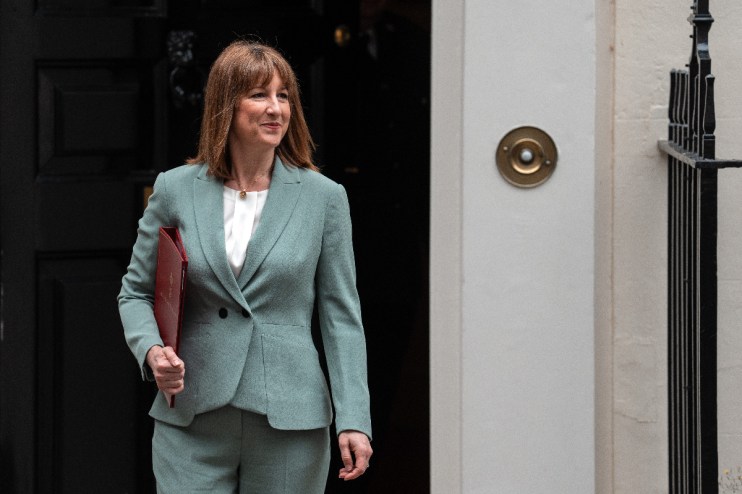
But Labour’s hopes were high, and none more so than those of the Chancellor, Rachel Reeves.
What happened to the £22bn black hole?
In early August last year, for example, the Treasury published a document entitled “Fixing the Foundations”. It not only claimed to have accounted for the £22bn black hole in the public finances – that mythical beast which few others sighted – but a remarkable section pronounced that the fiscal framework would be strengthened “to ensure this never happens again”.
A key way to achieve this aim was “formalise the Office for Budget Responsibility’s power to forecast overspend”. All very well and good. But could anyone in advance have predicted the gigantic overspend on HS2? And this is just the most famous of a whole series of public sector projects where the actual costs have turned out to be several multiples of the original estimates
Reeves went even further. She legislated that no government could announce fiscally significant measures without being subject to an independent assessment by the OBR.
As a result of all this, Labour MPs found themselves dragooned into the division lobbies to vote through measures such as abolishing the winter fuel allowance for all but a small minority of pensioners and cutting benefits to the disabled.
Labour eulogised the OBR. Now, the talk in the tearooms of the House of Commons is of the urgent need to abolish it.
The OBR exists because of the myth that if forecasts and decisions are removed from the political arena and assigned to independent experts, they will be automatically superior.
The distinguished economists, both past and present, who have served on the OBR would be amongst the first to say that this is simply not true.
Forecasting the economy at the macro level is an extremely difficult task. No matter what economic theory is used, no matter what statistical technique, substantial errors are made. For example, the Survey of Professional Forecasters in the US has monitored a wide range of forecasts since 1968. Looking just one year ahead, the correlation between the actual rate of growth of GDP and the consensus forecast is effectively zero. And there is no sign of accuracy improving over time.
The myth that independent experts make better policy decisions than elected politicians underpins the Chancellor’s support of the OBR.
But the Labour MPs who want to close down the OBR are perpetuating an even more damaging myth.
This is the myth that the current levels of state spending can be expanded in an economy where productivity growth is zero. Overall, it is only just above one per cent higher than it was in 2019 before the pandemic.
This sets tight constraints on what can be afforded, both in terms of state spending and in living standards.
There is no sleight of hand which can expand the current £300bn a year benefits bill. The OBR is simply the messenger conveying the news.
Shooting the messenger never solves any problems. Unless and until productivity growth resumes at meaningful rates, state spending will need to be restrained.
Paul Ormerod is an Honorary Professor at the Alliance Business School at the University of Manchester, an economist at Volterra Partners LLP, and author of Against the Grain: Insights of an Economic Contrarian, published by the IEA in conjunction with City PM