
Is getting off Tinder the answer to Britain’s relationship recession?

Dating apps like Hinge, Tinder and Bumble are in decline but let’s not pretend Britain was more romantic before the apps, says Phoebe Arslanagić-Little
All over the world, from Turkey and Finland to America and Thailand, people are becoming less likely to enter into relationships. In the UK, households consisting of just one person are also becoming more common and dating apps are frequently and casually blamed for our failure to couple up.
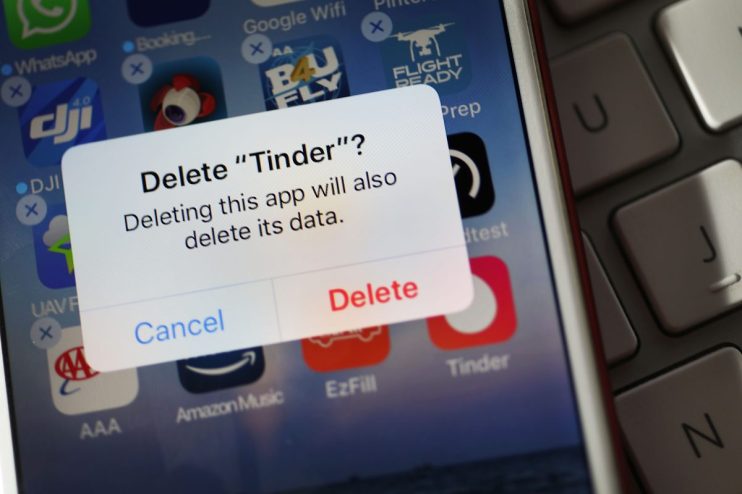
At the same time, ‘swipe fatigue’ is seeing the revenue of Match Group – which owns a huge number of apps including Tinder, Hinge and OKcupid – fall as users become less and less willing to pay for extra features or to use the apps at all. We all know people who have deleted these apps from their phones not because they have found someone, but because they “need a break”.
Dating app-haters rejoice at this news. But they may overestimate the strength of the hold that apps have ever had over us. As recently as 2020, the most common way for a British person to meet their partner was not online, but through work, mutual friends or while out and about. Even among people aged 18 to 34, the vast majority had met their partner offline.
I have also noticed that single people are often told (particularly by those whose relationships date from the pre-app era) that if only they could put down their phones, they would glance up and see hordes of stunning strangers desperately trying to catch their eye. Some of these people are also prone to describing pre-app Britain as a sort of permanent Jilly Cooper-esque romp, in which a single woman couldn’t so much as fill up her car without a handsome swain vaulting over the pump to ask for her number.
Some people are prone to describing pre-app Britain as a sort of permanent Jilly Cooper-esque romp, in which a single woman couldn’t so much as fill up her car without a handsome swain vaulting over the pump to ask for her number
Both this description of an implausibly sunny past and the claim that dating apps are the source of all our romantic woes should be treated with scepticism. In fact, rather than ushering us into a toasty new era of human connection, the decline of apps could mean that even more people struggle or are unable to find a partner. The relationship recession implies that there is something about finding romantic love that we either do not know how to do or do not want to do. Killing off dating apps will not change that.
Dating in real life
One particularly agentic friend of mine has stoutly taken this thorny social challenge in hand by deciding to host a singles night in August. To make the evening as unawkward as possible, she has encouraged single attendees to bring a friend for moral support and designed a sticker system so that it’s clear who is single and who is not. She has found a relaxed but stylish bar to hold the event at. She is also patiently removing people who sign up with transparently fake (and very rude) names. My friend is doing all this unremunerated and in the face of some sceptical amusement: one pessimistic man has promised to donate £1000 to a charity of her choice should two people who meet at the event go on to form a relationship that lasts at least a month.
Yet efforts such as this might be exactly the tonic we need. Singles nights, speed dating, match making, setting up friends – surely it is all good stuff that could provide a crucial shot in the arm for the lovelorn. Pre-app Britain may not have been paradise, but perhaps there were social scripts at play we can bring back and improve on. After all, speed dating was only invented in 1996!
Dancing – and it would be premature to do so – on the graves of the likes of Tinder and Bumble will not help end the relationship recession. Instead, all of us must do as my friend has done: believe that people still want to meet and be met and act accordingly.
Phoebe Arslanagić-Little is head of social policy at Onward