
Iran crisis has exposed the folly of net zero

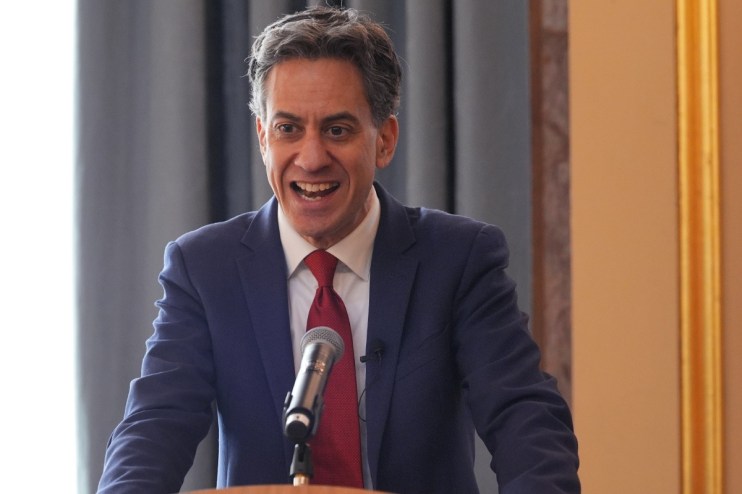
While net zero is an incredibly important economic and sustainability goal, long-term, idealistic agendas like these just cannot come at the expense of short-term economic health – especially when our country is already so frail, says Issac Goldring
This week in a rare case of diplomatic nous, President Trump chose relative peace over Armageddon. Remarkably perhaps, a two-week ceasefire was reached between the US and Iran, bringing a short-term reprieve to the conflict and some much-needed calm to global oil markets.
Unsurprisingly, the reaction, particularly from our FTSE, was euphoric. But while the VE-day-esque celebrations rage on, it’s important that we, as an economy and country, now learn from the potentially calamitous mistakes we made throughout this period – that is, all before the ceasefire ends.
What I’m talking about here is our government’s steadfastly admirable, yet perhaps foolish, commitment to net zero. Or, in simpler terms, their refusal to protect the stability of consumer energy prices by tapping into our natural oil and gas reserves, all necessary to avoid a mass inflationary overspill within our shores.
The point is this: while net zero is an incredibly important economic and sustainability goal, long-term, idealistic agendas like these just cannot come at the expense of short-term economic health – especially when our country is already so frail.
Of course, prior to the US-Iran conflict, the Bank of England had only just brought inflation down to a “stable” level. Since the Consumer Price Index’s eye-watering 9.6 per cent high post-mini budget, our central bank has undertaken a harsh and conservative rate-easing cycle, bringing inflation only recently down to a manageable 3.2 per cent in February – a reading still 1.2 per cent over its 2per cent target.
Equally, if our vulnerability to inflationary pressures is not enough, the broader economic sentiment of our private sector currently leaves much to be desired. Last month’s composite Purchasing Managers’ Index – a crucial indicator that measures the health of our manufacturing and services sectors, and thus our GDP – dipped by 3.4per cent to 50.3per cent in March, signalling less-than-ideal productivity and flourishing within our businesses.
These two measures all signal an unfortunate, albeit very real, truth: in an uncertain geopolitical environment, our economy is teetering on the knife-edge of stagflation. And indeed, given this frailty, our policymakers cannot, and should not, stick to any sustainability measure – no matter how morally righteous – that risks sending our country into a tailspin.
To do so would reveal deep-rooted levels of economic ineptitude.
Drilling in the North Sea
Of course, the obvious argument against me here would be that the Iran conflict – and fluctuations in global oil supply – both prove the need to ramp up the sophistication of our renewable energy infrastructure. And while that is certainly true, even the most committed Milibandists may agree with me – and admit that we cannot build a whole new raft of windfarms within the period of the two-week ceasefire.
Considering and appreciating all those arguments above – if the conflict restarts, which it may – our government may have to take unpalatable and difficult measures for the sake of a quick, stabilising economic stimulus. They may have to grant new drilling licences in the North Sea.
Amidst all the joy this morning, I would urge our policymakers to look back to the annals of history and educate themselves on the literal meaning of a ceasefire. The fact is, agreements like these do not signal the complete end of a conflict, but only a brief reprieve in the active tensions.
All of that is to say that we cannot get comfy – and continue life as we did before this conflict began. Fighting has only paused, not stopped. The Strait of Hormuz has only temporarily reopened – it isn’t fully open for business yet. The US and Iran may just be rearming their forces for round two.
Worries and concerns over oil supply should still remain high. And as this brief pause does little to stabilise global crude markets, our government may have to step back – and reassess whether they can realistically stick to their sustainability agenda, if energy prices continue their rapid climb.
If push comes to shove, idealistic long-term goals like these may have to be cast aside for short-term stability – and the avoidance of a recession. After all, when voters open their energy bills in the coming months, they’ll no doubt thank you for it.