
Soaring inflation in construction could spell disaster for housing in England

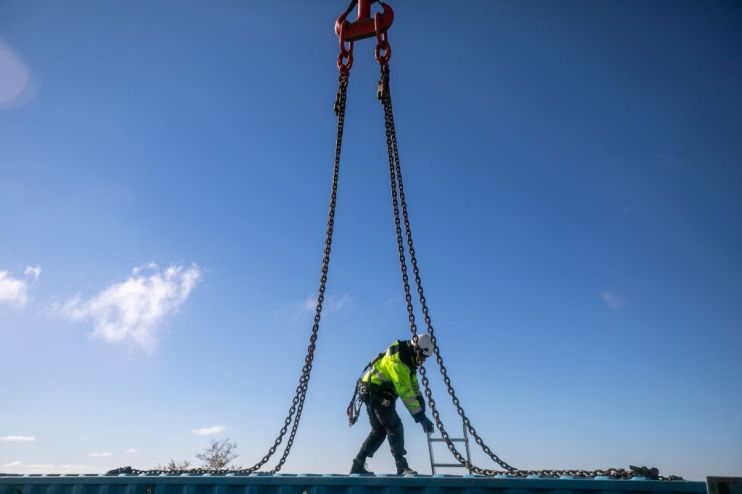
The construction industry has been hit badly by inflation. Material prices are up: in terms of year on year increase, structural steel is at 65 per cent, reinforcement steel is at 62 per cent and plywood is at 56 per cent.
Familiar supply chain problems are causing delays, and the cost of both energy and labour are also up. All these elements have conjured a perfect storm, even if the consequences are not felt uniformly across the industry.
Rising costs have created a new hierarchy within the construction industry. At the top we find companies using modern methods, such as building entire houses in factories and then transporting the finished goods right where the expectant couple or the excited family await for their new property. For this, the cost of transport is cut considerably because everything is coming from the same place. Supplies don’t need to make their way from the corners of the country – or the world – to a construction site in East London. This is at the bottom of the new order: traditional building companies transporting materials and subcontractors around various sites.
Smaller contractors working on fixed contracts risk losing their business because “they don’t have the funds to cover additional expenses that are rising during their work,” according to Caspar Harvard Walls, a partner at buying agent Black Brick. As a result, smaller firms are avoiding fixed contracts and delaying taking on new projects.
Rico Wojtulewicz, head of Housing and Planning Policy at the National Federation of Builders, has warned small companies operating outside of cities will suffer the most as a result of rising material prices as well as a lack of accessibility to products. With winter coming, building becomes even trickier because certain structural elements must be put into the ground before temperatures get too low. Thanks to the delays, some projects might have to stop until spring, putting additional costs onto small constructors.
All of this really matters. Small and medium businesses account for more than 99 per cent of British business, and 16 per cent of them operate in construction. This is a huge stack of enterprises that might lose money and have to start firing staff. But many of those who will struggle the most will be in the North East, the Midlands and the North West, according to Wojtulewicz.
The political consequences then reach right to the heart of many of the problems Britain faces. Outside of London, the North West is one of the most populated areas of England, with that number set to grow, especially with the current push from Westminster to tempt young, ambitious Brits to places outside of London.
According to the Office for National Statistics, the number of households in the North West will grow by 176,000 by 2028. The population of the East and West Midlands is set to grow by 7.7 per cent and 8.7 per cent respectively – on par with London’s expected growth of 7.8 per cent.
By 2031, we need to be building almost 340,000 homes a year across the country, according to the National Housing Federation. In 2019/20, there were 220,600 new homes completed, slightly up from the 214,410 the year before. But not enough. Further delays could puncture any plans to put the housing crisis on hold. With Michael Gove, in his position as Housing Secretary, currently reviewing the planning reforms in a bid to fix the broken market, the prospect of inflationary pressures on new homes is existential.
A chain of liquidations in the North and the Midlands would also mean rising unemployment. In political terms, that’s a disaster for the levelling up agenda. Much of the fears about inflation have focused on the consumer implications, with a cost of living crisis and fewer people buying fewer goods, leading to a stunted economic growth.
For affordable homes in particular, inflation in construction poses a problem.
Peter Hardy, co-head of Housing at law firm Addelshaw Goddard warns constractors could get away with devoting a smaller rate of their projects to affordable housing by blaming higher costs. Politicians, desperate to get anything built, could acquiesce to more relaxed planning applications more easily.
Andrew Shepherd, managing director at TopHat, a construction company acquired by Goldman Sachs in 2019, is one of the lucky ones. TopHat is a SME, but one that’s growing fast and employing modern methods. “We aren’t building less, if anything there has been a huge uptake in demand. We’re fortunate because we can order materials one year in advance, but companies that use more traditional methods and work on different sites make orders two weeks in advance,” he says. Currently, delivery periods can stretch up to sixteen weeks. The impact of a delay like that is enough to bring a small company to its knees. That means collateral costs, such as scaffolding staying up longer, are higher as well. The risk of taking on a new building project is looking dangerously close to too high for many contractors.