
Immigration is rocketing. That’s brilliant news for Britain.

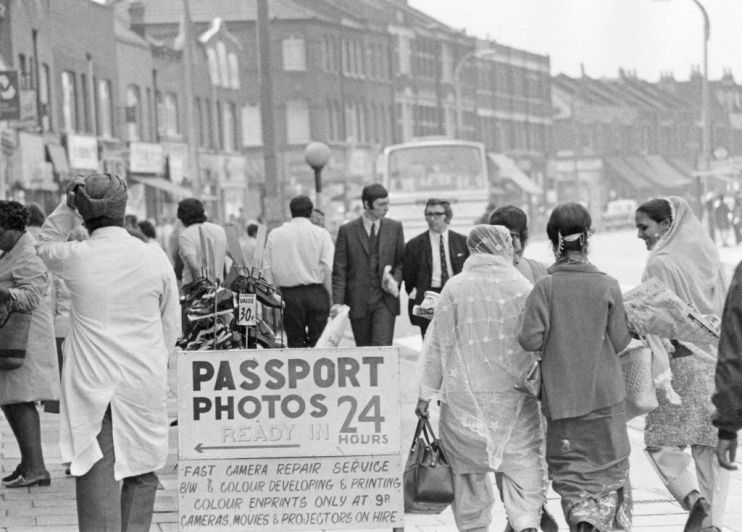
Immigration is the never-ending saga of British politics. City PM editor and metropolitan elite member Andy Silvester says we should take record numbers as a complement.
Some good news for Britain, then: loads of people want to live here. At a time when cheer is in short supply in the news pages, today’s net migration stats should be a welcome morale boost.
Of course, we don’t live in that world. Immigration to Britain is, according to the public narrative, largely a Very Bad Thing. Seven years after the Brexit referendum, immigration is once again in the top couple of issues for the great British voter, and those who are thinking about it are not – as a rule – hanging the ‘open for business’ sign around the country.
That’s a shame, emotionally, and in a country that is by most metrics far more welcoming than any of its European neighbours it should be seen as a competitive advantage to have hundreds of thousands of people wanting to share in our national story.
The utilitarian case for immigration as a good thing, though, is easy to make. It’s demographics.
As the west has grown richer, its inhabitants have found other things to do with their twenties than having children. When they do set their career aside, however briefly, they’re using more protection than they used to.
The birth rate amongst UK-born women has fallen from near 3 in the 1960s to around 1.5 in 2021. That number is itself somewhat pumped up by an outbreak of consequential how’s-your-father during the pandemic.
But if it takes two to tango and only one and half come out the other side, the maths is fairly simple to do.
That leaves us with a demographic conundrum; unless those of us born in the UK get at it like rabbits, our population will age with ever-fewer people to pay for the sort of social and health care that people expect. Fewer people paying for services demanded by more people means either a) taxing the bejesus out of those still working until the economy is squeezed into submission or b) radically shrinking the role of the state in providing older people with the care they need in their advanced years.
Today, there are 30 people of pension age for every 100 people working. By 2052, shy of 30 years away, the ONS expects that to be 35. By 2067, 38. Net debt under that scenario hits 280 per cent by GDP by 2067; it falls to 250 per cent under a scenario in which the UK has net migration of around 250,000.
Solving that requires the sort of long-term thinking that a five-year election cycle does not necessarily lend itself to. But it also requires us to fill the demographic gap with younger workers who can staff our businesses and pay the bills.
Unless those of us born in the UK get at it like rabbits, we need immigration to pay for the most basic public services
The data, though incomplete, tends to point towards immigrants covering off both of those quandaries. On the former, large chunks of the customer-facing businesses in the UK continue to report staff shortages. On the latter, Oxford University’s Migration Observatory – using HMRC data – estimates that European & Swiss immigrants contributed an additional £22.4bn in income tax and national insurance than they took out in credits and benefits, with non-European immigrants themselves chipping in around £20bn.
Pleasingly for the sake of this argument and making a point, that aligns fairly neatly with the £45bn spent on our national defence.
Those numbers of course don’t tell the whole picture: it excludes things like VAT, and doesn’t include things like the use of public services. The numbers are a bit clunky, but migrants are much more likely (unsurprisingly) to skew towards the younger end of the working age spectrum, with the percentage of immigrants over the age of 65 much lower than that of those born here in the UK.
In short – immigration is the thing keeping the show on the road from a purely economic perspective.
To all of this, anti-immigration critics will describe me as a metropolitan elite who doesn’t mind the impact on local communities of mass immigration so long as the deli at the end of my townhoused-London road can find a barista to make me a flat white.
Whilst I do appreciate said flat white, it’s also true that I recognise economic arguments about immigration don’t hold water in those communities most directly affected.
At a national and international level, there is precious little evidence that immigration brings down wages; at a hyper-local level, there is some. Ditto, the fiscal impact of immigration is good for the Treasury and therefore public services at large; it may not feel that way when the numbers of individuals suddenly spike and demand spikes for GP appointments and school places.
Nor are we likely to have a truly positive debate about immigration’s benefits (or otherwise) when the government, in concert with the French authorities, seem incapable of stopping small boats crossing the channel.
Politicians, then, have to lead. Funnelling additional cash to local communities directly affected by unexpected ‘spikes’ is an obvious one. Building more houses is another, a policy which will benefit more than just those born overseas. Shouting loudly about the economic value of migration to the UK – and the fact it should make us feel good about the opportunities that others think this country still holds – may be slightly beyond our political class currently, but we can but hope.
Immigration can be managed. But it is also vital that someone, somewhere, makes the case that high immigration is a good thing: economically, yes, but as a compliment too. Amidst the grim headlines, it’s nice to be reminded that some people still believe Britain is a place that allows you to work hard, and get on.
Just don’t tell them about the taxes. Or the trains.