
HS2 needs government support, not more dithering and debate

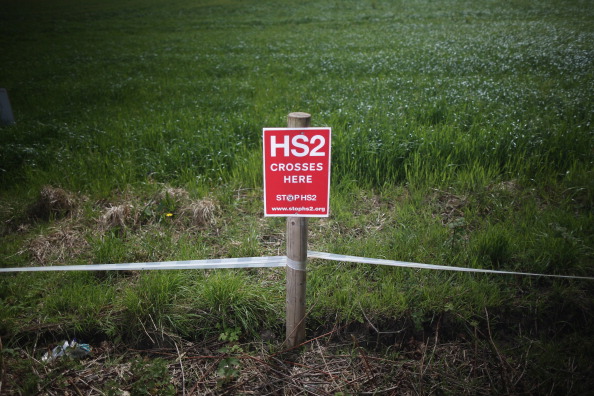
Last week, a leaked draft of the HS2 review revealed recommendations that the controversial project should go ahead as planned. This has sparked some debate, with opponents citing the project’s escalating costs and delays.
Yet, when builders’ timescales and budgets for even small-scale domestic construction projects are almost always optimistic and therefore taken with a pinch of salt, extra costs and delays are to be expected. It is also important to remember that this is not out of character for UK infrastructure projects.
Long before Crossrail, the Jubilee Line extension suffered similar issues. Almost doubling in cost during the six years it took to complete, the project was at first deferred by a year, then another two months. Eventually the first phase opened in May 1999, with the entire line opening later that year.
Though the project earned serious criticism at the time, where would we be without these stations now?
Today, Canary Wharf station is one of London’s busiest, welcoming nearly 55m visitors a year. But prior to the extension, the district was served by very little public transport, making it difficult for it to fulfil its purpose of breathing new life into London’s Docklands. Crossrail will be similarly transformational.
Put into context, and given the projected economic impact of the project, it can only be good news that HS2 is going ahead in full. Britain’s regions have been denied their fair share of transport investment for too long.
The North is still reliant on Victorian railway infrastructure, which struggles to cope with demand. Leeds station — the third busiest outside London — is the fourth worst in the country for overcrowding during peak times, while eight per cent of East Coast Main Line intercity services are cancelled or significantly delayed.
The delivery of HS2 will do much to alleviate such pressure, providing our regional cities with modern transport links that they desperately need.
Still, the real challenge is yet to come. As the project website states, HS2 trains will serve over 25 stations, connecting around 30m people — around half the population. But what about the rest — people located in areas beyond the proposed station sites?
If, as intended, HS2 is to revitalise England’s woeful regional rail infrastructure, then investment in fast and frequent public transport connections between and within regional towns and cities must also be a priority.
In addition, priority must be given to projects such as Northern Powerhouse Rail (NPR), the planned introduction of new and significantly upgraded railway lines in the North. When interlinked with HS2, NPR will make it easier to move between northern towns and cities, connecting businesses with each other and their customers, and acting as a catalyst for local growth.
The Midlands and the North have huge economic potential, but have been held back by inadequate transport infrastructure. Poor connectivity is a major obstacle for growing regional businesses, and remains a barrier to inward investment.
Meanwhile, the promise of HS2 has already acted as a catalyst for growth. For example, the approval of phase one led to record levels of foreign direct investment in the West Midlands and more than 7,000 new jobs were created in Birmingham as a direct result of the project.
Rather than continuing to dither and debate, it is time the government publicly committed to HS2 and invested in local transport infrastructure in the regions.
Only by taking this joined-up approach to railway infrastructure can we unlock the UK’s massive regional potential.