
How to get hired by a bot

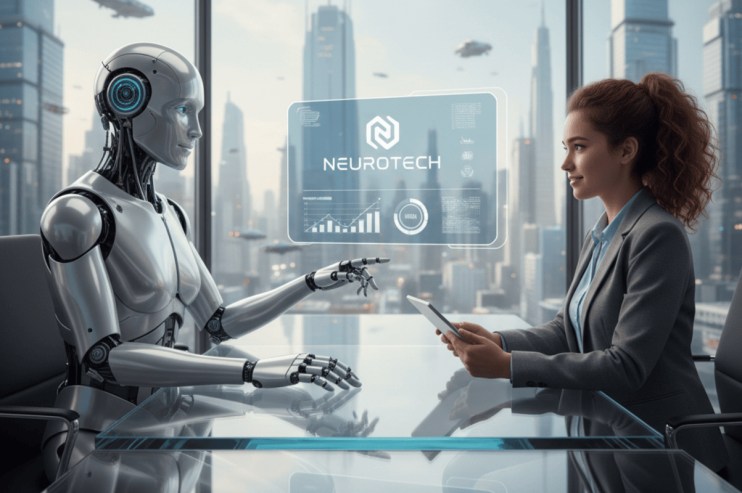
AI has infiltrated every stage of the job hunt – but has it made recruitment better? Asks Eliza Filby
The recruitment guru James Reed warned last week that “graduate jobs are no longer a given,” fuelling talk of a looming “jobpocalypse” and the decline of white-collar work. Reed has seen openings fall from 180,000 after the pandemic to a projected 50,000 this year, a staggering decline. His advice to young people in this white-collar recession? Find a career where you work with your hands, not just your head.
But, as always, context matters. How much of this decline is simply a rebalancing after the post-lockdown hiring surge? How much reflects the rising tax burden on employers or a broader loss of business confidence? Or the impact of AI? As Reed himself suggests, the answer is likely all of the above.
Still, behind the debate lies a practical problem that firms, and platforms like Indeed, can actually control: how people get jobs. Speak to anyone job hunting and the major frustration isn’t the lack of roles but the silence that so often follows an application. Candidates apply to dozens of jobs and never hear back, with no idea why. It can be depressingly impersonal and demoralising.
Consider how deeply AI has infiltrated every stage of the job hunt. Even the roles you see on LinkedIn or Indeed are powered by predictive analytics assessing whether you’re “worth” showing the ad to. Behind the scenes, systems are quietly building behavioural profiles to score your fit. Once you apply, your CV is scanned by AI for exact keyword matches, sensitive to your phrasing, structure and layout. You might then face an automated video interview where algorithms analyse your word choice, tone and pacing.
If you make it to the human interview, the person across the table often receives an AI-generated dossier summarising your skills, estimating how long you might stay and rating your “cultural fit”. The final decision may rest with a person, but almost everything leading up to it is driven by unseen algorithms few truly understand.
Those who know how to game the AI, or at least work with it, are gaining the upper hand. On YouTube and Instagram, entire communities now exist to teach people how to outsmart the bots.
One such creator is Sam DeMase, ZipRecruiter’s Career Expert, who has over half a million Instagram followers. She’s seen a sharp rise in people wanting to understand and “hack” AI-driven hiring. Her core message is that AI literacy is essential.
Demonstrate human and tech fluency
She offers pragmatic, if slightly disconcerting, advice on how to make the algorithms work for you, from mirroring the job description’s language in your CV to adjusting how you speak in automated interviews (no umms). But she warns there’s a fine line. Be too formulaic and you’ll fail to stand out. The trick, she says, is balance: demonstrating both human and technical fluency. In an age of algorithmic hiring, being explicit about your IQ and EQ skills, with clear examples and proof, has never mattered more across all levels.
Tech companies have sold these systems to firms large and small as a timesaver, which, of course, they are. Yet I remember one partner at a major firm proudly telling me that thousands of graduates applied to his company each year. “But surely that’s a bad thing?” I suggested. “By attracting sheer volume, rather than the right candidates, you’re just creating more work for yourselves.” It’s precisely this kind of inefficiency that tech firms have swooped in to solve. But perhaps the real fix is to make the problem smaller by actively deterring the wrong applicants. That starts with honesty. Too many firms polish their employer brands to a gleam. An accountancy firm that spotlights its charity volunteer days but hides the horrors of audit season is selling a false promise and could be targeting the wrong candidates.
As Sam DeMase points out, the deeper issue is a lack of transparency. Why don’t roles list salaries? Why not spell out the process, the timeline, the expectations? “Too often,” she says, “employers aren’t clear on what they want, which creates confusion for everyone.”
We’ve made hiring more efficient but far less human. Until employers rediscover that recruitment is about connection, not filtration, we’ll keep mistaking automation for progress.
Eliza Filby’s book Inheritocracy is out now